What is Shim Pack Coupling
In the vast and interconnected field of mechanical power transmission systems, the reliable connection between rotating shafts stands as one of the most foundational and functionally critical elements for the stable operation of all types of industrial machinery and mechanical equipment. Every rotating mechanical device, whether deployed in basic industrial production lines, precision manufacturing processing equipment, energy conversion and transmission facilities, or fluid transportation and processing systems, relies on a stable and efficient medium to transmit rotational torque, maintain synchronous rotation between driving components and driven components, and cope with various unavoidable deviations and deformations generated during long-term operational processes. Among the numerous types of mechanical connection components developed to meet these core industrial demands, the shim pack coupling has emerged as a vital and widely applied metal flexible transmission component, favored by mechanical design engineers and equipment operation and maintenance personnel for its unique structural design, stable torque transmission performance, excellent misalignment compensation capacity, and strong adaptability to complex and harsh working environments. Unlike traditional rigid coupling products that can only achieve simple shaft connection and lack effective deformation coordination capabilities, and different from ordinary elastic flexible couplings that rely on non-metallic elastic materials to buffer vibration and compensate displacement, the shim pack coupling adopts an all-metal structural design centered on stacked thin metal shim components, realizing the dual core functions of efficient and stable torque transmission and flexible and precise compensation of various shaft misalignments through the micro elastic deformation and relative limited displacement of metal shims in the working process. This unique working mechanism and structural characteristic enable the shim pack coupling to strike a delicate and effective balance between structural rigidity required for high-precision power transmission and flexible deformation performance needed for adapting to mechanical operation deviations, making it applicable not only to conventional low-speed and medium-load mechanical transmission scenarios but also to high-speed rotation, high-load operation, high-temperature working conditions, and long-term continuous unmanned operation industrial scenarios that put forward extremely strict requirements for transmission stability and component durability.
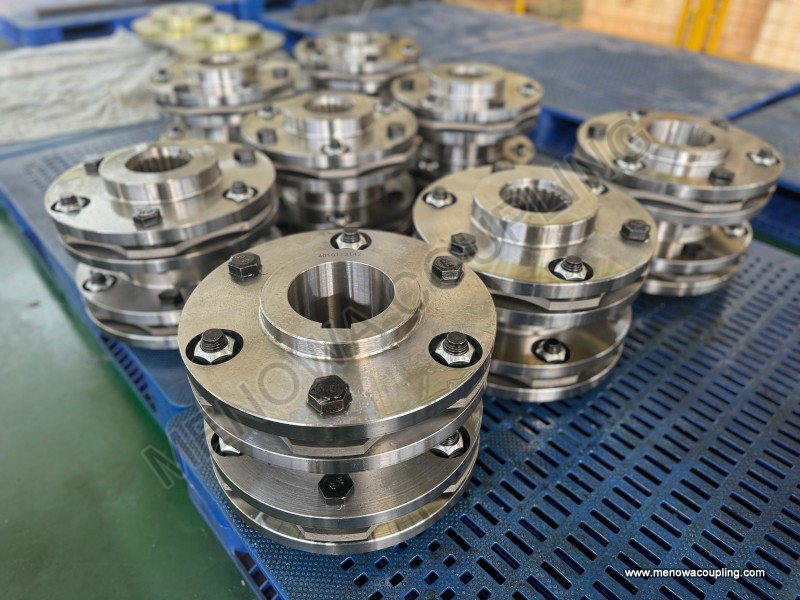
To fully understand the essence and application value of the shim pack coupling, it is first necessary to clarify its core definition and basic positioning in the entire mechanical coupling system. Fundamentally, a shim pack coupling is a specialized form of metal flexible coupling designed specifically for precise shaft power transmission and multi-dimensional misalignment compensation in rotating mechanical systems. Its core design concept abandons the structural mode of single elastic deformation unit used in many traditional flexible couplings, and instead adopts a combined structural form composed of multiple thin metal shims stacked and matched with precision connecting components and rigid shaft hubs. The basic working logic of this type of coupling is to rely on the tight assembly connection between rigid hubs and the driving and driven shafts to ensure the stability of the connection base, and then use the ordered arrangement and controlled micro elastic deformation of the stacked metal shim packs between the two hubs to complete the continuous transmission of rotational torque from the driving shaft side to the driven shaft side. At the same time, the tiny gaps between the stacked shims and the natural elastic deformation allowance of the metal shim materials themselves can effectively absorb and adapt to various slight misalignments that inevitably occur between the two connected shafts during equipment installation, commissioning, and long-term operation. These misalignments include parallel offset misalignment generated by installation position deviation, angular misalignment formed by the non-coaxial inclination of the two shafts, and axial displacement misalignment caused by thermal expansion and contraction of mechanical components during operation and long-term mechanical wear and tear. In the entire power transmission process, the shim pack coupling does not produce obvious mechanical vibration and additional rotational resistance, nor will it generate excessive mechanical stress concentration on the connected shafts and key mechanical equipment components, ensuring that the original rotational power output by the power source can be transmitted to the driven equipment efficiently and smoothly with minimal power loss and mechanical impact.
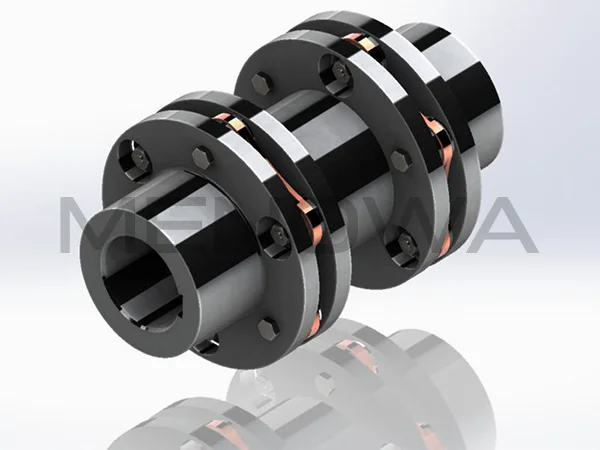
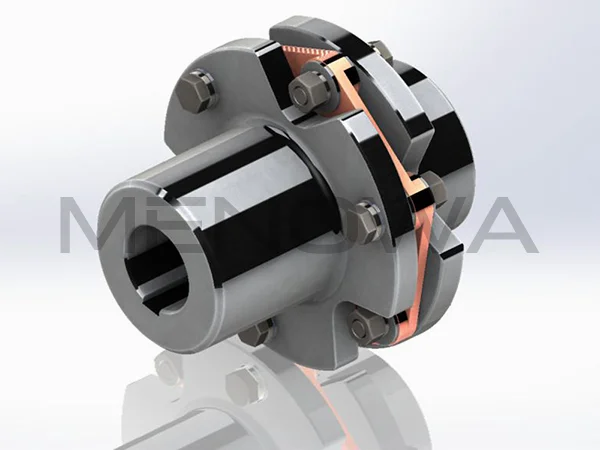
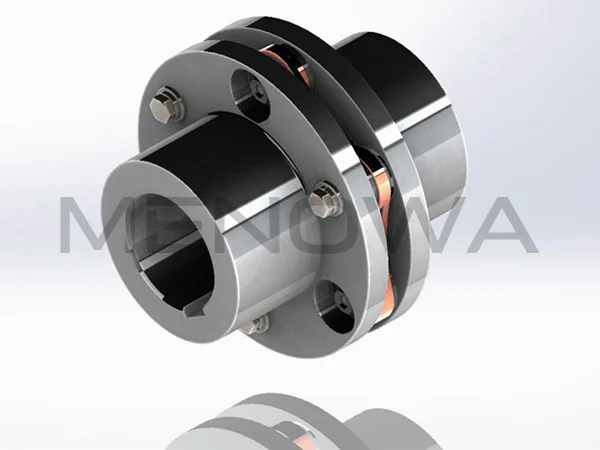
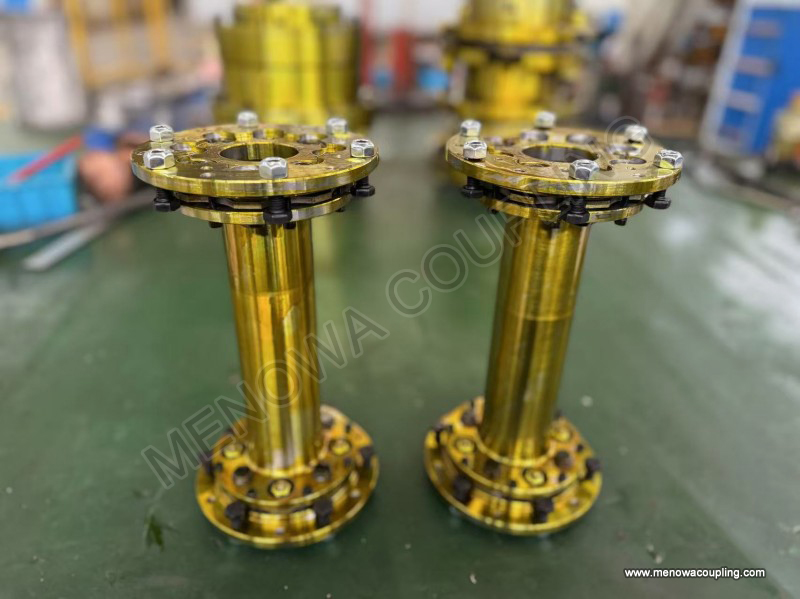
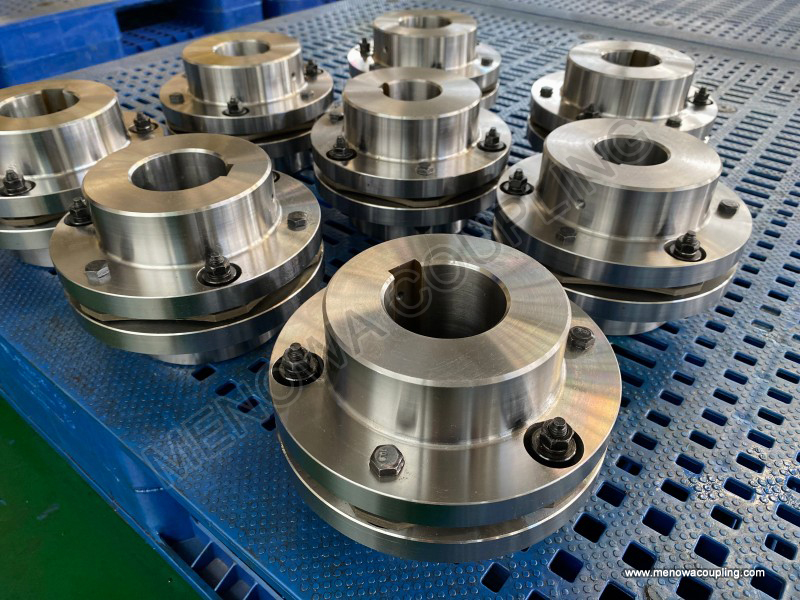
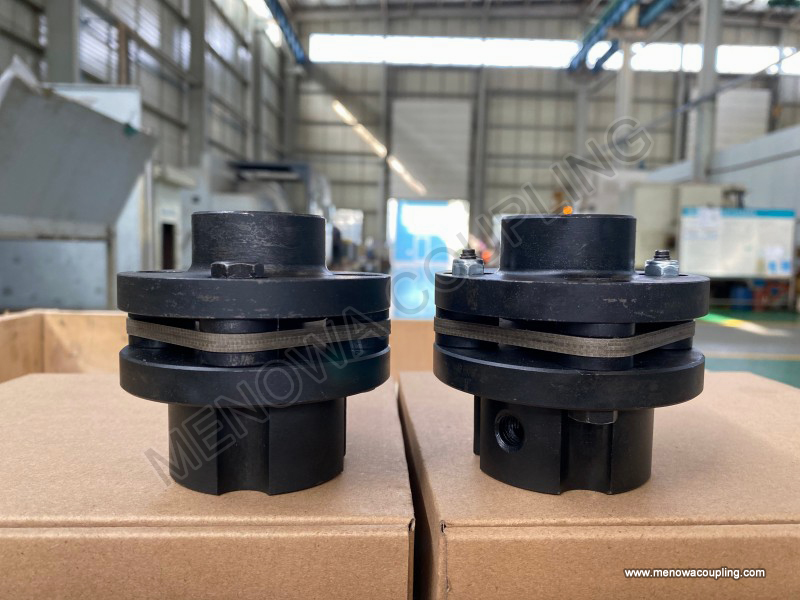
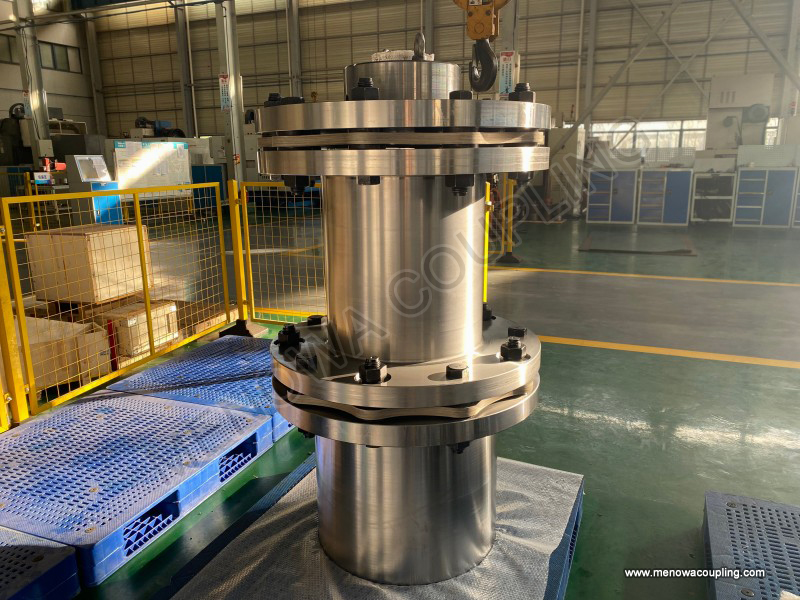
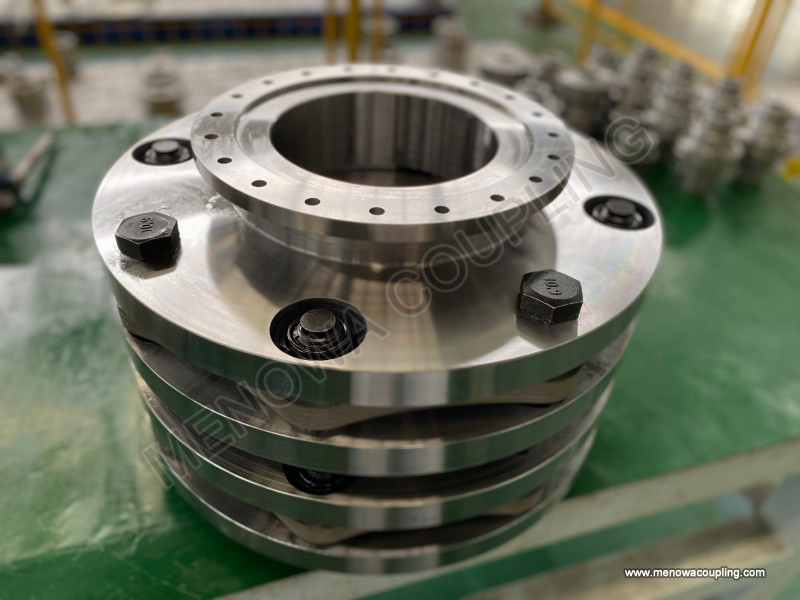
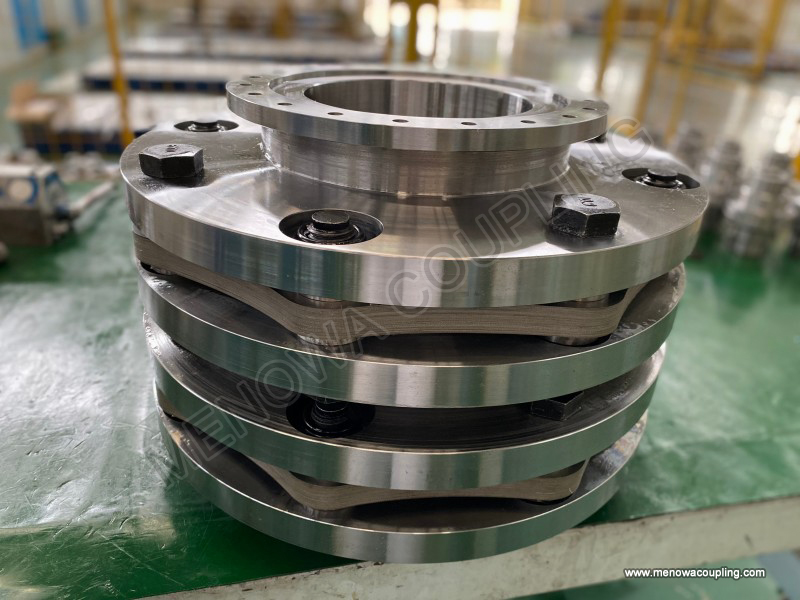
The internal structural composition of the shim pack coupling is precise and rigorous, and every component has a clear division of labor and coordinated functions, jointly supporting the overall working performance and operational stability of the coupling. The main structural components of a standard shim pack coupling include two rigid metal hubs, one or multiple groups of stacked metal shim packs, high-strength connecting fasteners, and auxiliary positioning and buffer structural parts, and some optimized structural designs will also be equipped with intermediate spacer components according to the actual shaft spacing and transmission working condition requirements. The rigid hubs are the basic connecting parts of the coupling and the rotating shafts, usually processed through precision machining technology with high dimensional accuracy and surface finish. The inner hole of the hub is designed to closely fit the outer circle of the driving and driven shafts, realizing a tight and backlash-free assembly effect. This tight assembly method can effectively avoid the relative rotation and small impact friction between the hub and the shaft during high-speed rotation and torque transmission, prevent the generation of additional mechanical vibration and shaft wear, and maintain the high precision and stability of the entire rotating shaft system during long-term operation. The metal shim pack is the core functional component of the shim pack coupling and the key part to realize torque transmission and misalignment compensation. The shim pack is composed of a plurality of thin metal shims with uniform thickness, consistent material properties, and standardized shape specifications stacked together in a fixed order. Each thin metal shim has good metal ductility and elastic deformation performance, and can undergo micro reversible elastic deformation under the action of torque and shaft displacement without permanent deformation or structural damage. The number of shims in each group of shim packs and the thickness of a single shim can be adjusted and optimized according to the actual torque transmission demand and misalignment compensation range of different mechanical equipment, so as to match different working condition requirements of various industrial scenarios.
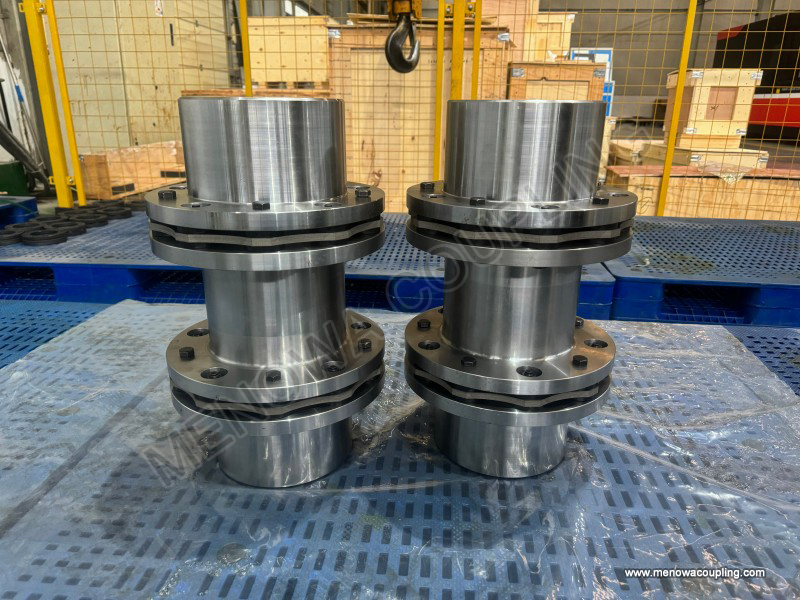
The high-strength connecting fasteners are responsible for fixedly connecting the rigid hubs and the metal shim packs into an integrated whole, ensuring that no relative separation or loose displacement occurs between all components during high-speed rotation and torque transmission. These fasteners are usually made of high-strength alloy metal materials with strong tensile resistance and shear resistance, and undergo strict precision processing and surface treatment to ensure stable fastening performance and good fatigue resistance under long-term alternating load working conditions. The auxiliary positioning and buffer structural parts installed at the connection between fasteners and shim packs can avoid direct rigid friction and stress concentration between the fasteners and the metal shims during the deformation and displacement process of the shim packs, reduce the wear of the contact parts of the components, and further extend the overall service life of the coupling. For mechanical equipment with a long distance between the driving shaft and the driven shaft or special transmission layout requirements, the shim pack coupling can be equipped with an intermediate spacer shaft structure. The intermediate spacer shaft is connected with multiple groups of shim packs and hubs in sequence, which not only meets the installation and connection requirements of long-span shafts but also does not affect the original torque transmission efficiency and misalignment compensation performance of the coupling, realizing flexible adaptation to various complex shaft layout designs in industrial mechanical systems. All structural components of the shim pack coupling adopt an all-metal integrated design without any non-metallic vulnerable parts, which lays a solid structural foundation for the coupling to adapt to high temperature, low temperature, strong corrosion, and other harsh working environments and achieve long-term maintenance-free operation.
The working principle of the shim pack coupling can be deeply understood from the two core dimensions of torque transmission and misalignment compensation, and the coordinated operation of structural components in the working process ensures the realization of these two core functions. In terms of torque transmission, when the power source drives the driving shaft to rotate, the rigid hub fixedly connected to the driving shaft will synchronously rotate with the shaft, and the rotational torque generated by the rotation will be transmitted to the stacked metal shim packs connected with the driving hub through the connecting fasteners. Under the action of fastening pressure and rotational shear force, the multiple stacked metal shims in the shim pack will form an integrated stress-bearing whole, and the torque will be evenly transmitted from the driving side shim pack to the driven side shim pack, and then transmitted to the rigid hub on the driven shaft side through the driven side shim pack, finally driving the driven shaft and the connected mechanical equipment to synchronously rotate and complete the entire power transmission process. In this torque transmission process, the metal shim packs rely on their own structural rigidity and the tight fit between stacked shims to ensure that the torque transmission is stable and continuous, without torque loss or rotational hysteresis, and can maintain accurate synchronous rotation of the driving and driven shafts even under high-load and high-speed operating conditions.
In terms of misalignment compensation, which is another core advantage of the shim pack coupling, the working principle relies on the micro elastic deformation of the metal shims and the tiny relative displacement between the stacked shims to absorb and coordinate various shaft misalignments. After the equipment is installed and put into operation, affected by many factors such as installation and construction accuracy, long-term operation mechanical vibration, thermal expansion and contraction of metal components under temperature change, and slight structural settlement of equipment base, it is difficult for the driving shaft and the driven shaft to maintain an absolute ideal coaxial state all the time, and various forms of misalignment will inevitably be produced. When parallel misalignment occurs between the two shafts, the metal shims in the shim pack will produce slight bending elastic deformation in the radial direction, and the tiny gaps between the stacked shims can adapt to the parallel offset of the shafts without generating excessive additional mechanical stress on the shafts and equipment. When angular misalignment occurs due to the inclination of the two shafts, the shim packs on both sides will produce differential micro deformation at different positions, and the elastic deformation difference of the metal shims can effectively balance the angular deviation of the shafts and keep the torque transmission process stable. When axial displacement misalignment is caused by thermal expansion and contraction or mechanical wear, the telescopic deformation allowance reserved by the stacked structure of the shim packs can adapt to the axial movement of the shafts, avoiding extrusion stress and structural damage caused by axial rigid collision between the two shafts. All the deformation and displacement changes of the shim packs in the compensation process are reversible elastic changes, and after the misalignment state returns to normal, the metal shims can automatically recover to their original structural state without permanent deformation, ensuring that the coupling can work stably for a long time under repeated misalignment compensation conditions.
The selection of manufacturing materials for the shim pack coupling directly determines its mechanical performance, environmental adaptability, and overall service life, and different material combinations are matched according to different working condition requirements to ensure the optimal matching effect between performance and application scenarios. The rigid hubs of the coupling are mostly made of high-quality carbon steel or alloy steel materials with high structural rigidity and good mechanical processing performance. These materials have high hardness and strong compressive and shear resistance after precision processing and heat treatment, can withstand the alternating load and mechanical impact generated during long-term torque transmission, and are not easy to produce structural deformation and surface wear, maintaining the long-term stability of the connection with the rotating shafts. The metal shims, as the core functional components, usually adopt high-strength stainless steel or special alloy steel materials with excellent elastic performance, fatigue resistance, and corrosion resistance. These metal materials have good ductility and reversible elastic deformation ability, can withstand frequent micro deformation for a long time without fatigue damage and fracture, and have strong resistance to high temperature oxidation and chemical corrosion, adapting to various harsh working environments such as high temperature, low temperature, and corrosive media in industrial production. The high-strength connecting fasteners are made of special high-strength alloy materials through forging and heat treatment processes, with excellent tensile strength and shear strength, strong fastening stability and anti-loosening performance, and will not loose or break under the action of long-term high-speed rotation and alternating torque.
For shim pack couplings used in special working scenarios, targeted material optimization and surface treatment will also be carried out according to the actual environmental characteristics. For equipment operating in high-temperature industrial environments such as thermal power generation, metallurgical processing, and high-temperature chemical production, the metal components of the coupling will be made of high-temperature resistant alloy materials to avoid material performance degradation and structural deformation caused by long-term high-temperature baking. For mechanical equipment working in corrosive environments such as chemical engineering, marine engineering, and sewage treatment, the surface of the coupling components will be treated with anti-corrosion processes such as galvanizing and passivation, and the shim materials will use high-corrosion-resistant stainless steel to prevent chemical corrosion and structural rust damage and ensure the long-term stable operation of the coupling. For precision high-speed rotating equipment such as precision machine tools and intelligent automated production equipment, the coupling components will adopt high-precision polishing and stress relief treatment processes to reduce the surface friction coefficient and internal structural stress of the components, reduce vibration and noise during high-speed operation, and improve the precision and stability of power transmission. The scientific and targeted material selection and processing technology make the shim pack coupling have strong environmental adaptability and performance adjustability, and can meet the diversified application needs of different industrial fields.
Compared with other common types of couplings used in mechanical power transmission systems, the shim pack coupling has many prominent comprehensive performance advantages, which make it stand out in various industrial application scenarios and become the preferred transmission connection component for many mechanical design schemes. First of all, the shim pack coupling adopts an all-metal structural design without any non-metallic elastic parts or vulnerable rubber and plastic components, so it has excellent durability and long service life. It will not aging, deteriorate or lose performance due to the influence of time, temperature and environmental media, and basically does not need frequent replacement and regular maintenance in the whole service cycle, reducing the later equipment operation and maintenance cost and downtime loss caused by component replacement. Secondly, the coupling has high structural rigidity and torque transmission efficiency, can transmit rotational torque stably and efficiently without obvious power loss and rotational hysteresis, and can maintain high-precision synchronous rotation of driving and driven shafts, meeting the high-precision transmission requirements of precision mechanical equipment and high-speed rotating equipment.
In addition, the shim pack coupling has good vibration damping and impact buffering effects while realizing misalignment compensation. The micro elastic deformation of the stacked metal shims can absorb and weaken the mechanical vibration and instantaneous impact load generated during equipment startup, shutdown and operation, reduce the vibration and noise of the entire mechanical transmission system, and protect the connected rotating shafts, bearings, motors and other key mechanical components from damage caused by vibration impact. Moreover, the compact structural design of the shim pack coupling makes it occupy a small installation space, with a simple and reasonable overall structure and convenient installation, commissioning and disassembly operations. The staff can complete the assembly and alignment work of the coupling through conventional mechanical installation tools, without complex installation process and professional debugging equipment, saving equipment installation and commissioning time and labor cost. At the same time, the coupling has strong high temperature resistance, low temperature resistance and corrosion resistance, can work normally in various harsh working environments where ordinary elastic couplings cannot adapt, and has stable performance and no performance attenuation under extreme working conditions, ensuring the continuous and reliable operation of mechanical equipment in special industrial production environments.
The shim pack coupling has a wide range of industrial application coverage, and its stable performance and strong adaptability make it widely used in almost all industrial fields involving mechanical rotating shaft power transmission. In the field of petrochemical and chemical production, a large number of chemical pumps, reaction kettle stirring equipment, fluid conveying compressors and other mechanical equipment need to operate continuously for a long time in high-temperature, high-pressure and corrosive working environments. The shim pack coupling can adapt to the harsh working conditions of chemical production, stably transmit power for fluid transportation and chemical reaction processing equipment, compensate shaft misalignment caused by thermal expansion and long-term operation, and ensure the continuous and stable operation of chemical production equipment and avoid production interruption caused by coupling failure. In the field of power energy production, whether it is thermal power generation equipment, wind power supporting transmission equipment or new energy power conversion equipment, the rotating shaft transmission system needs to bear high load and long-term continuous operation requirements. The shim pack coupling provides reliable shaft connection and power transmission guarantee for power generation units and energy transmission equipment, reduces equipment operation failure rate, and improves the overall operational efficiency and safety and stability of power energy equipment.
In the field of mechanical manufacturing and precision processing, precision machine tools, automated production lines, mechanical processing robots and other precision equipment have extremely high requirements for the synchronization accuracy and transmission stability of rotating shafts. The shim pack coupling relies on high-precision structural design and stable torque transmission performance to ensure the precise rotation coordination of precision processing equipment, avoid processing errors and product quality problems caused by shaft misalignment and transmission vibration, and improve the processing accuracy and production efficiency of mechanical products. In the field of metallurgical processing and building materials production, metallurgical rolling equipment, building materials processing machinery, mining conveying equipment and other mechanical equipment have the characteristics of heavy load operation, harsh working environment and large mechanical vibration. The shim pack coupling can withstand heavy load impact and harsh environmental tests, maintain stable power transmission and misalignment compensation functions, and ensure the normal operation of heavy industrial production equipment. In the field of marine engineering and water conservancy equipment, marine power propulsion equipment, water conservancy pumping stations, flood control and drainage equipment need to work in humid and corrosive water environment for a long time. The shim pack coupling with anti-corrosion treatment has good corrosion resistance and waterproof performance, providing reliable shaft connection guarantee for marine and water conservancy mechanical equipment.
The installation, commissioning and daily maintenance management of the shim pack coupling are important links to ensure its long-term stable and efficient operation, and standardized operation and scientific management can effectively extend the service life of the coupling and maintain its optimal working performance. In the installation and commissioning stage, the first step is to carry out precise alignment calibration of the driving shaft and the driven shaft connected to the coupling, minimize the initial installation misalignment of the two shafts within the allowable compensation range of the shim pack coupling, and avoid excessive initial misalignment causing long-term overload deformation of the metal shims and accelerated fatigue damage of components. During the assembly process, all connecting components such as hubs, shim packs and fasteners should be installed in strict accordance with the assembly sequence and process requirements, and the fastening torque of each connecting fastener should be evenly controlled to avoid uneven fastening force causing unilateral stress concentration of the shim packs and affecting the torque transmission effect and misalignment compensation performance. After the installation and assembly is completed, it is necessary to conduct a trial rotation test of the equipment, check whether the coupling has abnormal vibration, abnormal noise and jamming during the rotation process, and adjust and correct the alignment state and fastening degree in time if any abnormal situation is found until the coupling runs smoothly and normally.
In the daily operation and maintenance process, the shim pack coupling does not need complex and frequent maintenance work due to its all-metal wear-resistant and durable structural characteristics. The daily maintenance work mainly includes regular visual inspection and regular operational state monitoring. Regularly observe the external structural state of the coupling, check whether there is obvious structural deformation, surface corrosion, fastener loosening and other abnormal conditions of the shim packs and hubs, and timely handle and fasten the loose fasteners and replace the components with serious corrosion and deformation. Regularly monitor the vibration amplitude and operating noise of the coupling during equipment operation, judge whether the internal structural state of the coupling is normal according to the vibration and noise changes, and find potential hidden dangers of equipment failure in advance. For the coupling working in high-load and high-frequency operation scenarios, regular stress detection and deformation inspection of the metal shim packs should be carried out to check whether the shims have fatigue deformation and micro cracks, and replace the aging and failed shim packs in time to avoid sudden failure of the coupling affecting the normal operation of the entire mechanical equipment. Scientific and standardized installation, commissioning and simple daily maintenance management can always keep the shim pack coupling in a good working state, give full play to its excellent transmission performance and compensation capacity, and create stable and reliable operating conditions for industrial mechanical equipment.
With the continuous progress of industrial mechanical design technology and the continuous upgrading of industrial production automation and precision requirements, the design and manufacturing technology of shim pack couplings is also constantly optimized and improved, and continuous innovation and breakthroughs have been made in structural optimization, material upgrading and performance improvement. In terms of structural design optimization, modern shim pack coupling design combines finite element mechanical simulation analysis technology, carries out accurate mechanical stress calculation and deformation simulation on the shim pack structure and overall components, optimizes the structural size and shim stacking mode of the coupling, further reduces the internal structural stress of the coupling during operation, improves the deformation coordination ability and torque transmission efficiency, and makes the structural design of the coupling more reasonable and compact. In terms of material research and development and application, with the continuous emergence of new high-strength, high-elasticity and corrosion-resistant alloy materials, the manufacturing materials of shim pack couplings are also constantly upgraded, and the new materials can further improve the fatigue resistance, high temperature resistance and corrosion resistance of the coupling, adapt to more extreme industrial working conditions, and extend the overall service life of the coupling.
In terms of performance matching and personalized customization, according to the diversified and personalized transmission needs of different industrial mechanical equipment, the shim pack coupling can realize targeted personalized design and parameter matching, adjust the number of shims, shim thickness, hub size and fastener specifications according to the actual torque size, misalignment compensation range, operating speed and environmental conditions of the equipment, and provide exclusive coupling matching solutions for different mechanical transmission systems. At the same time, with the development of intelligent industrial equipment, the shim pack coupling is also gradually combined with intelligent monitoring technology, realizing real-time monitoring of the operating temperature, vibration state and deformation degree of the coupling through embedded monitoring components, realizing early warning of potential failure hidden dangers of the coupling, further improving the operational safety and reliability of the coupling and the matching mechanical equipment. As an indispensable and important basic component in the field of mechanical power transmission, the shim pack coupling will continue to rely on technological innovation and performance optimization to adapt to the increasingly stringent industrial production needs, and play a more important core role in the stable operation and efficient production of various industrial mechanical equipment.
In conclusion, the shim pack coupling, as a mature and high-performance metal flexible coupling, integrates efficient torque transmission, multi-dimensional misalignment compensation, strong environmental adaptability and long-term durable operation into one, with reasonable structural design, simple installation and maintenance, and wide application range. Its unique working mechanism of relying on stacked metal shims for elastic deformation and limited relative displacement enables it to solve the common shaft connection and transmission pain points in industrial mechanical operation, effectively cope with various installation deviations and operational deformation problems in rotating shaft systems, reduce mechanical vibration and component wear, protect mechanical equipment components, and ensure the stable and efficient operation of mechanical transmission systems. From basic industrial production equipment to high-precision precision manufacturing equipment, from conventional normal temperature working conditions to harsh extreme working environments, the shim pack coupling can show stable and reliable working performance, provide solid and reliable basic guarantee for the normal operation of various mechanical equipment, and occupy an irreplaceable important position in the entire mechanical power transmission industry. With the continuous development of industrialization and mechanical manufacturing technology, the application value and development potential of shim pack couplings will be further highlighted, and it will continue to accompany the steady development of various industrial fields and mechanical manufacturing industries.
Post Date: Apr 24, 2026
https://www.menowacoupling.com/china-coupling/what-is-shim-pack-coupling.html
Products
Tags
Related Articles
Flexible Diaphragm Coupling Fabrication
Flexible diaphragm couplings are essential components in modern mechanical transmission systems, designed to connect two shafts while compensating for axial, radial, and angular misalignments, absorbing vibrations, and ensuring efficient power transfer. The fabrication of these couplings is a sophisticated process that …What is Flexible Diaphragm Coupling
Flexible diaphragm coupling is a high-performance metal flexible transmission component widely used in modern mechanical shafting systems, designed to connect driving and driven shafts while achieving efficient torque transmission and adaptive compensation of shaft misalignment. Unlike traditional rigid couplings that r…Gap Chart of Flexible Diaphragm Coupling
The gap chart of flexible diaphragm couplings serves as a core technical reference that quantifies the spatial clearance parameters between key structural components under diverse operating conditions, laying a foundational role in installation calibration, operational condition monitoring, and service life prediction o…Flexible Diaphragm Coupling For Sale
When it comes to transmitting power between two shafts in industrial machinery, the choice of coupling plays a crucial role in ensuring smooth operation, efficiency, and long-term reliability. Among the various types of couplings available in the market, flexible diaphragm couplings have emerged as a preferred solution …Working Principle of Flexible Diaphragm Coupling
Flexible diaphragm couplings are essential mechanical transmission components widely applied in modern industrial power transmission systems, serving as a critical bridge between driving and driven shafts to realize stable torque transmission while accommodating various shaft misalignments. Unlike rigid coupling structu…Maintenance of Flexible Diaphragm Coupling
Flexible diaphragm couplings serve as indispensable components in modern mechanical power transmission systems, designed to transmit torque between rotating shafts while compensating for minor axial, angular, and radial misalignments through the elastic deformation of metal diaphragm elements. Unlike rigid coupling stru…
 WeChat
 WhatsApp