Size Chart of Curved Tooth Coupling
The global industrial transmission component market has maintained steady expansion alongside the continuous upgrading of industrial manufacturing, intelligent equipment iteration, and the vigorous development of heavy industry sectors worldwide. As a core high-efficiency power transmission component, curved tooth couplings have become indispensable in modern mechanical transmission systems due to their excellent torque transmission capacity, superior misalignment compensation performance, and strong adaptability to harsh working environments. The size chart of curved tooth couplings serves as the core basis for product model selection, parameter matching, and standardized global application, supporting the unified deployment of such couplings in cross-border industrial projects, multinational equipment manufacturing, and international engineering construction. In the global market, the market demand and application scope of curved tooth couplings continue to expand, covering traditional heavy industry, new energy equipment, intelligent manufacturing, and fluid transmission equipment, with regional market characteristics and application scenarios showing obvious differentiation while maintaining unified technical selection logic.
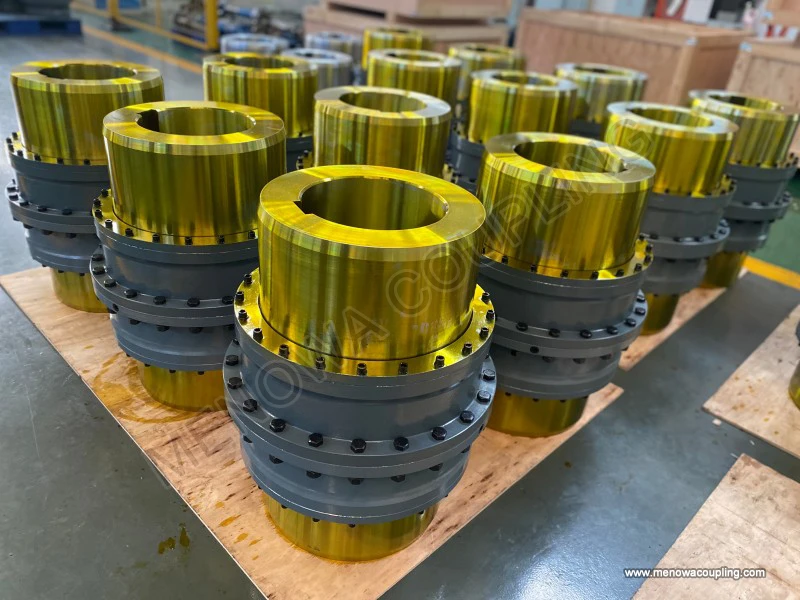
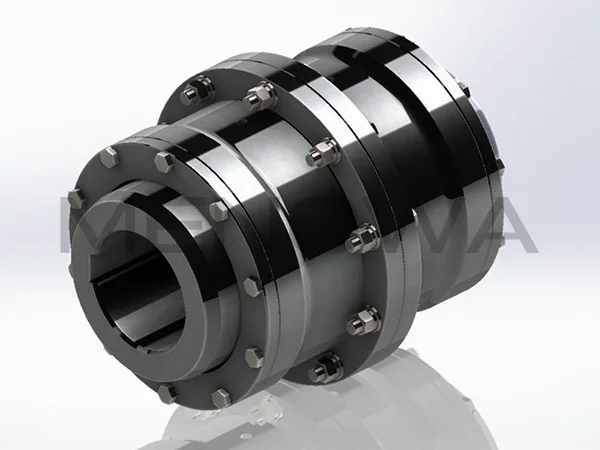
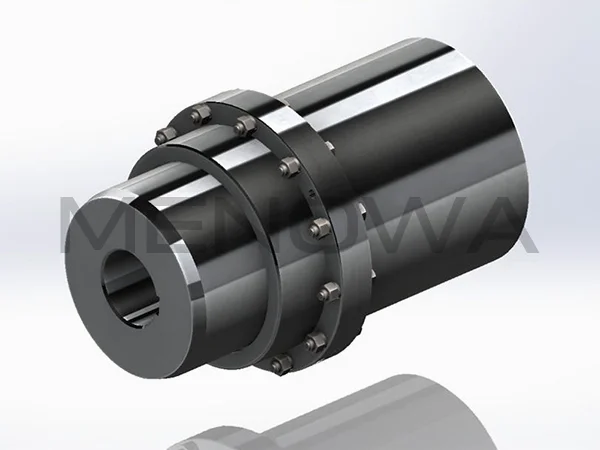
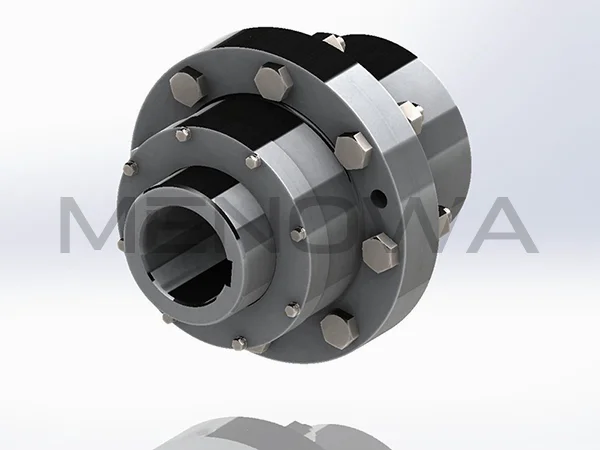
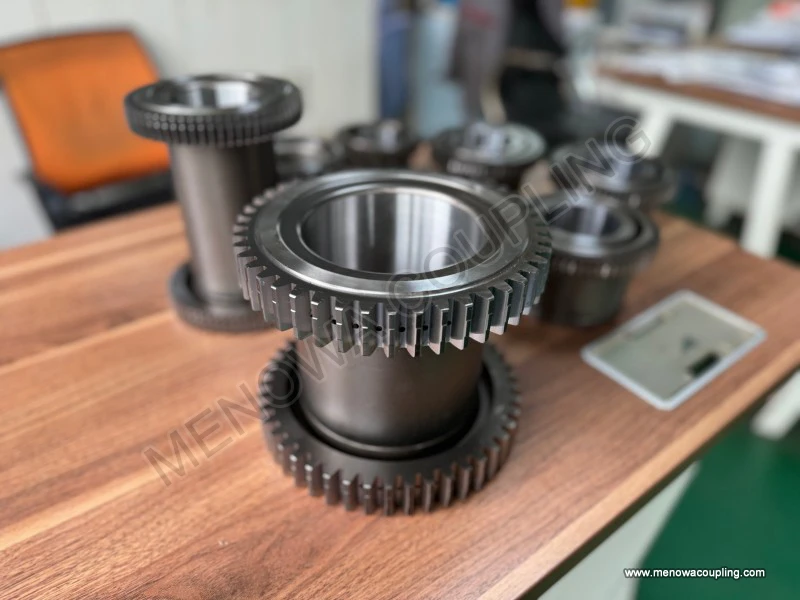
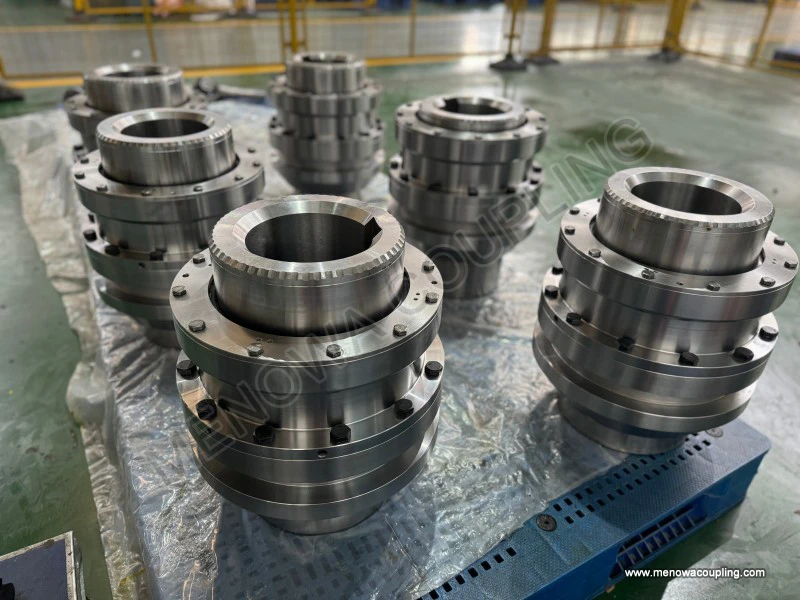
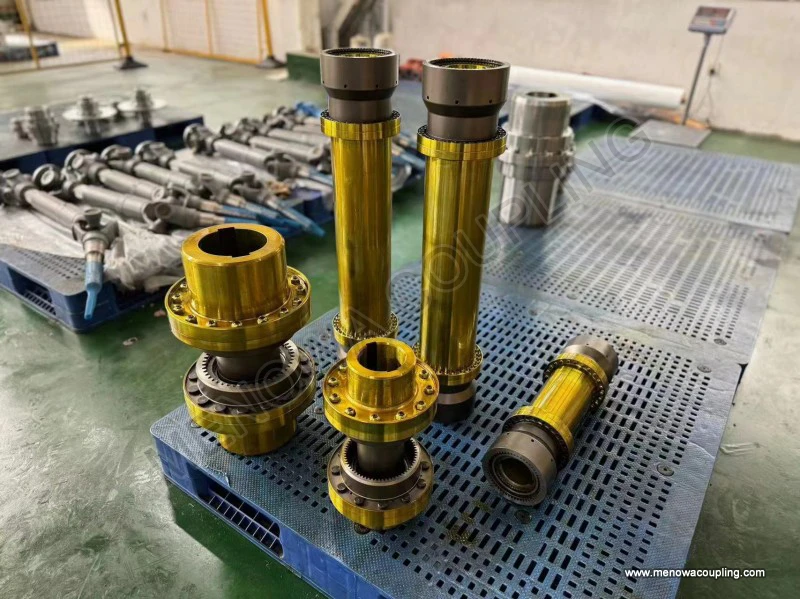
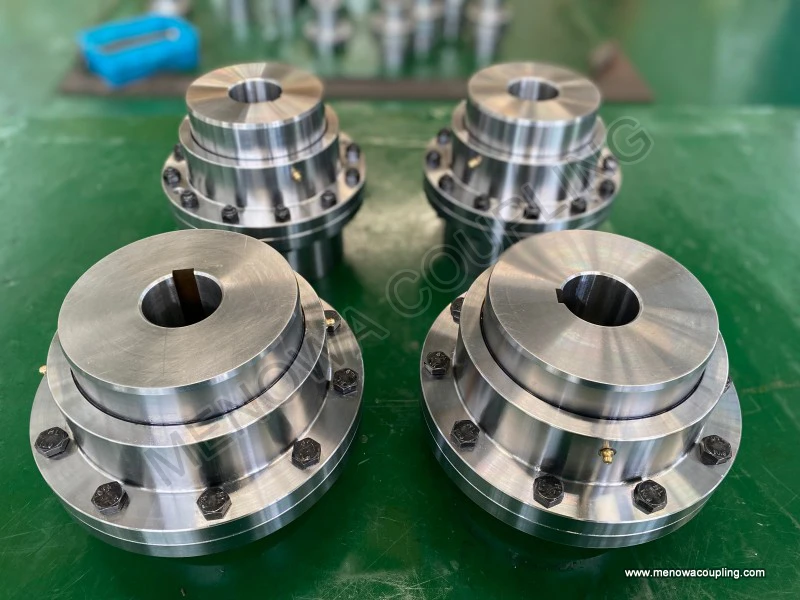
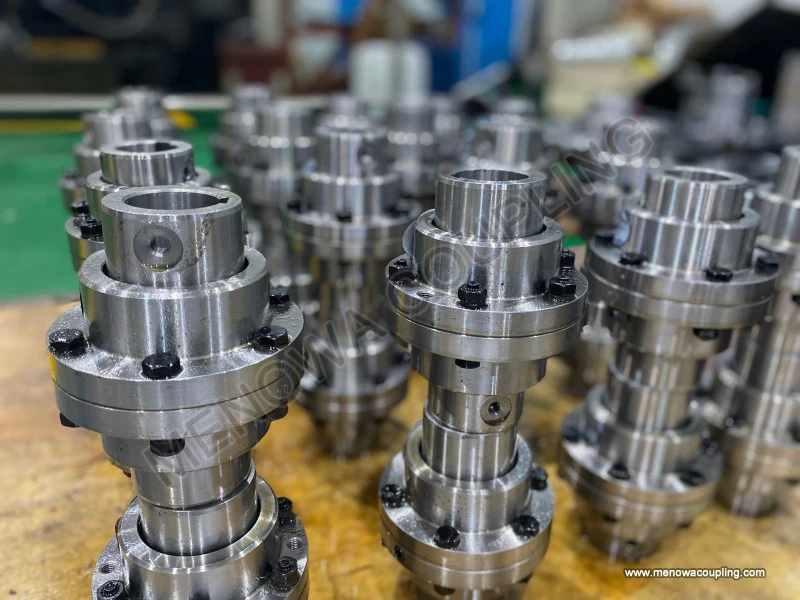
Curved tooth couplings rely on the meshing transmission of internal and external curved gear teeth to realize power and torque transmission between driving and driven shafts. Compared with traditional straight tooth couplings and elastic couplings, their structural design endows them with unique technical advantages that adapt to global industrial production needs. The curved tooth structure can effectively reduce tooth surface impact and friction during high-speed operation, lower transmission noise and vibration, and bear large instantaneous overload torque, which makes them widely recognized in high-load, continuous-operation, and variable-load working conditions in the international market. The size chart of curved tooth couplings standardizes key dimensional parameters including outer diameter, inner shaft hole diameter, tooth width, tooth number, installation length, and axial offset range of different models. These standardized dimensional parameters unify the production and processing standards of manufacturers in various regions, reduce the matching barrier of cross-border equipment assembly, and lay a foundation for the large-scale circulation and global popularization of curved tooth coupling products.
From the perspective of global market distribution, the demand for curved tooth couplings presents a pattern of simultaneous growth in developed industrial regions and emerging industrial regions. In European and North American industrial markets, which have mature high-end manufacturing systems, curved tooth couplings are mainly applied in high-precision transmission equipment, high-speed rotating machinery, and large complete sets of industrial equipment. The local industrial equipment has high requirements for transmission stability, operational precision, and service life, so medium and high-precision standardized curved tooth coupling models matching size chart parameters occupy the mainstream market share. These regions focus on the long-term operational stability and low maintenance cost of equipment, and the structural advantages of curved tooth couplings in compensating axial, radial, and angular misalignments can effectively reduce equipment failure rates caused by shaft body deviation, meeting the stringent operational requirements of continuous industrial production lines.
In Asia-Pacific, Middle Eastern, and Latin American emerging industrial markets, the market demand for curved tooth couplings is mainly driven by the rapid development of heavy industry, infrastructure construction, and resource development industries. Mining machinery, cement production equipment, metallurgical transmission equipment, and large conveying machinery in these regions have the characteristics of heavy load, harsh working conditions, and long-time continuous operation. Curved tooth couplings with large torque bearing capacity and strong environmental adaptability can fully adapt to dusty, high-vibration, and variable-load working scenarios. With the continuous transfer of global manufacturing capacity and the improvement of local industrial supporting facilities, the demand for standardized curved tooth couplings that conform to unified size chart specifications in emerging markets is increasing year by year, and the market growth rate is significantly higher than that in mature industrial regions, becoming an important growth pole of the global curved tooth coupling market.
In the global chemical industry, curved tooth couplings have become a key matching component of fluid transmission and chemical processing equipment. Chemical production equipment such as chemical pumps, stirring devices, and compressors often operate in variable temperature and variable load environments, and the thermal expansion and mechanical vibration of equipment are obvious during operation. The flexible transmission performance of curved tooth couplings can effectively absorb the displacement deviation caused by equipment thermal deformation and mechanical vibration, ensure stable torque transmission, and avoid transmission failure caused by shaft body extrusion and friction. The size chart parameters of curved tooth couplings provide accurate dimensional matching for chemical equipment of different power levels, realizing precise matching from small-power laboratory chemical stirring equipment to large-scale industrial chemical continuous production units, and meeting the diversified transmission needs of the global chemical industry.
The new energy industry is a new emerging application field of curved tooth couplings in the global market. With the rapid development of wind power generation, photovoltaic supporting power equipment, and energy storage transmission equipment worldwide, the demand for high-stability and high-reliability transmission components continues to rise. Wind power generation equipment has the characteristics of variable wind load, frequent load fluctuation, and long-term outdoor operation, which puts forward high requirements for the shock resistance and fatigue resistance of couplings. Curved tooth couplings can buffer instantaneous load impact, stabilize power transmission efficiency, and adapt to complex outdoor working environments. The standardized size chart system enables curved tooth couplings to quickly match wind power transmission shafts of different specifications, realizing modular matching and rapid assembly of equipment, which greatly improves the production and installation efficiency of global new energy power generation equipment.
Scientific and reasonable model selection is the core premise to ensure the stable operation of curved tooth couplings, and the selection process needs to be based on professional calculation formulas combined with size chart parameters and actual working conditions. The core selection formula for curved tooth couplings is derived from the matching relationship between operating power, rotating speed, load characteristics and coupling rated torque. The basic selection calculation formula is as follows: Design Torque T = 9550 × P × K / n. In this formula, T represents the design torque required for equipment operation, with the unit of N·m; P refers to the rated operating power of the driving equipment, with the unit of kW; K is the working condition service factor, which is determined according to the actual load fluctuation, operation duration and impact degree; n represents the rated operating speed of the equipment, with the unit of rpm.
The service factor K in the selection formula is a key parameter affecting the matching accuracy of curved tooth couplings, and its value needs to be adjusted according to global universal industrial working condition standards. For stable load equipment with long-term continuous operation and no obvious impact, such as conventional fans and water pumps, the service factor can be selected within 1.2 to 1.5; for medium-variable load equipment with intermittent operation and slight load fluctuation, such as general processing machinery and mixing equipment, the service factor is controlled between 1.5 and 2.0; for heavy-load impact equipment with frequent start-stop and severe load fluctuation, such as mining crushers and metallurgical rolling equipment, the service factor needs to be selected from 2.0 to 2.5. After calculating the design torque through the formula, it is necessary to compare it with the rated torque parameter corresponding to each model in the curved tooth coupling size chart, and select the coupling model whose rated torque is not less than the calculated design torque, so as to ensure that the coupling can bear the load impact during long-term operation and avoid overload damage.
In addition to torque calculation and size chart parameter matching, there are multiple key selection precautions for curved tooth couplings in global market application scenarios. First, it is necessary to verify the installation dimensional adaptability, including the matching degree of shaft hole diameter, shaft end installation length, and equipment installation space. The size chart defines the standard shaft hole range and overall outer contour size of each model, and in actual selection, it is necessary to ensure that the coupling installation size does not conflict with the equipment shell and matching parts, and reserve a reasonable installation and maintenance space. Second, attention should be paid to the adaptation of operating speed parameters. Each model of curved tooth coupling in the size chart has a corresponding maximum allowable operating speed. Excessive operating speed will cause increased tooth surface wear, intensified vibration and even structural failure, so the equipment operating speed must be lower than the limit speed of the selected coupling model.
Third, the misalignment compensation demand of actual working conditions should be fully considered. Different models of curved tooth couplings have different ranges of axial displacement, radial deviation and angular deflection compensation, which are clearly marked in the size chart and parameter table. For equipment with large shaft body deviation caused by long-term operation or thermal deformation, a coupling model with a larger misalignment compensation range needs to be selected to avoid additional transmission stress caused by shaft misalignment. Fourth, environmental adaptability selection should be carried out according to the global application scenario. For high-dust, high-humidity and corrosive working environments in mining, chemical and marine engineering fields, it is necessary to select curved tooth couplings with optimized surface treatment and structural sealing performance, avoiding tooth surface corrosion and dust deposition affecting transmission efficiency and service life.
In the global industrial market, the standardized size chart system of curved tooth couplings promotes the standardized and modular development of the industry, and effectively solves the problem of inconsistent dimensional parameters and difficult cross-regional matching of products from different manufacturers. Unified dimensional standards enable downstream equipment manufacturers in various countries to realize unified component selection in product design, reduce product design and supporting costs, and improve the interchangeability of maintenance parts in global equipment after-sales service. With the acceleration of global industrial integration and the deepening of cross-border equipment cooperation, the standardized application of curved tooth coupling size charts in international engineering projects, complete equipment exports and supporting parts matching has become more extensive, and has gradually formed a unified technical selection specification in the global industrial transmission field.
The downstream application industry iteration also drives the continuous optimization of curved tooth coupling size chart parameters and selection standards. With the development of industrial equipment towards high power, high speed and miniaturization, the global market has put forward higher requirements for the torque density, compactness and high-speed stability of curved tooth couplings. New optimized models with smaller installation size and larger torque bearing capacity have been continuously added to the size chart, and the selection formulas and parameter matching standards have also been dynamically adjusted according to the new equipment operating characteristics, adapting to the technical iteration needs of global industrial manufacturing. In the field of precision intelligent manufacturing, the optimized small-size curved tooth coupling models in the size chart can meet the high-precision and low-vibration transmission needs of automated production equipment, while in the field of heavy equipment manufacturing, large-specification models can fully meet the extreme load transmission requirements of large-scale mining and metallurgical equipment.
In terms of global market competition and development trend, the popularization of standardized size chart and scientific selection technology has lowered the technical threshold of the curved tooth coupling industry, promoted the balanced development of the global market, and enabled high-quality standardized products to cover more emerging industrial regions. In the future, with the continuous development of global intelligent industry, green manufacturing and high-end equipment manufacturing, the application scenarios of curved tooth couplings will be further expanded, and the market demand will maintain a stable growth trend. The continuous improvement of size chart standardization and the popularization of accurate selection methods will further enhance the application value of curved tooth couplings in the global mechanical transmission field, provide reliable basic component support for the upgrading and development of global industrial manufacturing, and drive the continuous progress of the entire industrial transmission component industry.
Post Date: Jun 26, 2026
https://www.menowacoupling.com/china-coupling/size-chart-of-curved-tooth-coupling.html
Products
Tags
Supply
Related Articles
Material of Curved Tooth Coupling
Curved tooth couplings have emerged as one of the most reliable and versatile mechanical transmission components in the global industrial machinery sector, serving as a core connecting unit for shaft torque transmission in heavy-duty, high-speed, and misalignment-tolerant operating environments. The unique curved tooth …Characteristics of Curved Tooth Coupling
In the global industrial transmission equipment market, curved tooth couplings have emerged as a core universal transmission component, widely adopted in heavy-duty machinery, energy equipment, marine engineering, and mining industries across all regional markets. Differing from traditional straight tooth gear couplings…Gear Type Coupling Supply
Gear type couplings stand as one of the most reliable and high-performance mechanical components designed for torque transmission and shaft connection across diverse industrial mechanical systems. As a core component in power transmission machinery, these specialized couplings are engineered to connect two rotating shaf…Types of Gear Type Coupling
Gear type couplings stand as one of the most robust and reliable flexible coupling solutions in modern industrial mechanical transmission systems, widely utilized for connecting rotating shafts to transmit torque while compensating for various shaft misalignments during equipment operation. Unlike rigid couplings that r…Components of Gear Type Coupling
Gear type couplings are essential mechanical transmission components widely applied in heavy-duty industrial mechanical systems, serving as key connecting structures for rotating shafts in power transmission equipment. Classified as rigid flexible couplings, they rely on the precise meshing of internal and external gear…Parts of Curved Tooth Coupling
Curved tooth couplings stand as one of the most reliable and widely adopted mechanical transmission components in the global industrial machinery sector, renowned for their superior torque transmission capacity, flexible misalignment compensation, and durable structural performance. As global industrialization continues…
 WeChat
 WhatsApp