Components of Flexible Diaphragm Coupling
A flexible diaphragm coupling is a high-performance mechanical component widely used in various industrial applications to connect two shafts and transmit torque while compensating for relative displacements between them. Unlike rigid couplings that require precise alignment, flexible diaphragm couplings utilize the elastic deformation of diaphragm plates to accommodate axial, radial, and angular misalignments, ensuring smooth and efficient power transmission even under challenging operating conditions. The overall performance, reliability, and service life of a flexible diaphragm coupling are determined by the design, material, and interaction of its core components. Each part plays a unique and indispensable role in the coupling’s operation, and understanding the characteristics and functions of these components is essential for optimizing their application, maintenance, and overall performance.
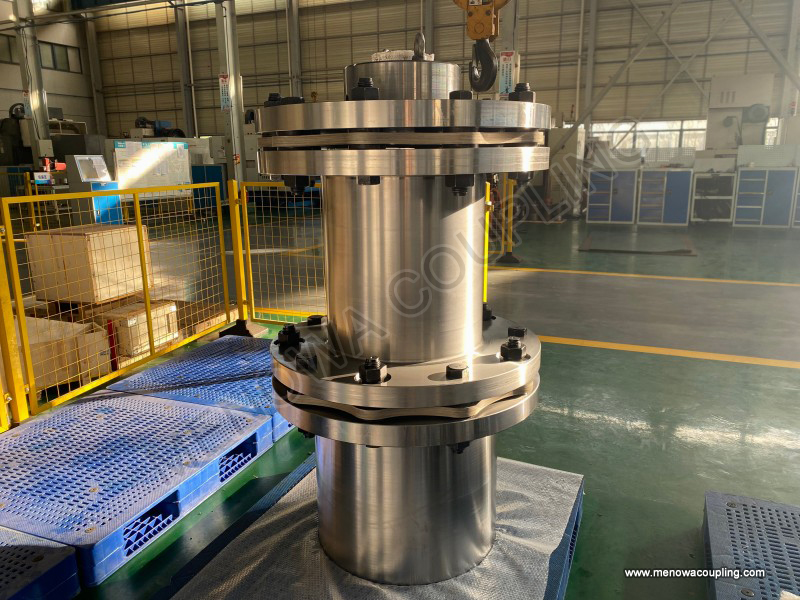
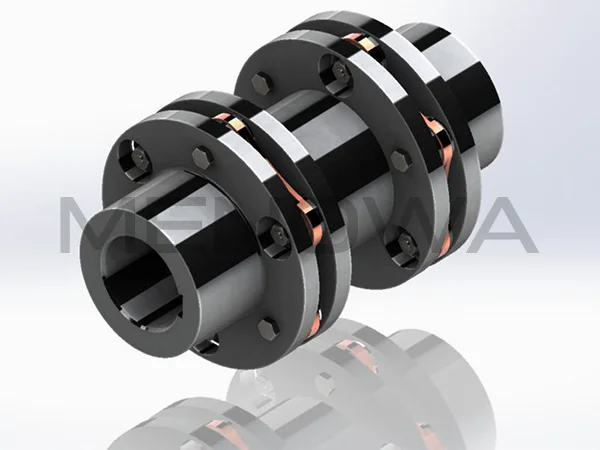
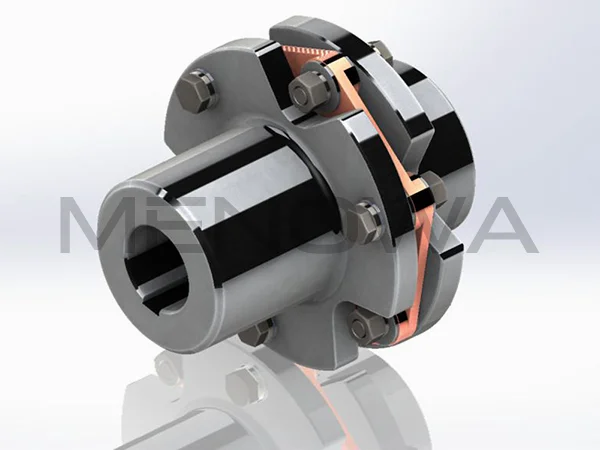
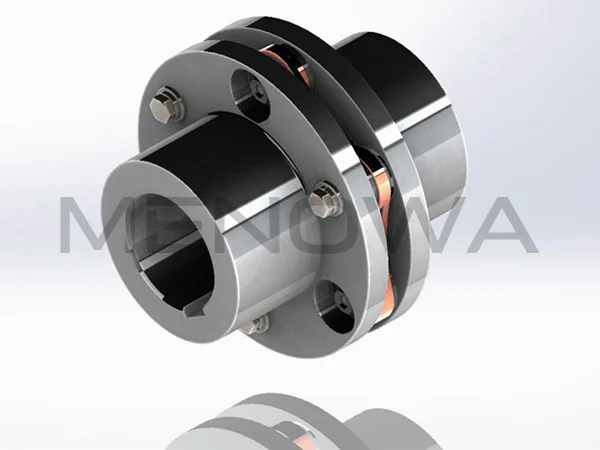
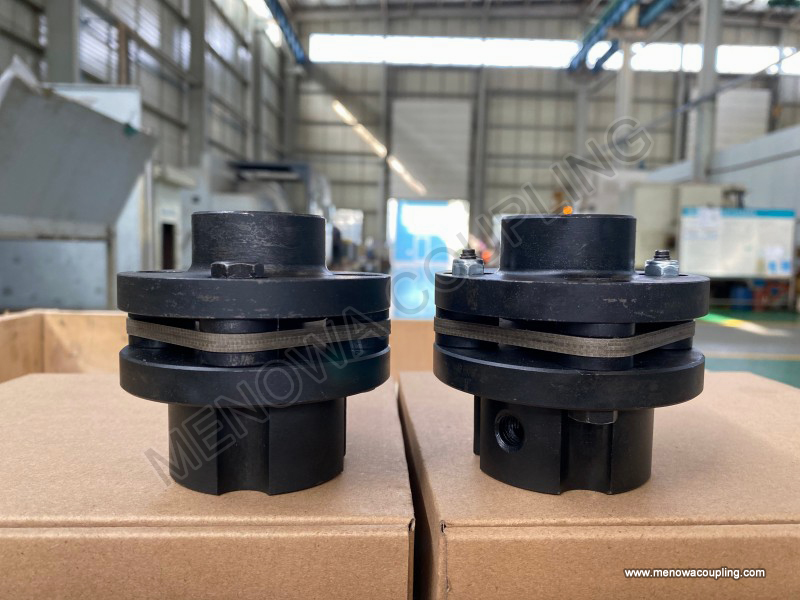
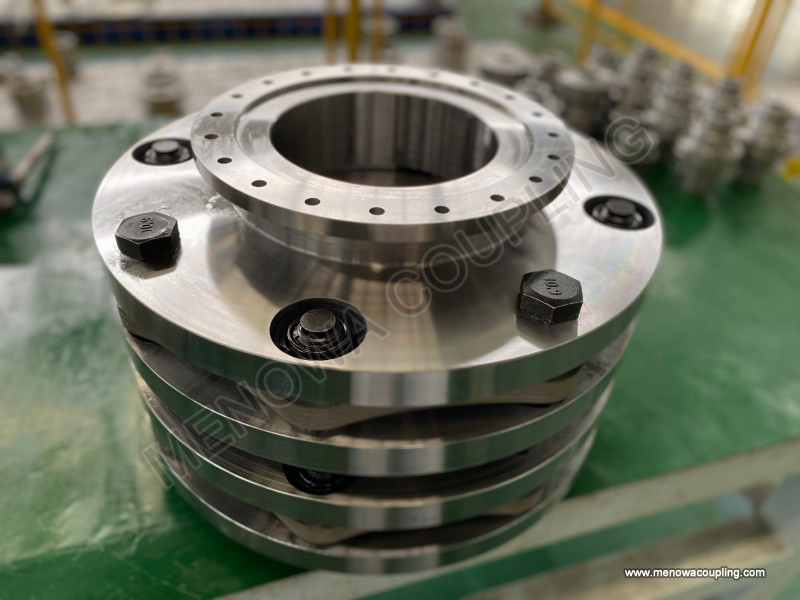
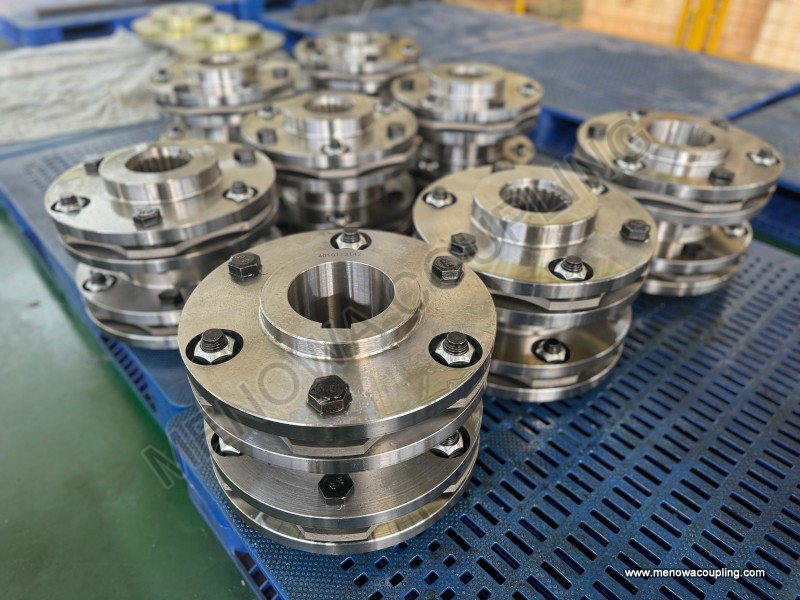
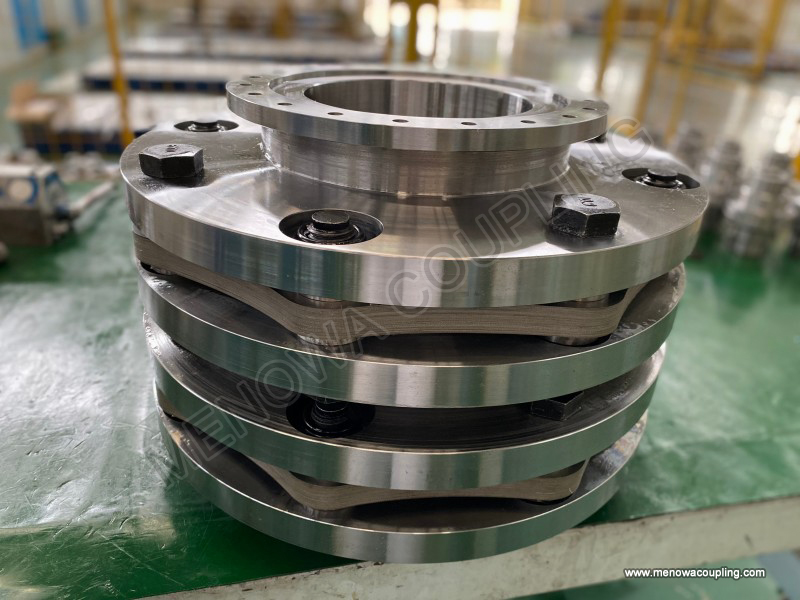
The diaphragm pack is the heart of a flexible diaphragm coupling, serving as the primary elastic element that enables both torque transmission and displacement compensation. Composed of multiple thin, flat, and flexible plates—typically stacked together to enhance strength and flexibility—the diaphragm pack is designed to deform elastically when subjected to torque and misalignment, without undergoing permanent damage. The number, thickness, and shape of the diaphragm plates vary depending on the coupling’s intended application, torque capacity, and compensation requirements. Common shapes of diaphragm plates include circular, square, or rectangular with holes or slots, which are strategically positioned to distribute stress evenly and maximize flexibility. The holes or slots also reduce the overall weight of the diaphragm pack while maintaining its structural integrity, allowing for higher rotational speeds without excessive centrifugal force.
The material selection for diaphragm plates is critical, as it directly impacts the coupling’s durability, temperature resistance, corrosion resistance, and torque-carrying capacity. Most diaphragm plates are made from high-strength, corrosion-resistant metals to withstand the harsh conditions often encountered in industrial settings. Stainless steel is one of the most commonly used materials due to its excellent combination of strength, flexibility, and resistance to corrosion and oxidation. It is particularly suitable for applications in chemical, food processing, and marine environments where exposure to moisture, chemicals, or saltwater is common. Alloy steels, such as alloy structural steel, are also used for diaphragm plates in high-torque applications, as they offer superior strength and fatigue resistance compared to standard carbon steel. For specialized applications requiring lightweight or high-temperature resistance, materials like titanium alloy or aluminum alloy may be employed, although these materials are typically more expensive and used only when specific performance requirements justify the cost. The diaphragm plates must undergo precise manufacturing processes, such as laser cutting or electrochemical etching, to ensure uniform thickness, smooth edges, and consistent performance across all plates in the pack.
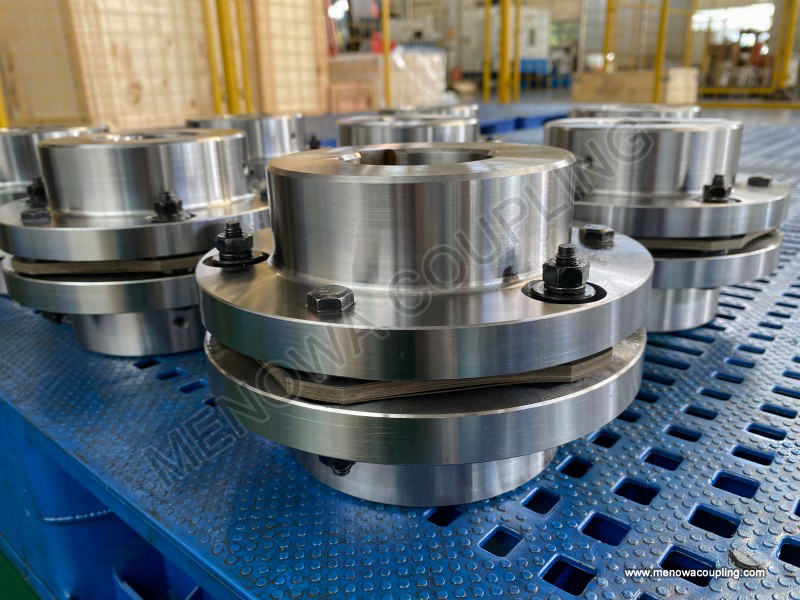
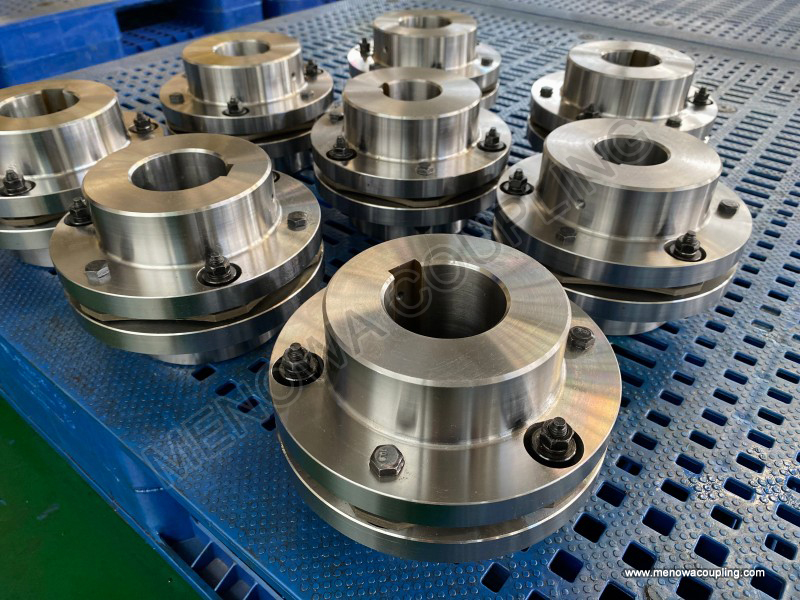
Next to the diaphragm pack, the hub (also known as the shaft sleeve) is another essential component of a flexible diaphragm coupling. The hub is a cylindrical or conical component that connects the coupling to the driving and driven shafts, serving as the interface for torque transfer from the shaft to the diaphragm pack. Each flexible diaphragm coupling typically has two hubs—one attached to the input (driving) shaft and the other to the output (driven) shaft. The design of the hub must ensure a secure and precise fit with the shaft to prevent slippage or misalignment, which could lead to premature wear or failure of the coupling.
Hubs are commonly manufactured from high-strength metals, such as carbon steel, alloy steel, or stainless steel, depending on the application’s torque requirements and environmental conditions. Carbon steel hubs are cost-effective and suitable for general-purpose applications with moderate torque demands, while alloy steel hubs are used for high-torque applications due to their superior strength and toughness. Stainless steel hubs are preferred in corrosive environments to prevent rust and degradation. The inner diameter of the hub is machined to match the diameter of the shaft, and various fitting methods are used to ensure a secure connection. These methods include interference fit (press fit), keyway connection, or set screws. Interference fit involves slightly reducing the inner diameter of the hub so that it expands when heated and contracts onto the shaft as it cools, creating a tight, friction-based connection. Keyway connections use a key inserted into grooves in both the hub and the shaft to prevent relative rotation, while set screws are tightened against the shaft to secure the hub in place. The choice of fitting method depends on the torque capacity, shaft size, and ease of assembly and disassembly required for the application.
To connect the hub to the diaphragm pack, a series of fasteners—typically bolts and nuts—are used. These fasteners play a critical role in ensuring that torque is efficiently transmitted from the hub to the diaphragm pack and that the diaphragm plates remain securely stacked. The fasteners must be made from high-strength materials to withstand the tensile and shear forces generated during operation. High-strength steel bolts, often heat-treated to enhance their strength and fatigue resistance, are the most common choice. In corrosive environments, stainless steel bolts may be used to match the corrosion resistance of the diaphragm plates and hubs.
The design and placement of the fasteners are also important considerations. The bolts are usually inserted through holes in the diaphragm plates and the hub flange, with nuts tightened to a specific torque to ensure a secure connection without over-tightening, which could damage the diaphragm plates. Some couplings use锁紧 washers or nylon-insert lock nuts to prevent the fasteners from loosening due to vibration during operation. The number and spacing of the fasteners are determined by the coupling’s torque capacity and the size of the diaphragm pack; more fasteners are typically used for higher torque applications to distribute the load evenly across the diaphragm plates.
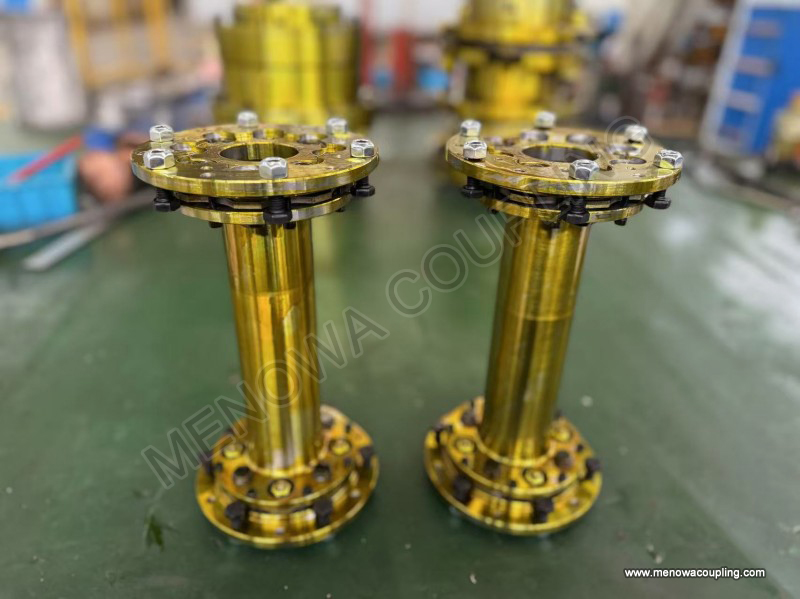
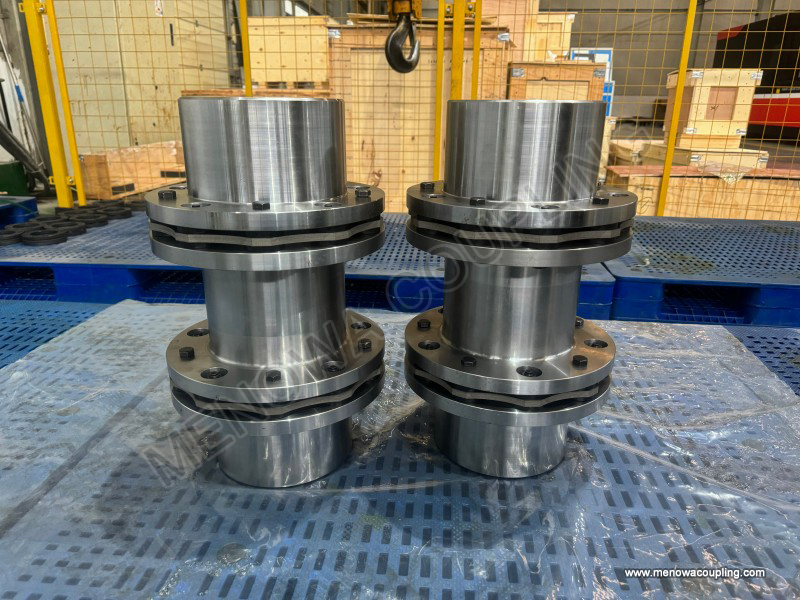
In some flexible diaphragm coupling designs, a spacer (also known as an intermediate sleeve) is used to connect the two diaphragm packs, creating a double-diaphragm coupling. The spacer is a cylindrical component that is attached to the outer ends of the two diaphragm packs, providing additional length to the coupling and allowing for greater flexibility in shaft alignment. The spacer also helps to isolate the driving and driven shafts, reducing the transmission of vibration and noise between them. Spacers are typically made from the same materials as the hubs, such as carbon steel, alloy steel, or stainless steel, and their length can be customized to meet the specific distance between the two shafts in the application.
The use of a spacer offers several advantages, including the ability to compensate for larger axial displacements and the convenience of disassembling the coupling without moving the connected equipment. For example, in applications where the driving and driven shafts are separated by a significant distance, a spacer allows the coupling to span the gap while maintaining the ability to compensate for misalignments. Additionally, if maintenance is required on one side of the coupling, the spacer can be removed to separate the two shafts without disturbing the other equipment, reducing downtime and maintenance costs.
Another important component of flexible diaphragm couplings is the protective cover (also known as a guard or housing). While not all couplings include a protective cover, it is a common feature in many industrial applications to protect the internal components from external contaminants, such as dust, dirt, moisture, and debris. The protective cover also helps to prevent accidental contact with the rotating components of the coupling, enhancing workplace safety. Protective covers are typically made from lightweight materials, such as aluminum, steel, or engineering plastics, and are designed to be easily removed for maintenance and inspection.
The design of the protective cover must allow for the coupling’s flexibility and movement, ensuring that it does not restrict the diaphragm pack’s elastic deformation or the coupling’s ability to compensate for misalignments. Some covers are designed with slotted or flexible sections to accommodate axial and radial movement, while others are fixed in place but sized to provide sufficient clearance for the coupling’s movement. In addition to protection, the cover can also help to reduce noise generated by the coupling during operation, particularly in high-speed applications.
Gaskets or seals are often used in flexible diaphragm couplings to enhance the protection provided by the protective cover. These components are installed between the cover and the hubs or spacer to prevent the ingress of contaminants and the egress of any lubricants (though most flexible diaphragm couplings do not require lubrication). Gaskets are typically made from elastic materials, such as rubber, silicone, or cork, which can conform to the shape of the mating surfaces and create a tight seal. Seals, such as O-rings or lip seals, are used in applications where a more robust seal is required, such as in wet or dusty environments.
While flexible diaphragm couplings are generally maintenance-free due to their lack of moving parts that require lubrication, the inclusion of gaskets and seals helps to extend their service life by protecting the internal components from damage caused by contaminants. Regular inspection of the gaskets and seals is recommended to ensure they remain intact and effective, as worn or damaged seals can lead to premature failure of the coupling.
The interaction between all these components is what enables a flexible diaphragm coupling to perform its intended function effectively. When the driving shaft rotates, it transmits torque to the hub, which in turn transfers the torque to the diaphragm pack via the fasteners. The diaphragm pack deforms elastically to compensate for any misalignments between the driving and driven shafts, ensuring that the torque is transmitted smoothly to the driven hub and ultimately to the driven shaft. The spacer (if present) helps to distribute the torque evenly across the two diaphragm packs and provides additional flexibility, while the protective cover and seals protect the internal components from external damage.
The performance of a flexible diaphragm coupling is influenced by several factors related to its components, including the material and design of the diaphragm plates, the strength of the hubs and fasteners, the length of the spacer (if used), and the effectiveness of the protective cover and seals. For example, diaphragm plates made from high-strength, corrosion-resistant materials will have a longer service life in harsh environments, while hubs with a secure fit to the shaft will prevent slippage and ensure efficient torque transmission. The number and thickness of the diaphragm plates will determine the coupling’s torque capacity and flexibility, with more plates typically providing higher torque capacity but lower flexibility, and thinner plates offering greater flexibility but lower torque capacity.
In addition to the core components mentioned above, some flexible diaphragm couplings may include additional features or components to enhance their performance for specific applications. For example, in high-speed applications, the coupling may be balanced to reduce vibration and ensure smooth operation. Balancing involves removing material from specific areas of the hubs or spacer to ensure that the coupling rotates evenly, minimizing centrifugal force and reducing wear on the connected equipment. In applications where precise torque control is required, torque limiters may be integrated into the coupling to prevent damage to the connected equipment in the event of overload.
The selection of the appropriate components for a flexible diaphragm coupling depends on the specific requirements of the application, including torque capacity, rotational speed, misalignment compensation needs, environmental conditions, and space constraints. For example, in a chemical processing plant where corrosion is a concern, the coupling would likely use stainless steel diaphragm plates, hubs, and fasteners, along with a protective cover and robust seals to prevent chemical exposure. In a high-torque industrial application, such as a mining or heavy machinery application, alloy steel hubs and diaphragm plates would be preferred to handle the high loads. In a precision application, such as a CNC machine tool, a coupling with a spacer and balanced components would be used to ensure accurate torque transmission and minimal vibration.
Proper installation and maintenance of the components are also essential to ensure the long-term performance and reliability of the flexible diaphragm coupling. During installation, the hubs must be properly aligned with the shafts to minimize initial misalignment, which can cause excessive stress on the diaphragm plates and lead to premature failure. The fasteners must be tightened to the recommended torque to ensure a secure connection, and the protective cover and seals must be properly installed to provide effective protection. Regular inspection of the coupling components, including the diaphragm plates, hubs, fasteners, spacer (if present), and seals, is recommended to identify any signs of wear, damage, or loosening. Damaged or worn components should be replaced promptly to prevent further damage to the coupling or the connected equipment.
In summary, a flexible diaphragm coupling is a complex assembly of interconnected components, each of which plays a critical role in its overall performance. The diaphragm pack, hubs, fasteners, spacer (if used), protective cover, and seals work together to transmit torque efficiently, compensate for misalignments, and protect the coupling from external damage. The material and design of each component are carefully selected based on the application’s requirements, ensuring that the coupling can withstand the operating conditions and perform reliably over its service life. By understanding the functions and characteristics of these components, engineers and maintenance personnel can select, install, and maintain flexible diaphragm couplings effectively, optimizing their performance and extending their service life in a wide range of industrial applications.
The versatility of flexible diaphragm couplings stems from the flexibility and adaptability of their components, allowing them to be used in a diverse range of industries, including manufacturing, automotive, aerospace, chemical, food processing, and energy. In each of these industries, the components of the coupling are tailored to meet the specific demands of the application, whether it is high torque, high speed, corrosion resistance, or precise alignment. As industrial technology continues to advance, the design and materials of flexible diaphragm coupling components are also evolving, with new materials and manufacturing processes being developed to enhance performance, reduce weight, and extend service life. This ongoing innovation ensures that flexible diaphragm couplings will remain a critical component in modern industrial power transmission systems for years to come.
Post Date: May 19, 2026
https://www.menowacoupling.com/china-coupling/components-of-flexible-diaphragm-coupling.html
Products
Tags
Related Articles
Characteristics of Flexible Diaphragm Coupling
A flexible diaphragm coupling is a high-performance flexible coupling that uses metal elastic elements to connect two rotating shafts in industrial machinery, enabling efficient torque transmission while accommodating various types of misalignment between the shafts. Unlike many other coupling types that rely on rubber …What is Shim Pack Coupling
In the vast and interconnected field of mechanical power transmission systems, the reliable connection between rotating shafts stands as one of the most foundational and functionally critical elements for the stable operation of all types of industrial machinery and mechanical equipment. Every rotating mechanical device…Types of Flexible Diaphragm Coupling
Types of Flexible Diaphragm CouplingFlexible diaphragm couplings are essential mechanical transmission components designed to connect two rotating shafts while compensating for various forms of shaft misalignment, absorbing vibration, and ensuring precise and efficient torque transmission in mechanical systems. Unlike r…Flexible Diaphragm Coupling Price
In the realm of industrial power transmission, flexible diaphragm couplings stand out as a critical component, valued for their ability to connect two rotating shafts while compensating for misalignments, absorbing minor vibrations, and ensuring efficient torque transfer. As businesses across various industries—from ma…Size Chart of Flexible Diaphragm Coupling
The size chart of flexible diaphragm coupling is an essential reference tool for engineers, procurement personnel, and maintenance technicians in various industrial fields, as it provides precise dimensional parameters and matching guidelines to ensure the coupling can perfectly adapt to different equipment and working …Types of Shim Pack Coupling
Shim pack couplings stand as a vital category of metal flexible transmission components widely applied in modern industrial mechanical shaft connection systems, serving the core purpose of stable torque transmission between driving and driven equipment while effectively absorbing and compensating for various minor misal…
 WeChat
 WhatsApp