Types of Shim Pack Coupling
Shim pack couplings stand as a vital category of metal flexible transmission components widely applied in modern industrial mechanical shaft connection systems, serving the core purpose of stable torque transmission between driving and driven equipment while effectively absorbing and compensating for various minor misalignments and positional deviations that inevitably occur during equipment operation and installation. Unlike traditional rubber flexible couplings that rely on the elastic deformation of polymer materials for buffering and displacement compensation, shim pack couplings depend entirely on the controlled elastic deformation and relative micro-movement of precision-stacked thin metal shim sets to complete power transmission, featuring excellent structural stability, durable fatigue resistance, and reliable performance adaptation in complex and harsh working environments. These couplings are widely deployed in core transmission links such as industrial production processing equipment, power generation supporting facilities, chemical process transmission systems, metallurgical rolling machinery, and water supply and drainage pump sets, where stable long-term operation and precise power transmission synchronization are basic operational demands. With the continuous upgrading of industrial manufacturing standards and the increasing requirements for mechanical transmission accuracy and operational stability, different structural forms of shim pack couplings have been derived and optimized according to varying installation space constraints, misalignment compensation demands, torque transmission ranges, and operating speed conditions. Each type of shim pack coupling has unique structural design characteristics, distinct performance advantages, and targeted application scenarios, and a clear understanding of the classification differences and functional characteristics of each type is essential for mechanical design engineers and equipment maintenance personnel to select suitable supporting transmission components, ensure the efficient and stable operation of mechanical systems, and extend the overall service life of equipment shafting structures.
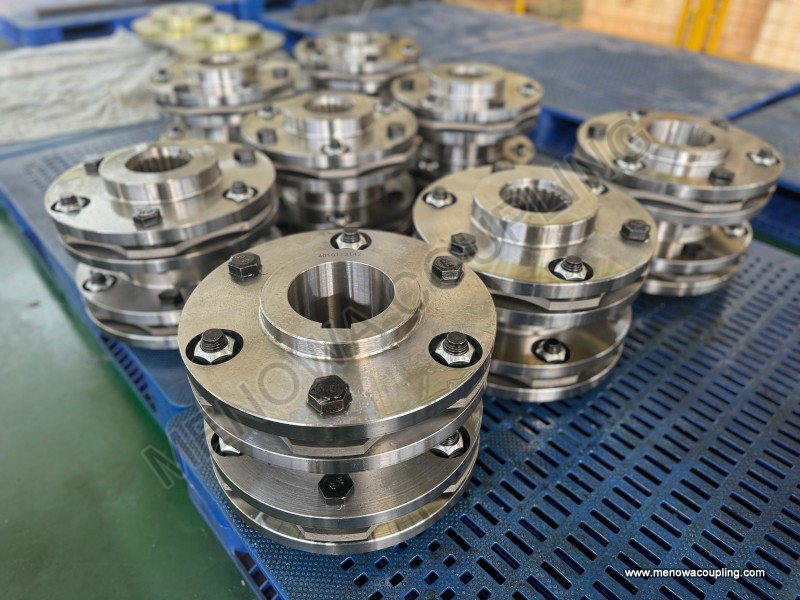
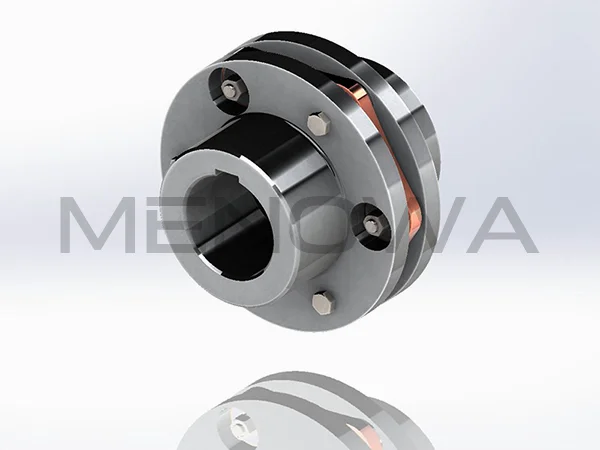
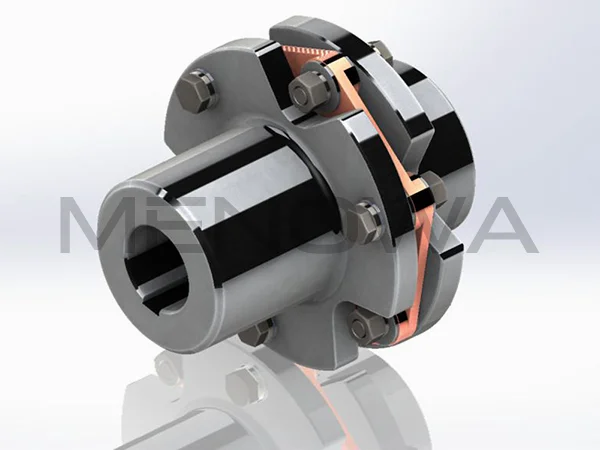
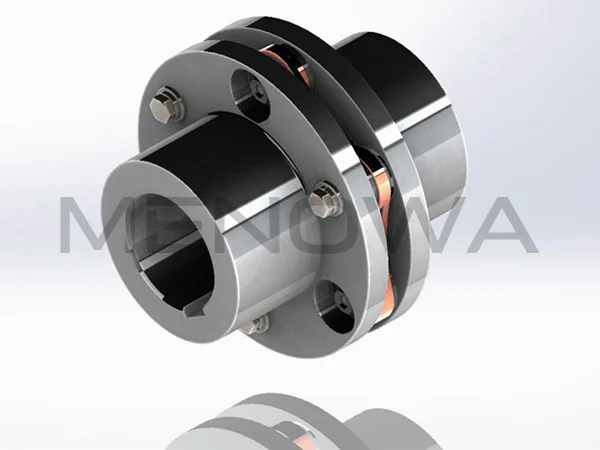
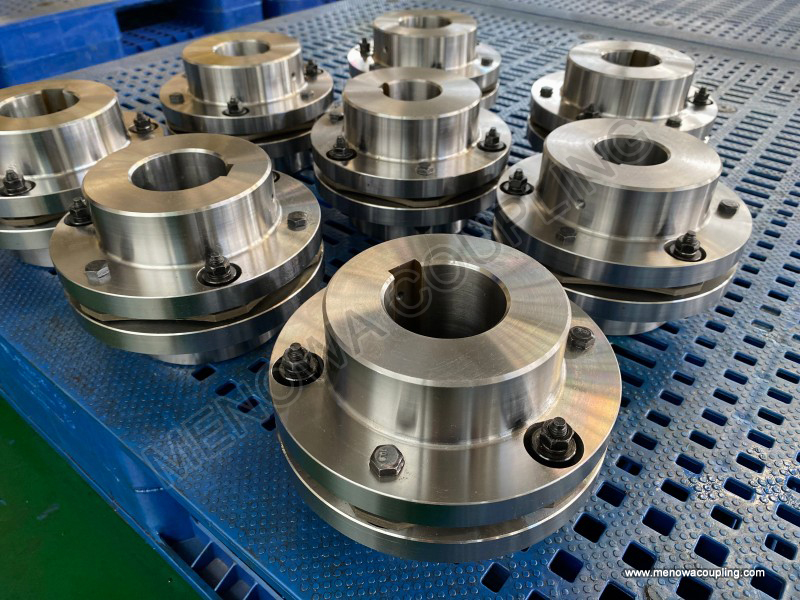
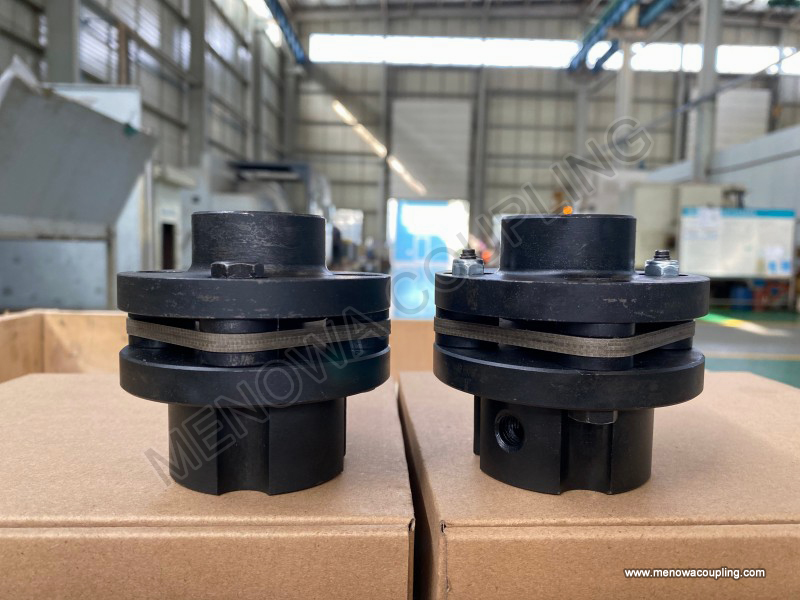
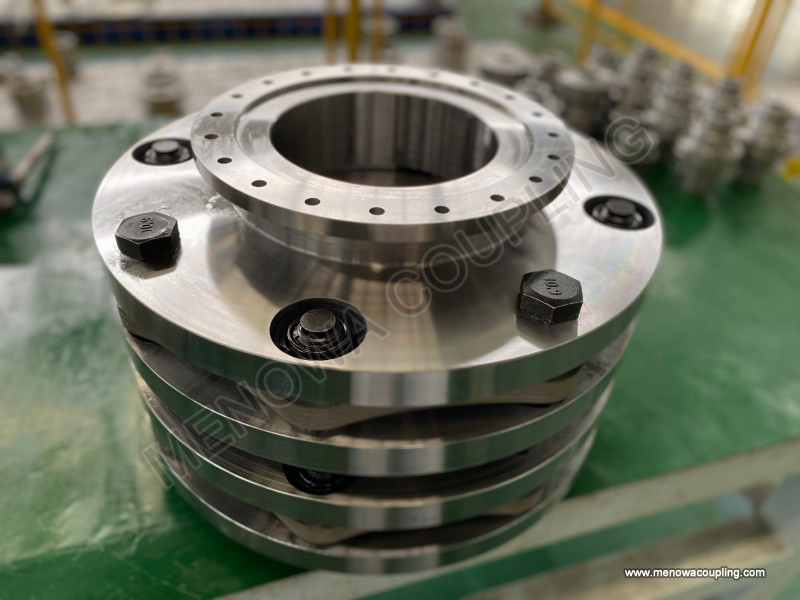
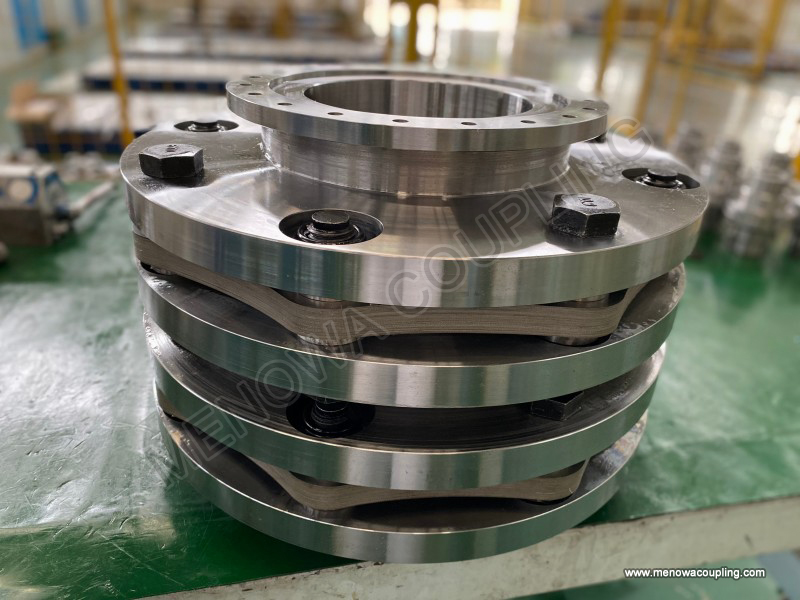
The most fundamental and widely adopted classification standard for shim pack couplings is based on the structural combination form of the metal shim assembly and the number of flexible deformation units, which divides the entire product series into single-flex shim pack couplings and double-flex shim pack couplings. This core classification directly determines the misalignment compensation capacity, axial installation dimension, torsional rigidity, and operational adaptability of each coupling type, forming the basic selection benchmark for most conventional industrial transmission occasions. Single-flex shim pack couplings represent the most basic structural form in the entire shim pack coupling family, adopting a simple and compact integrated design structure where only one set of precision-laminated metal shim packs is used to connect the two hubs on the driving side and the driven side respectively. The overall structural composition of this coupling type is relatively simple, with fewer matching parts, no intermediate connecting shaft or auxiliary transition structure, and all functional components are highly integrated within a small axial installation space. The metal shim pack in single-flex shim pack couplings is fixed and locked with the driving hub and driven hub through high-strength fastening bolts, and torque is directly transmitted from the driving shaft to the shim pack via the fastening structure, then to the driven hub and the connected driven shaft through the elastic deformation of the shims themselves. During the entire power transmission process, the thin metal shims produce tiny and controllable elastic bending and telescopic deformation under the action of torque and shafting displacement, which can effectively offset small angular misalignment and minor axial displacement generated by installation errors or thermal expansion and contraction of equipment during operation. Due to the single-group shim flexible structure design, the torsional rigidity of single-flex shim pack couplings maintains a stable and balanced level, which can ensure high synchronization accuracy during torque transmission and avoid excessive torsional vibration and power transmission lag during equipment startup, shutdown, and load fluctuation.
In actual industrial application scenarios, single-flex shim pack couplings are mainly suitable for mechanical transmission occasions with limited installation axial space, low comprehensive misalignment requirements of shafting, stable operating load, and medium and low torque transmission demands. Many small and medium-sized industrial process pumps, conventional fan and blower equipment, general mechanical reduction transmission devices, and light-duty conveyor transmission systems often adopt this type of shim pack coupling for shaft connection and power matching. The prominent structural advantages of single-flex shim pack couplings lie in their compact overall layout, light weight, convenient on-site installation and disassembly operations, and low daily maintenance workload after long-term operation. Since the structure does not contain any easily worn non-metal vulnerable parts and the metal shim group has strong fatigue resistance and corrosion resistance under conventional working conditions, this type of coupling can maintain stable working performance for a long time in continuous operating state without frequent shutdown inspection and parts replacement, reducing the overall operational maintenance cost of mechanical equipment. However, it is necessary to clearly recognize the inherent performance limitations of single-flex shim pack couplings in practical use. Affected by the single-group flexible shim structure, this coupling type has relatively weak compensation capacity for parallel radial misalignment between shafts, and cannot adapt to working conditions with large installation position deviation or severe shafting vibration and alternating load impact. If used beyond the applicable misalignment range, it will easily cause excessive local stress on the metal shims, accelerate fatigue deformation and aging damage of the shim group, lead to increased vibration and noise during equipment operation, and even affect the normal service life of the connected driving and driven equipment bearings and shafting components.
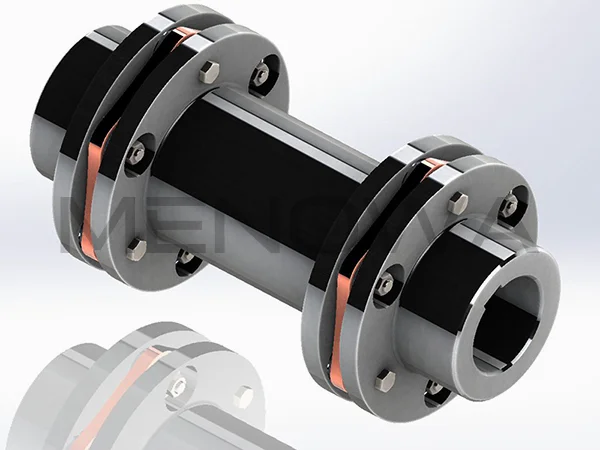
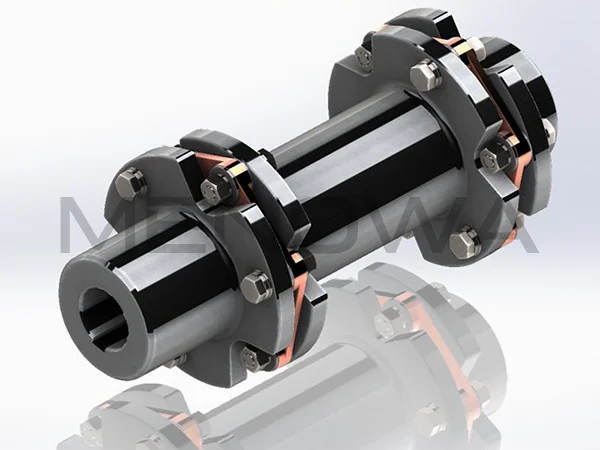
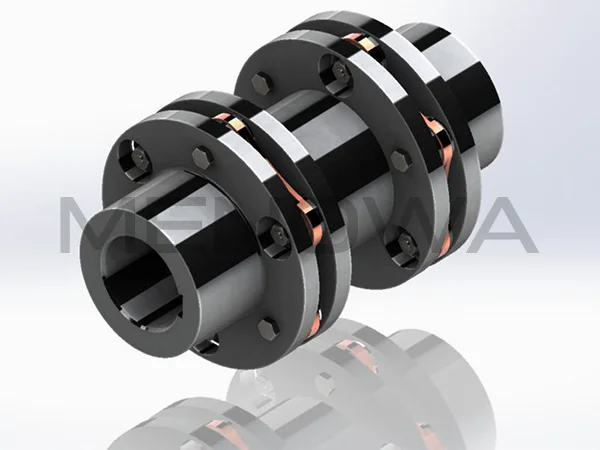
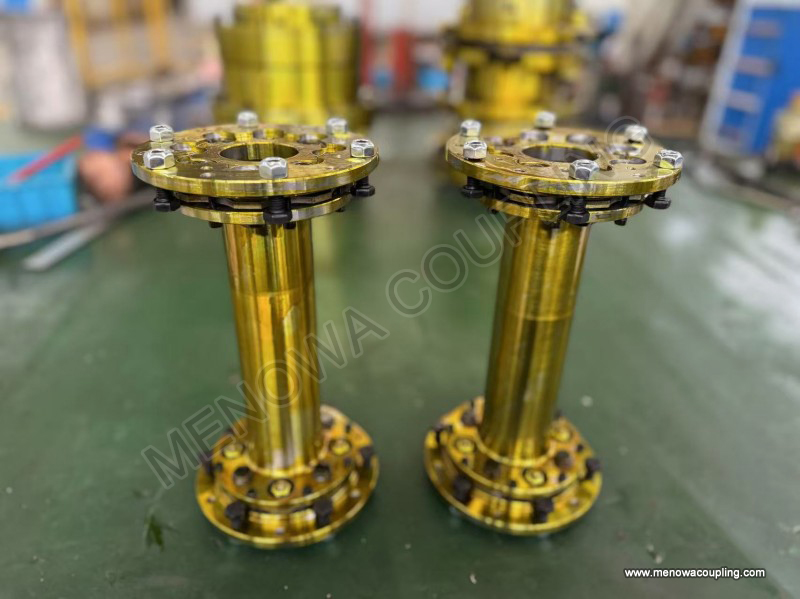
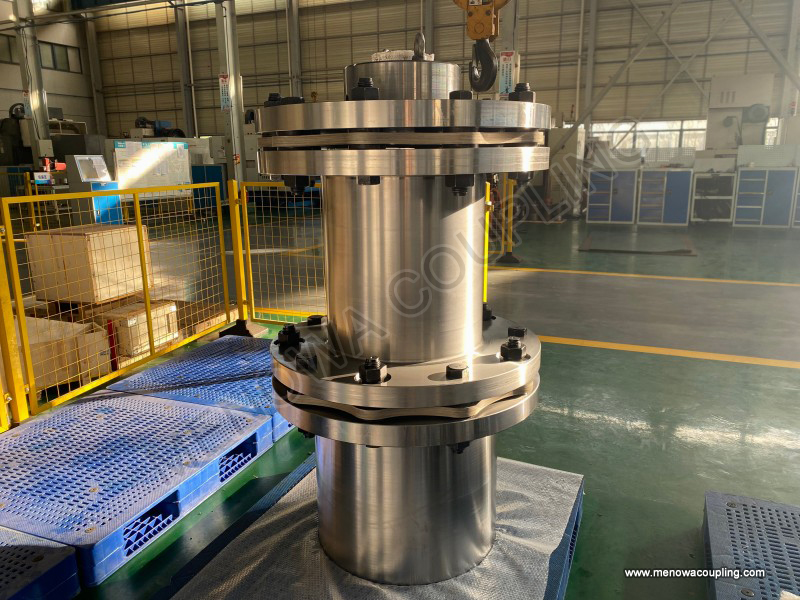
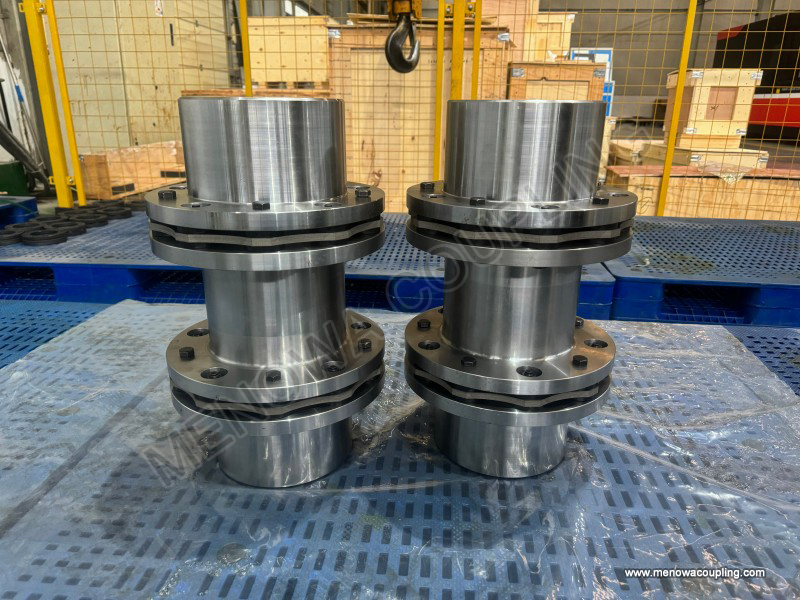
Different from the structural design of single-flex products, double-flex shim pack couplings adopt a dual-group shim pack flexible structure configuration, equipped with two independent precision-laminated metal shim assemblies, and a special intermediate connecting sleeve or intermediate shaft structure is arranged between the two sets of shim packs to connect and transition the overall transmission structure. The two sets of shim packs are respectively fixed to the driving hub, intermediate connecting component, and driven hub through high-strength bolt fastening structures, forming a double-flexible deformation transmission structure with front and rear independent compensation functions. When torque is transmitted, the two sets of metal shim packs can produce synchronous and coordinated elastic deformation and micro relative movement according to the actual misalignment state of the driving and driven shafts. The ingenious structural design enables double-flex shim pack couplings to comprehensively compensate for various complex misalignment deviations generated in the operation of mechanical shafting, including angular misalignment, axial displacement, and parallel radial misalignment that cannot be effectively adapted by single-flex structures. The intermediate connecting sleeve or intermediate shaft structure between the two sets of shim packs can effectively isolate the vibration and impact generated by the load fluctuation of a single shafting, disperse the stress concentration caused by shafting misalignment, and make the torque transmission process more stable and uniform. In terms of torsional rigidity performance, double-flex shim pack couplings can maintain stable overall torsional transmission performance while possessing stronger displacement adaptability, and will not cause obvious torque transmission loss or synchronization accuracy reduction due to the increase of flexible deformation units.
Double-flex shim pack couplings are widely used in industrial transmission scenarios with large shafting installation distance, complex working conditions, large comprehensive misalignment compensation demand, high operating speed, and high torque transmission requirements. Large chemical process pump units, high-speed power transmission equipment, metallurgical heavy-duty rolling transmission systems, energy storage power generation supporting transmission shafting, and long-distance mechanical power transmission devices are all typical application fields for this type of coupling. In actual industrial production, many mechanical equipment will produce obvious thermal expansion and contraction displacement after long-term continuous high-temperature operation, and the foundation of the unit will also have slight settlement and positional deviation after years of operation, resulting in multiple types of comprehensive misalignment between the driving shaft and the driven shaft. Double-flex shim pack couplings can well adapt to these complex variable working conditions, relying on the coordinated deformation of the two sets of shim packs to offset various positional deviations, ensure continuous and stable power transmission of the equipment, and avoid equipment failure and shutdown maintenance caused by shafting misalignment. Although the overall axial installation size of double-flex shim pack couplings is slightly larger than that of single-flex products, and the structural composition is relatively more complex with a slight increase in installation and debugging difficulty, the excellent comprehensive compensation performance and operational stability make this type of coupling have higher applicability and practicability in high-demand industrial production scenarios.
In addition to the core classification based on the number of flexible shim sets, shim pack couplings can also be divided into keyless connection shim pack couplings and keyed connection shim pack couplings according to different shaft and hub connection and fixing methods, which is also an important classification dimension affecting the installation convenience and transmission stability of the coupling. Keyed connection shim pack couplings adopt the traditional flat key or spline connection mode between the hub and the connecting shaft, relying on the mutual cooperation between the key and the keyway to realize torque transmission and circumferential fixation. This connection form has a simple and mature matching process, low requirements for shaft and hub processing precision, convenient on-site assembly and disassembly, and is suitable for most conventional general industrial transmission occasions. The structural matching of keyed connection shim pack couplings is highly compatible with the conventional shaft processing standards of mechanical equipment, and replacement and maintenance can be completed quickly in subsequent equipment maintenance work. However, due to the existence of assembly gaps between the key and the keyway, slight circumferential rotation deviation may occur during equipment frequent startup, shutdown, and load sudden change, resulting in minor transmission vibration and impact after long-term operation.
Keyless connection shim pack couplings, on the other hand, adopt an expansion sleeve interference fit connection structure, with no keyway processing required between the hub and the connecting shaft, relying on the elastic expansion and contraction of the high-precision expansion sleeve to realize close interference fit and friction locking fixation between the hub and the shaft. Torque transmission is completed through the friction force between the contact surfaces, with no assembly gap in the circumferential direction, realizing gapless torque transmission between the driving and driven shafts. This connection method makes keyless shim pack couplings have higher transmission synchronization accuracy, better anti-loosening performance, and stronger adaptability to frequent forward and reverse rotation and sudden load change working conditions. During operation, there is no circumferential impact and vibration caused by keyway gap collision, which can effectively reduce the vibration and noise of mechanical equipment operation and extend the service life of shafting and bearing components. Keyless connection shim pack couplings are mostly used in high-precision mechanical transmission occasions, high-speed rotating equipment, and transmission systems with frequent load changes and forward and reverse rotation requirements, providing more stable and accurate power transmission guarantee for high-standard mechanical operation.
Another practical classification method for shim pack couplings is based on the structural integration degree, dividing them into integral laminated shim pack couplings and combined assembled shim pack couplings. Integral laminated shim pack couplings adopt an integrated stamping and forming process for the metal shim group, with multiple thin metal shims stacked and fixed into an inseparable integrated structure through professional processing technology. The shim group has high overall structural rigidity and uniform stress distribution during operation, good fatigue resistance, and stable long-term use performance, not easy to produce loose displacement between single shims. This type of coupling structure is neat and compact, suitable for high-speed, stable load, and small vibration conventional working conditions, and can maintain consistent transmission performance for a long time. Combined assembled shim pack couplings adopt a split assembly design for the metal shim group, and the number of stacked shims can be appropriately increased or decreased according to the actual torque transmission demand and misalignment compensation range of the equipment. The flexible deformation performance and torque bearing capacity of the coupling can be adjusted by changing the number and thickness of the assembled shims, with strong structural adjustability and flexible application range. This combined structural design makes the assembled shim pack couplings more suitable for special working conditions with variable load and changing transmission demands, and later performance adjustment and maintenance and replacement of single shims are more convenient, without replacing the entire coupling assembly.
In the actual selection and application process of shim pack couplings, mechanical design and maintenance personnel need to comprehensively consider multiple key factors such as equipment installation space size, shafting misalignment degree, operating speed range, torque transmission demand, load stability, and connection fixing form, and reasonably select the appropriate type of shim pack coupling according to the actual working conditions of mechanical transmission. It is not advisable to blindly select couplings with excessive compensation performance or overly simplified structure, as unreasonable selection will not only fail to give full play to the transmission advantages of shim pack couplings but also may cause adverse effects such as increased equipment operation vibration, accelerated component wear, and shortened overall service life. Each type of shim pack coupling has its own unique structural design advantages and targeted applicable working condition range. Only by fully combining the structural characteristics and performance parameters of different types of couplings with the actual operation demands of mechanical equipment can the stability, efficiency, and durability of the mechanical shafting transmission system be truly guaranteed, creating a reliable basic guarantee for the long-term stable operation of industrial mechanical equipment.
Post Date: Apr 24, 2026
https://www.menowacoupling.com/china-coupling/types-of-shim-pack-coupling.html
Products
Tags
Related Articles
Types of Diaphragm Coupling
Diaphragm couplings stand as a vital category of flexible metal couplings widely utilized in modern mechanical power transmission systems, designed to connect driving and driven shafts while delivering stable torque transfer and accommodating various forms of shaft misalignment through the elastic deformation of metal d…Structure of Flexible Diaphragm Coupling
Flexible diaphragm coupling serves as a vital mechanical transmission component widely applied in high-precision and high-speed mechanical transmission systems, relying on elastic deformation of metal diaphragm components to realize torque transmission and shaft misalignment compensation. Different from traditional flex…Coaxiality of Flexible Diaphragm Coupling
Coaxiality is a critical geometric parameter that directly determines the performance, reliability, and service life of flexible diaphragm couplings. As a high-performance flexible coupling widely used in various industrial fields, the flexible diaphragm coupling relies on the elastic deformation of the diaphragm to com…Flexible Diaphragm Coupling Supplier
In the realm of mechanical power transmission, flexible diaphragm couplings stand out as a critical component that ensures efficient, reliable, and precise torque transfer between rotating shafts. As a dedicated supplier of these essential mechanical parts, we focus on delivering high-quality flexible diaphragm coupling…Characteristics of Flexible Diaphragm Coupling
A flexible diaphragm coupling is a high-performance flexible coupling that uses metal elastic elements to connect two rotating shafts in industrial machinery, enabling efficient torque transmission while accommodating various types of misalignment between the shafts. Unlike many other coupling types that rely on rubber …What is Shim Pack Coupling
In the vast and interconnected field of mechanical power transmission systems, the reliable connection between rotating shafts stands as one of the most foundational and functionally critical elements for the stable operation of all types of industrial machinery and mechanical equipment. Every rotating mechanical device…
 WeChat
 WhatsApp