Working Principle of Grid Spring Coupling
In the complex and dynamic field of mechanical power transmission, couplings serve as the critical link between driving and driven shafts, ensuring the smooth and efficient transfer of torque while accommodating inevitable misalignments and mitigating operational stresses. Among the diverse range of coupling types available, the grid spring coupling stands out for its unique combination of flexibility, durability, and shock absorption capabilities, making it a preferred choice in numerous industrial applications. Unlike rigid couplings that require precise alignment and offer no room for deflection, grid spring couplings leverage the elastic properties of a grid-shaped spring element to bridge the gap between shafts, absorbing vibrations, compensating for misalignments, and protecting connected equipment from damage. To fully understand the operational efficiency and functional advantages of this coupling type, it is essential to delve into its structural components, working mechanism, performance characteristics, and the underlying principles that govern its operation.
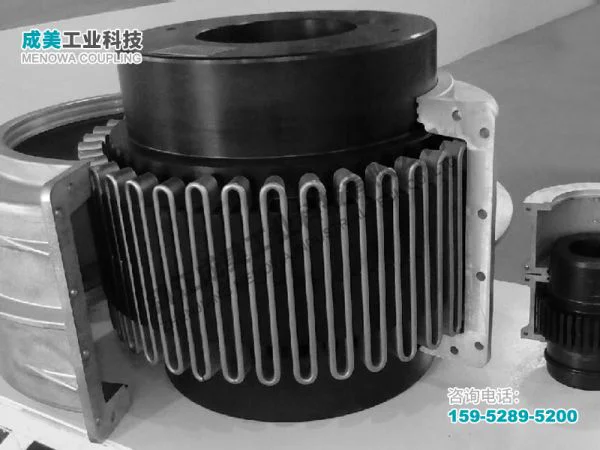
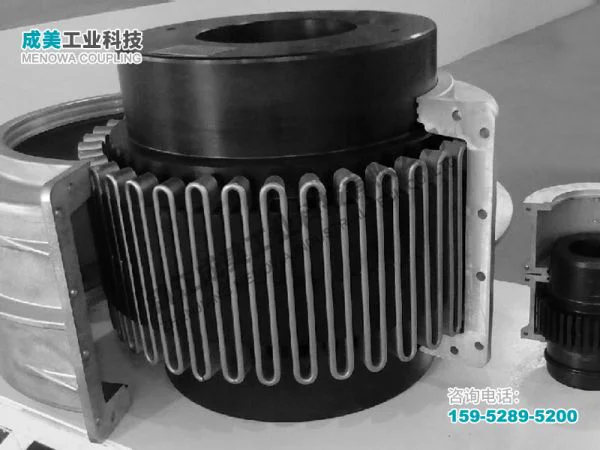
At the core of a grid spring coupling lies a simple yet ingeniously designed structure that works in harmony to transmit torque while providing the necessary flexibility. The primary components of a typical grid spring coupling include two hubs, a grid spring, and a protective cover. Each hub is precision-machined to feature a series of evenly spaced teeth or grooves along its circumference, which are specifically shaped to accommodate the grid spring. The hubs are designed to be mounted on the driving and driven shafts, respectively, using standard fastening methods such as keyways, set screws, or hydraulic fits, ensuring a secure and slip-free connection. The grid spring, which is the heart of the coupling, is a flexible element typically made from high-strength alloy steel that has undergone specialized heat treatment to enhance its elasticity, fatigue resistance, and overall durability. The spring is formed into a grid-like pattern, often resembling a serpentine or wavy shape, which allows it to deform elastically under load and return to its original shape once the load is removed. The protective cover, usually made from cast iron or steel, encloses the grid spring and the toothed portions of the hubs, serving to prevent the ingress of dust, debris, and moisture, which could otherwise degrade the coupling’s performance and lifespan. Additionally, the cover helps to contain any lubricant used to reduce friction between the grid spring and the hub teeth, ensuring smooth operation and minimizing wear.
The working principle of a grid spring coupling revolves around the transfer of torque through the elastic deformation of the grid spring, which simultaneously accommodates shaft misalignments and dampens vibrations. When the driving shaft rotates, it imparts rotational force to the corresponding hub, which in turn engages with the grid spring. The teeth on the driving hub exert a tangential force on the grid spring, causing the spring to undergo a controlled elastic deformation. This deformation allows the spring to transmit the torque to the teeth of the driven hub, which then rotates the driven shaft. Unlike rigid couplings, where torque is transferred directly through a solid connection, the grid spring acts as a flexible intermediary, absorbing the shocks and vibrations that occur during operation. This elastic transmission not only protects the connected shafts and equipment from damage but also ensures a smoother and more stable power transfer, even in applications with variable loads or frequent start-stop cycles.
One of the key functional advantages of the grid spring coupling is its ability to compensate for various types of shaft misalignments, which are common in industrial machinery due to manufacturing tolerances, installation errors, thermal expansion, and structural deflection. These misalignments can be categorized into three main types: axial, radial, and angular misalignment. Axial misalignment occurs when the two shafts are offset along their common axis, a situation that may arise due to thermal expansion of the shafts during operation or improper installation. The grid spring, with its flexible structure, can stretch or compress slightly to accommodate this axial movement, ensuring that the torque transfer remains uninterrupted. Radial misalignment, on the other hand, refers to the offset of the two shafts perpendicular to their common axis. This type of misalignment is often caused by bearing wear, shaft bending, or foundation settlement. The grid spring’s ability to bend elastically allows it to bridge the radial gap between the hubs, maintaining a consistent contact with the teeth of both hubs and ensuring efficient torque transmission. Angular misalignment occurs when the two shafts are not perfectly parallel, forming a small angle between their axes. This can happen due to misalignment during installation or structural deformation of the machinery frame. The grid spring’s flexible design enables it to adapt to this angular offset by deforming differently on either side of the coupling, ensuring that the torque is transferred evenly without placing excessive stress on the shafts or bearings.
Vibration damping is another critical aspect of the grid spring coupling’s working principle, as it plays a vital role in protecting sensitive equipment and improving the overall reliability of the transmission system. In many industrial applications, the driving shaft may generate vibrations due to unbalanced rotating parts, irregular load distribution, or the inherent characteristics of the power source. These vibrations, if not dampened, can be transmitted to the driven shaft and the connected equipment, leading to increased wear, noise, and even premature failure. The grid spring acts as a natural vibration damper by virtue of its elastic properties. When vibrations are transmitted to the coupling, the grid spring deforms elastically, absorbing the vibrational energy and converting it into a small amount of heat, which is then dissipated through the coupling’s components. This damping effect reduces the amplitude of the vibrations, preventing them from propagating to the rest of the system. The grid-like structure of the spring enhances this damping capability by providing multiple points of contact with the hub teeth, distributing the vibrational forces evenly and minimizing localized stress concentrations.
The material selection for the grid spring is a critical factor that directly influences the coupling’s performance, durability, and working principle. The grid spring must be made from a material that possesses high elasticity, excellent fatigue resistance, and sufficient strength to withstand the torque and stresses encountered during operation. High-strength alloy steels, such as 60Si2MnA and 50CrVA, are commonly used for this purpose due to their superior mechanical properties. These materials undergo a series of heat treatment processes, including quenching and tempering, to enhance their hardness, toughness, and elastic limit. Quenching involves heating the steel to a high temperature and then rapidly cooling it, which increases its hardness and strength, while tempering reduces brittleness and improves ductility, ensuring that the spring can deform elastically without permanent damage. The surface of the grid spring is often polished or coated to reduce friction and corrosion, further extending its lifespan. The hubs, on the other hand, are typically made from cast iron, steel, or aluminum alloys, depending on the application requirements. Cast iron hubs are preferred for heavy-duty applications due to their high strength and durability, while aluminum hubs are used in lighter applications where weight reduction is a priority.
Lubrication is an essential component of the grid spring coupling’s operation, as it reduces friction between the grid spring and the hub teeth, minimizing wear and ensuring smooth torque transmission. The interaction between the grid spring and the hub teeth during rotation creates sliding friction, which can lead to wear over time if not properly lubricated. A suitable lubricant, such as grease or oil, is applied to the grid spring and the hub teeth to form a thin film that separates the metal surfaces, reducing friction and preventing metal-to-metal contact. The lubricant also helps to dissipate heat generated by friction, preventing overheating and premature failure of the coupling components. The protective cover plays a crucial role in retaining the lubricant and preventing it from leaking out, while also keeping contaminants such as dust and moisture out of the coupling. Regular lubrication and maintenance are necessary to ensure the continued performance of the grid spring coupling, as degraded or contaminated lubricant can lead to increased friction, wear, and ultimately, coupling failure.
The performance characteristics of the grid spring coupling are closely tied to its working principle, making it suitable for a wide range of industrial applications. One of the key performance metrics is torque capacity, which refers to the maximum amount of torque that the coupling can transmit without failure. The torque capacity of a grid spring coupling is determined by the strength of the grid spring material, the design of the spring and hub teeth, and the overall dimensions of the coupling. Grid spring couplings are available in a range of sizes and configurations, with torque capacities ranging from relatively low values for light-duty applications to very high values for heavy-duty industrial machinery. Another important performance characteristic is the coupling’s ability to accommodate misalignments, which is determined by the flexibility of the grid spring. Different designs of grid springs can accommodate varying degrees of axial, radial, and angular misalignment, making the coupling adaptable to different application requirements. Additionally, the damping capacity of the coupling is a critical performance factor, as it determines the coupling’s ability to reduce vibrations and protect connected equipment. The grid spring’s design and material properties directly influence its damping capacity, with stiffer springs providing less damping and more flexible springs offering greater damping.
In practical applications, the grid spring coupling is widely used in various industries, including manufacturing, mining, agriculture, automotive, and aerospace, among others. In manufacturing facilities, it is commonly used to connect motors to pumps, compressors, conveyors, and other machinery, where it provides the necessary flexibility to accommodate misalignments and dampen vibrations. In the mining industry, grid spring couplings are used in heavy-duty equipment such as crushers, grinders, and conveyors, where they must withstand high torque, severe vibrations, and harsh environmental conditions. In agricultural machinery, such as tractors and harvesters, the coupling is used to connect the engine to various implements, providing reliable torque transmission while accommodating the misalignments that occur during operation. In the automotive industry, grid spring couplings are used in drive shafts and other components, where they help to reduce vibrations and improve the overall smoothness of the vehicle’s operation. In aerospace applications, lightweight grid spring couplings are used in aircraft engines and other systems, where they provide reliable torque transmission while minimizing weight and space requirements.
The operational reliability of a grid spring coupling is dependent on proper installation, maintenance, and adherence to the manufacturer’s specifications. During installation, it is essential to ensure that the hubs are correctly mounted on the shafts and that the coupling is properly aligned to minimize initial misalignments. Improper alignment can lead to increased stress on the grid spring and hub teeth, reducing the coupling’s lifespan and performance. Regular maintenance, including lubrication, inspection, and replacement of worn components, is also necessary to ensure the coupling’s continued operation. Inspections should include checking for signs of wear on the grid spring and hub teeth, such as cracks, deformation, or excessive wear, as well as checking the lubricant level and condition. If any worn or damaged components are detected, they should be replaced promptly to prevent further damage to the coupling and connected equipment.
It is important to distinguish the grid spring coupling from other types of elastic couplings, such as jaw couplings, tire couplings, and disc couplings, as each type has its own unique working principle and performance characteristics. Unlike jaw couplings, which use elastomeric elements to transmit torque and dampen vibrations, grid spring couplings use a metal grid spring, which offers higher torque capacity and better durability in harsh environments. Tire couplings, on the other hand, use a rubber or polyurethane tire element, which provides excellent damping but has a lower torque capacity and is more susceptible to damage from oil, chemicals, and high temperatures. Disc couplings use flexible metal discs to transmit torque and accommodate misalignments, offering high precision and low backlash but limited damping capacity. The grid spring coupling strikes a balance between torque capacity, flexibility, damping, and durability, making it a versatile choice for many industrial applications.
In conclusion, the grid spring coupling is a highly efficient and reliable mechanical component that plays a crucial role in power transmission systems. Its working principle, which revolves around the elastic deformation of a grid spring to transmit torque, accommodate misalignments, and dampen vibrations, makes it well-suited for a wide range of industrial applications. The coupling’s simple yet robust structure, combined with its superior performance characteristics, ensures that it can withstand the demands of harsh operating conditions while protecting connected equipment from damage. By understanding the structural components, working mechanism, and performance characteristics of the grid spring coupling, engineers and maintenance professionals can make informed decisions about its selection, installation, and maintenance, ensuring optimal performance and longevity of the transmission system. As industrial machinery continues to evolve, the grid spring coupling will remain a vital component, providing the flexibility and reliability needed to meet the ever-increasing demands of modern industrial applications.
Post Date: May 13, 2026
https://www.menowacoupling.com/china-coupling/working-principle-of-grid-spring-coupling.html
Supply
Related Articles
Grid Spring Coupling Exporter
In the field of industrial power transmission, the role of couplings is irreplaceable. They serve as the critical connection between driving devices and driven equipment, ensuring the stable transfer of torque while compensating for alignment errors and reducing operational vibrations. Among the various types of couplin…Material of Grid Spring Coupling
Grid spring couplings are essential components in mechanical transmission systems, designed to connect two shafts and transmit torque while compensating for axial, radial, and angular misalignments, absorbing vibrations, and reducing shock loads. The performance, reliability, and service life of a grid spring coupling a…Maintenance of Grid Spring Coupling
Grid spring couplings are widely used in various industrial transmission systems, serving as a critical connection between driving and driven shafts to transmit torque while compensating for axial, radial, and angular misalignments. Their unique structure, which relies on grid springs embedded in the tooth grooves of tw…Diagram of Grid Spring Coupling
A grid spring coupling is a versatile mechanical device designed to transmit torque between two rotating shafts while accommodating misalignments, absorbing shock loads, and reducing vibration in various industrial applications. Its unique structural design, which combines rigidity with flexibility, makes it an indispen…Grid Spring Coupling Manufacture
Grid spring couplings are essential mechanical components widely used in industrial power transmission systems, serving as the critical connection between driving and driven shafts to transmit torque while accommodating misalignments and absorbing shocks. The manufacture of grid spring couplings requires precise enginee…Grid Spring Coupling Factory
In the complex ecosystem of industrial machinery, the role of grid spring couplings is often underestimated, yet they are the unsung heroes that ensure the smooth and efficient transmission of power between rotating shafts. These precision components are integral to a wide range of industrial applications, from heavy-du…
 WeChat
 WhatsApp