Specification of Grid Spring Coupling
Grid spring coupling is a crucial flexible connecting component widely used in mechanical transmission systems, designed to transmit torque between two shafts while compensating for relative displacements and absorbing vibrations and shocks. Unlike rigid couplings that require precise alignment between shafts, grid spring couplings utilize the elastic deformation of grid springs to accommodate axial, radial, and angular misalignments, thereby protecting the connected equipment and improving the overall stability and service life of the transmission system. This article provides a comprehensive and detailed specification of grid spring couplings, covering their structural composition, working principle, material selection, performance characteristics, application scenarios, installation methods, maintenance requirements, and safety considerations, aiming to offer a thorough understanding of this essential mechanical component for engineers, technicians, and relevant practitioners.
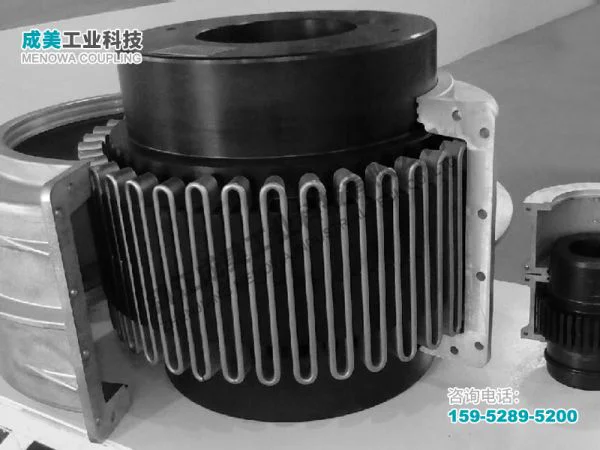
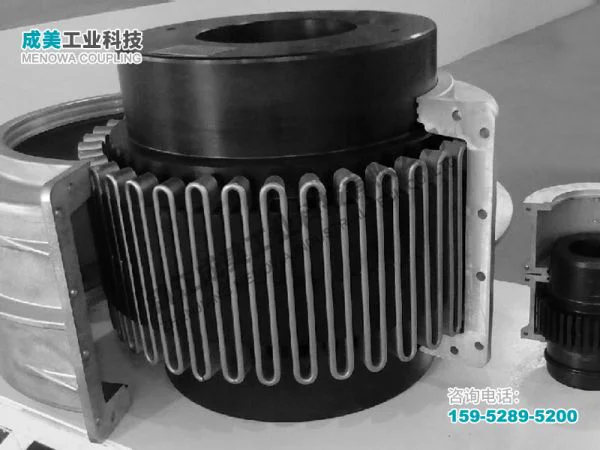
The structural design of a grid spring coupling is relatively compact yet robust, consisting of several key components that work together to achieve efficient torque transmission and displacement compensation. The core components include two hubs, a grid spring, a housing, and sealing elements. The hubs are typically cylindrical in shape, with a bore at the center to connect to the driving and driven shafts respectively. The inner surface of the bore is usually processed with keyways or splines to ensure a secure fit with the shafts, preventing relative rotation between the hub and the shaft during operation. Some hubs may also be designed with set screws or clamping mechanisms to further enhance the connection reliability, especially in applications with high torque or frequent start-stop operations. The grid spring, as the core elastic element of the coupling, is a curved or spiral-shaped component made of high-strength elastic material. Its unique grid structure allows it to deform elastically under torque and displacement, providing both flexibility and load-bearing capacity. The grid spring is installed between the two hubs, with its two ends respectively embedded in the grooves or notches on the hubs, ensuring that torque is transmitted from the driving hub to the driven hub through the spring. The housing, also known as the cover, is a protective component that encloses the grid spring and the connecting parts of the hubs. It is usually made of metal or engineering plastic, with a split design to facilitate installation and maintenance. The housing not only prevents dust, debris, and other external contaminants from entering the internal components, which could cause wear and damage, but also helps to retain lubricating oil, ensuring the smooth operation of the grid spring and reducing friction. Sealing elements, such as O-rings or oil seals, are installed between the housing and the hubs to prevent lubricating oil leakage and further enhance the sealing performance of the coupling.
The working principle of a grid spring coupling is based on the elastic deformation of the grid spring and the mutual cooperation between its components. When the driving shaft rotates, it drives the driving hub to rotate, which in turn exerts a torque on the grid spring embedded in the hub. The grid spring, under the action of the torque, undergoes elastic deformation, and the force is transmitted to the driven hub through the other end of the spring, thereby driving the driven shaft to rotate synchronously. During this process, if there is relative displacement between the driving and driven shafts (such as axial movement, radial offset, or angular deviation), the grid spring can adapt to these displacements through its own elastic deformation without transmitting excessive additional forces to the shafts or the connected equipment. This displacement compensation capability is one of the most significant advantages of grid spring couplings, as it can effectively reduce the impact of installation errors, shaft deformation, and thermal expansion on the transmission system. Additionally, the grid spring has excellent vibration absorption performance. When the transmission system generates vibrations due to unbalanced loads, uneven operation, or other factors, the grid spring can absorb and dissipate the vibration energy through its elastic deformation, reducing the vibration amplitude and preventing the vibrations from being transmitted to other components, thus protecting the motor, reducer, and other key equipment from damage. The damping effect of the grid spring also helps to reduce noise generated during operation, creating a quieter working environment.
Material selection is a critical factor affecting the performance, reliability, and service life of grid spring couplings. Each component of the coupling requires materials with appropriate mechanical properties, wear resistance, corrosion resistance, and elasticity to meet the working requirements of different application scenarios. The hubs are usually made of high-strength carbon steel, alloy steel, or cast iron. Carbon steel, such as 45# steel, is widely used due to its good mechanical properties, high strength, and low cost, making it suitable for general industrial applications with medium torque. Alloy steel, such as 40Cr, 42CrMo, is selected for applications with high torque, high speed, or harsh working conditions, as it has higher strength, toughness, and wear resistance after heat treatment. Cast iron hubs are often used in low-torque, low-speed applications due to their good casting performance and low cost. The grid spring, as the core elastic component, is typically made of high-quality spring steel, such as 65Mn, 50CrVA, or 60Si2MnA. These spring steels have excellent elastic limit, fatigue strength, and toughness, enabling the grid spring to withstand repeated elastic deformation without permanent damage. The surface of the grid spring is usually treated with shot peening, electroplating, or heat treatment to improve its surface hardness, wear resistance, and corrosion resistance, thereby extending its service life. The housing is generally made of carbon steel, aluminum alloy, or engineering plastic. Carbon steel housings are durable and suitable for harsh working environments, while aluminum alloy housings are lightweight and have good heat dissipation performance, making them suitable for high-speed applications. Engineering plastic housings are corrosion-resistant and lightweight, suitable for applications in corrosive environments or where weight reduction is required. Sealing elements are usually made of nitrile rubber, fluorine rubber, or silicone rubber, which have good oil resistance, temperature resistance, and sealing performance, ensuring that the lubricating oil does not leak and external contaminants do not enter.
Grid spring couplings exhibit a series of excellent performance characteristics that make them widely applicable in various mechanical transmission systems. One of the key performance characteristics is their strong displacement compensation capability. They can compensate for axial displacement, radial displacement, and angular displacement between the driving and driven shafts. The axial compensation range is usually between a few millimeters and tens of millimeters, the radial compensation range is generally between 0.1mm and 1mm, and the angular compensation range is between 0.5° and 3°, depending on the model and size of the coupling. This wide range of displacement compensation ensures that the coupling can adapt to various installation errors and shaft deformations, reducing the stress on the shafts and bearings. Another important performance characteristic is their high torque transmission capacity. The torque transmission capacity of grid spring couplings varies with their size, material, and structural design, ranging from a few N·m to several thousand N·m, which can meet the needs of different torque levels in industrial applications. They also have good overload capacity, and can withstand short-term overloads without damage, providing a certain degree of protection for the transmission system. In addition, grid spring couplings have excellent vibration absorption and damping performance. The grid spring can absorb and dissipate vibration energy, reducing the impact of vibrations on the connected equipment, and improving the stability and reliability of the entire system. They also have low noise during operation, as the elastic deformation of the grid spring reduces the friction and impact between components. The transmission efficiency of grid spring couplings is also relatively high, usually above 99%, which means that most of the torque can be transmitted from the driving shaft to the driven shaft without significant energy loss. Moreover, they have a simple structure, easy installation and maintenance, and a long service life, which can reduce the maintenance cost and downtime of the equipment.
Due to their excellent performance characteristics, grid spring couplings are widely used in various industrial fields, including metallurgy, mining, petroleum, chemical, electric power, machinery manufacturing, and transportation. In the metallurgical industry, they are used in rolling mills, converters, continuous casting machines, and other equipment, where they need to transmit large torques and compensate for the displacement caused by high temperature and heavy load. In the mining industry, they are applied in crushers, ball mills, conveyors, and other equipment, which operate under harsh conditions with large vibrations and frequent overloads, and the grid spring couplings can effectively absorb vibrations and withstand overloads, protecting the equipment. In the petroleum and chemical industry, they are used in pumps, compressors, fans, and other equipment, where they need to have good corrosion resistance and sealing performance to adapt to the corrosive working environment. In the electric power industry, they are applied in generators, motors, and other equipment, ensuring stable torque transmission and reducing the impact of vibrations on the power generation system. In the machinery manufacturing industry, they are widely used in various machine tools, reducers, and transmission mechanisms, providing flexible connection and displacement compensation. In the transportation industry, they are used in automotive transmissions, ship propulsion systems, and other equipment, adapting to the dynamic displacement and vibration during operation. In addition, grid spring couplings are also used in some precision machinery and instrumentation, where they need to have high transmission accuracy and low noise to ensure the normal operation of the equipment.
The correct installation of grid spring couplings is crucial to ensure their performance and service life. Before installation, it is necessary to check the coupling components for damage, such as cracks, wear, or deformation, and ensure that all components are clean and free of contaminants. The driving and driven shafts should be checked for coaxiality, and the alignment error should be controlled within the allowable range of the coupling. If the alignment error is too large, it will increase the stress on the grid spring and the shafts, leading to premature wear and damage. The hubs should be installed on the shafts correctly, ensuring that the keyway and key fit tightly, and the set screws or clamping mechanisms should be tightened to prevent relative rotation between the hub and the shaft. The grid spring should be installed between the two hubs correctly, ensuring that both ends of the spring are embedded in the grooves or notches of the hubs securely. The housing should be assembled properly, and the sealing elements should be installed to ensure good sealing performance. After installation, it is necessary to add an appropriate amount of lubricating oil to the coupling. The type and amount of lubricating oil should be selected according to the working conditions of the coupling, such as temperature, speed, and torque. Lubricating oil can reduce friction between the grid spring and the hubs, prevent wear, and improve the service life of the coupling. During the initial operation of the equipment, the coupling should be inspected for abnormal noise, vibration, or temperature rise. If any abnormal situation is found, the operation should be stopped immediately, and the cause should be identified and resolved.
Regular maintenance is essential to ensure the long-term stable operation of grid spring couplings. The maintenance cycle should be determined according to the working conditions of the coupling, such as the operating environment, load, and speed. Generally, the coupling should be inspected every 3 to 6 months. During the inspection, the housing should be opened to check the condition of the grid spring, hubs, and sealing elements. The grid spring should be checked for wear, deformation, or fatigue cracks. If the spring is severely worn or has cracks, it should be replaced in time to avoid failure during operation. The hubs should be checked for wear, corrosion, or looseness, and the set screws or clamping mechanisms should be tightened if necessary. The sealing elements should be checked for aging, damage, or oil leakage, and replaced if necessary. The lubricating oil should be checked regularly, and if the oil is contaminated, deteriorated, or insufficient, it should be replaced or added in time. The type of lubricating oil should not be arbitrarily changed, as different types of lubricating oil may have different properties and may affect the performance of the coupling. In addition, the alignment of the driving and driven shafts should be checked regularly, and the alignment error should be adjusted if it exceeds the allowable range. During maintenance, it is necessary to ensure that all components are cleaned thoroughly, and no contaminants are left inside the coupling. After maintenance, the housing should be reassembled correctly, and the sealing performance should be checked to prevent lubricating oil leakage.
Safety considerations are also an important part of the specification of grid spring couplings. During the operation of the coupling, it is strictly prohibited to open the housing or touch the internal components to avoid personal injury. The coupling should be installed with a protective cover if necessary to prevent accidental contact. Before performing maintenance or replacement of components, the equipment must be shut down, and the power supply must be cut off to ensure that the shafts do not rotate. The replacement of components should be carried out in accordance with the manufacturer's specifications, and the new components should be of the same model and specification as the original ones to ensure the performance and compatibility of the coupling. If the coupling is used in a hazardous environment, such as flammable, explosive, or corrosive environments, special measures should be taken to ensure the safety of the coupling, such as using corrosion-resistant materials or explosion-proof designs. In addition, the coupling should be operated within its rated torque and speed range, and overloading or overspeeding is strictly prohibited, as this may cause damage to the coupling and the connected equipment, and even lead to safety accidents.
In conclusion, grid spring coupling is a versatile and reliable flexible connecting component that plays a crucial role in mechanical transmission systems. Its unique structural design, excellent performance characteristics, and wide application range make it an indispensable part of various industrial equipment. By understanding the detailed specification of grid spring couplings, including their structural composition, working principle, material selection, performance characteristics, application scenarios, installation methods, maintenance requirements, and safety considerations, engineers and technicians can select, install, and maintain the coupling correctly, ensuring the stable, efficient, and safe operation of the transmission system. With the continuous development of industrial technology, the design and performance of grid spring couplings will continue to be optimized and improved, adapting to the increasingly complex and harsh working conditions, and making greater contributions to the development of the industrial field. The continuous innovation in material technology and manufacturing processes will further enhance the torque transmission capacity, displacement compensation range, and service life of grid spring couplings, expanding their application scope to more new fields and industries. Whether in heavy-duty industrial equipment or precision machinery, grid spring couplings will continue to exert their unique advantages, providing reliable support for the stable operation of mechanical systems.
Post Date: May 13, 2026
https://www.menowacoupling.com/china-coupling/specification-of-grid-spring-coupling.html
Supply
Related Articles
Grid Spring Coupling Factory
In the complex ecosystem of industrial machinery, the role of grid spring couplings is often underestimated, yet they are the unsung heroes that ensure the smooth and efficient transmission of power between rotating shafts. These precision components are integral to a wide range of industrial applications, from heavy-du…Parts of Grid Spring Coupling
A grid spring coupling is a critical mechanical component widely used in power transmission systems across various industrial sectors, designed to connect two rotating shafts while accommodating misalignments, absorbing vibrations, and transmitting torque efficiently. Unlike rigid couplings that require precise alignmen…Classification of Grid Spring Coupling
Grid spring couplings are essential components in mechanical transmission systems, designed to connect two shafts and transmit torque while compensating for axial, radial, and angular misalignments, absorbing vibrations, and mitigating shock loads. Their unique grid-shaped spring element serves as the core functional pa…Gap Chart of Grid Spring Coupling
The gap chart of grid spring coupling is an indispensable technical document in the field of mechanical transmission, serving as a core guide for the installation, operation, maintenance, and fault diagnosis of grid spring couplings. Grid spring couplings, as a type of metallic flexible coupling widely used in medium to…Grid Spring Coupling For Sale
In the complex world of mechanical power transmission, the search for reliable, efficient, and durable coupling solutions is a constant priority for industries across the globe. Grid spring couplings have emerged as a versatile and high-performance option, designed to address the challenges of connecting rotating shafts…Size Chart of Grid Spring Coupling
A size chart of grid spring coupling is an indispensable reference tool in industrial transmission systems, serving as a bridge between the coupling’s design parameters and its practical application. It systematically organizes key dimensional data, enabling engineers, technicians, and procurement personnel to quickly …
 WeChat
 WhatsApp