Uses of Grid Spring Coupling
In the realm of mechanical power transmission, the grid spring coupling stands as a versatile and reliable component that plays a critical role in connecting rotating shafts across a wide range of industrial applications. Unlike rigid couplings that demand precise alignment and offer no flexibility, or flexible couplings that may lack the robustness to handle heavy loads, grid spring couplings strike a unique balance between flexibility, torque capacity, and durability. Their design, which incorporates a serpentine grid spring element nested within mating tooth grooves of two hubs, enables them to address key challenges in power transmission, including misalignment compensation, vibration damping, shock absorption, and reliable torque transfer. This article explores the diverse uses of grid spring couplings, delving into how their unique characteristics make them indispensable in various industrial sectors, from heavy machinery to precision equipment, and highlighting the practical benefits they bring to each application scenario.
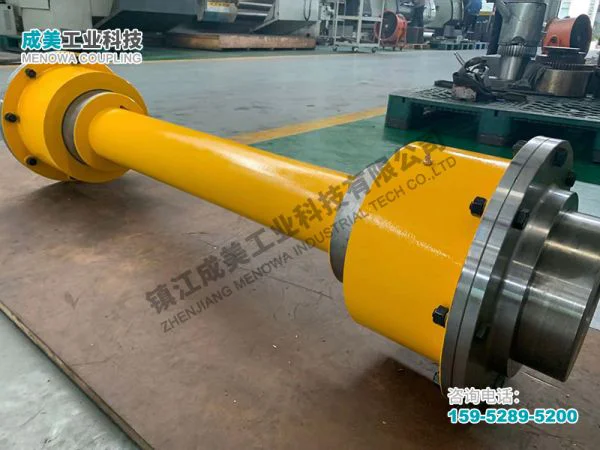
At its core, the grid spring coupling operates on a simple yet effective principle: the grid spring, typically made from high-strength alloy steel, fits into the curved tooth slots of two hubs that are connected to the driving and driven shafts. As the driving shaft rotates, it transfers torque to the grid spring, which in turn transmits the torque to the driven hub and shaft. The curved shape of the teeth and the flexibility of the grid spring allow for a certain degree of misalignment between the two shafts, including radial, angular, and axial misalignment—common issues in industrial setups due to installation errors, thermal expansion, or structural deflection. This ability to compensate for misalignment is one of the primary reasons grid spring couplings are widely used, as it reduces stress on bearings, shafts, and other components, thereby extending the overall service life of the machinery.
One of the most prominent applications of grid spring couplings is in heavy industrial machinery, where high torque, shock loads, and misalignment are common occurrences. In the mining industry, for example, equipment such as crushers, ball mills, and conveyor systems rely heavily on grid spring couplings to transmit power between motors and driven components. Crushers, which are used to break down large rocks and ores into smaller particles, operate under extreme conditions with frequent shock loads as the machine encounters hard materials. The grid spring coupling’s ability to absorb these shock loads prevents damage to the motor and the crusher’s internal components, such as the rotor and bearings. Similarly, ball mills, which are used to grind materials into fine powder, operate at high speeds and require consistent torque transmission. The grid spring coupling’s high torque capacity—capable of handling torque ranges from moderate to extremely high levels—and its ability to dampen vibrations ensure smooth operation, reducing wear and tear on the mill’s gears and bearings. Conveyor systems, which are essential for transporting materials throughout mining sites, also benefit from grid spring couplings, as they can compensate for misalignment between the motor and the conveyor’s drive roller, a common issue due to the long length of conveyor belts and potential structural movement.
The冶金 industry is another sector where grid spring couplings are extensively used, thanks to their ability to withstand high temperatures, heavy loads, and harsh operating conditions. In steel mills, equipment such as rolling mills, blast furnaces, and continuous casting machines depend on reliable power transmission to maintain efficient production. Rolling mills, which shape metal into sheets, bars, or other forms, exert significant torque on the drive system, and the grid spring coupling’s robust design ensures that this torque is transmitted efficiently without slippage. Additionally, the high temperature environment in steel mills—often exceeding 100°C in certain areas—requires components that can maintain their performance under thermal stress. Grid spring couplings, with their heat-resistant materials and design, can operate reliably in these conditions, unlike some flexible couplings that may degrade or fail under high temperatures. Blast furnaces, which are used to smelt iron ore into pig iron, also use grid spring couplings to connect the motor to the fan and other auxiliary equipment, as the couplings can absorb the vibrations generated by the fan and compensate for any misalignment caused by thermal expansion of the furnace structure.
In the construction industry, grid spring couplings are used in a variety of heavy equipment, including excavators, bulldozers, cranes, and concrete mixers. These machines operate in rugged environments, often on uneven terrain, which can lead to misalignment between the motor and the driven components. Excavators, for example, use hydraulic systems to power their arms and buckets, and the grid spring coupling connects the hydraulic pump to the motor, ensuring that power is transmitted smoothly even when the machine is operating at an angle. Bulldozers, which are used to push soil, rocks, and other materials, experience frequent shock loads as they encounter obstacles, and the grid spring coupling’s shock absorption capability protects the motor and transmission system from damage. Cranes, both mobile and stationary, rely on grid spring couplings to transmit torque to the hoist and trolley systems, as the couplings can compensate for misalignment between the motor and the gearbox, ensuring precise and safe lifting operations. Concrete mixers, which rotate continuously to keep concrete from setting, also use grid spring couplings to connect the motor to the mixer drum, as the couplings can handle the constant torque and minor misalignments that occur during operation.
Beyond heavy industry, grid spring couplings are also used in more precision-oriented applications, such as in the manufacturing of machinery and equipment for the automotive, aerospace, and electronics industries. In automotive manufacturing, for example, assembly lines use grid spring couplings to connect motors to conveyor belts, robotic arms, and other equipment. These couplings ensure smooth and precise movement of the assembly line, as they can dampen vibrations that could affect the accuracy of the assembly process. Additionally, the ability to compensate for misalignment is crucial in automotive manufacturing, where tight tolerances are required, and any deviation from alignment could lead to defects in the final product. In the aerospace industry, grid spring couplings are used in ground support equipment, such as aircraft maintenance stands and engine test rigs, where reliable power transmission and vibration damping are essential to ensure the safety and accuracy of the equipment. The aerospace industry also demands components that are lightweight yet robust, and grid spring couplings, with their compact design and high strength-to-weight ratio, meet these requirements.
The power generation industry is another key sector where grid spring couplings play a vital role. Power plants, whether thermal, hydroelectric, or wind-powered, require reliable power transmission between turbines, generators, and other auxiliary equipment. In thermal power plants, for example, steam turbines are connected to generators using grid spring couplings, which can handle the high torque generated by the turbine and compensate for any misalignment caused by thermal expansion of the turbine and generator shafts. Hydroelectric power plants use grid spring couplings to connect the water turbine to the generator, as the couplings can absorb the vibrations generated by the flowing water and ensure smooth power transmission. Wind turbines, which are becoming an increasingly important source of renewable energy, also use grid spring couplings in their drive trains, connecting the rotor to the generator. The grid spring coupling’s ability to handle variable torque—due to fluctuations in wind speed—and its vibration damping capability protect the generator and other components from damage, ensuring the long-term reliability of the wind turbine.
Marine applications also benefit from the use of grid spring couplings, as they are capable of withstanding the harsh marine environment, including saltwater corrosion, high humidity, and extreme temperature variations. Ships and offshore platforms use grid spring couplings in their propulsion systems, connecting the engine to the propeller shaft. The grid spring coupling’s corrosion-resistant materials—often stainless steel or other coated alloys—ensure that it can operate reliably in saltwater environments, while its ability to compensate for misalignment between the engine and the propeller shaft is crucial in marine applications, where the hull can flex under load, causing shaft misalignment. Additionally, the shock absorption capability of grid spring couplings protects the engine and propulsion system from the vibrations generated by the ship’s movement through the water.
Another important application of grid spring couplings is in the agricultural industry, where they are used in farm machinery such as tractors, harvesters, and irrigation systems. Tractors, which are the workhorses of agriculture, use grid spring couplings to connect the engine to the transmission, PTO (power take-off) shafts, and other auxiliary equipment. The couplings can handle the variable torque generated by the tractor’s engine, as well as the shock loads encountered when plowing, planting, or harvesting. Harvesters, which operate at high speeds and require precise power transmission to cut and process crops, also use grid spring couplings to connect the engine to the cutting and conveying systems. Irrigation systems, such as pumps and sprinklers, rely on grid spring couplings to connect the motor to the pump, ensuring that water is delivered efficiently to crops, even in remote areas where misalignment may occur due to uneven terrain.
In addition to these specific industrial applications, grid spring couplings are also used in general industrial machinery, such as pumps, compressors, fans, and blowers. Pumps, which are used to move liquids or gases in various industries, rely on grid spring couplings to connect the motor to the pump impeller. The couplings can compensate for misalignment between the motor and the pump, which is common due to the installation of the pump in tight spaces or on uneven surfaces. Compressors, which are used to compress air or other gases, generate high levels of vibration, and the grid spring coupling’s vibration damping capability reduces the impact of these vibrations on the motor and compressor components. Fans and blowers, which are used for ventilation, cooling, and air circulation, also use grid spring couplings to ensure smooth operation, as the couplings can handle the torque required to drive the fan blades and compensate for any misalignment between the motor and the fan shaft.
The versatility of grid spring couplings is further enhanced by their ability to be customized to meet specific application requirements. For example, couplings can be designed with different grid spring materials, such as high-carbon steel, stainless steel, or alloy steel, depending on the torque capacity and environmental conditions of the application. The hubs can also be customized to fit different shaft sizes and connection types, such as keyed shafts, splined shafts, or tapered shafts. Additionally, grid spring couplings can be equipped with protective covers to prevent dust, debris, and other contaminants from entering the coupling, which is particularly important in harsh industrial environments. The protective cover also helps to reduce noise generated by the coupling during operation, making it suitable for applications where noise levels need to be minimized.
One of the key advantages of grid spring couplings over other types of couplings is their balance between flexibility and rigidity. Unlike flexible couplings that use rubber or plastic elements, which can degrade over time due to wear, heat, or chemical exposure, grid spring couplings use metal grid springs that are highly durable and resistant to wear. This durability ensures that the coupling has a long service life, reducing maintenance costs and downtime for the machinery. Additionally, the metal grid spring provides a higher torque capacity than many flexible couplings, making it suitable for heavy-duty applications. The ability to compensate for misalignment also reduces the need for precise installation, which can save time and labor costs during setup.
In applications where vibration damping is critical, grid spring couplings excel due to the inherent flexibility of the grid spring. The spring absorbs and dissipates vibrations generated by the driving shaft, preventing them from being transmitted to the driven shaft and other components. This not only protects the machinery but also improves the overall performance and efficiency of the system. For example, in precision manufacturing equipment, vibrations can cause inaccuracies in the final product, and the grid spring coupling’s vibration damping capability ensures that the equipment operates smoothly and precisely.
Shock absorption is another important feature of grid spring couplings, making them ideal for applications where the machinery is subject to sudden shock loads. For example, in mining and construction equipment, the machinery may encounter unexpected obstacles, leading to sudden increases in torque. The grid spring can absorb these shock loads by flexing, preventing damage to the motor, gearbox, and other components. This shock absorption capability also extends the service life of the coupling itself, as it reduces the stress on the grid spring and other parts.
The use of grid spring couplings also contributes to energy efficiency in industrial systems. By ensuring efficient torque transmission with minimal energy loss, the coupling helps to reduce the overall energy consumption of the machinery. Additionally, the reduced wear and tear on components due to misalignment compensation and vibration damping means that the machinery requires less maintenance and has a longer service life, further reducing energy and cost inputs over time.
In summary, grid spring couplings are a versatile and essential component in mechanical power transmission, with applications spanning a wide range of industries. Their unique design, which combines flexibility, torque capacity, vibration damping, and misalignment compensation, makes them suitable for both heavy-duty and precision applications. From mining and冶金 to construction, power generation, marine, agricultural, and general industrial applications, grid spring couplings play a critical role in ensuring reliable, efficient, and safe operation of machinery. Their durability, customization options, and ability to handle harsh operating conditions make them a preferred choice for engineers and manufacturers seeking to optimize the performance and longevity of their equipment. As industrial technology continues to advance, the demand for grid spring couplings is likely to grow, as they continue to provide a practical and effective solution to the challenges of power transmission in diverse and demanding environments.
Post Date: May 13, 2026
https://www.menowacoupling.com/china-coupling/uses-of-grid-spring-coupling.html
Supply
Related Articles
Grid Spring Coupling For Sale
In the complex world of mechanical power transmission, the search for reliable, efficient, and durable coupling solutions is a constant priority for industries across the globe. Grid spring couplings have emerged as a versatile and high-performance option, designed to address the challenges of connecting rotating shafts…Size Chart of Grid Spring Coupling
A size chart of grid spring coupling is an indispensable reference tool in industrial transmission systems, serving as a bridge between the coupling’s design parameters and its practical application. It systematically organizes key dimensional data, enabling engineers, technicians, and procurement personnel to quickly …Grid Spring Coupling Supply
In the realm of industrial power transmission, the role of grid spring couplings is indispensable, serving as a critical link between driving and driven components across a wide range of machinery. As the demand for efficient, reliable, and durable transmission solutions continues to grow across various industries, the …Dimensions of Grid Spring Coupling
The grid spring coupling is a critical component in mechanical transmission systems, widely utilized across various industrial sectors due to its exceptional ability to accommodate misalignments, dampen vibrations, and transmit torque efficiently. While its functional advantages are well-recognized, the dimensions of a …Grid Spring Coupling Price
In the realm of mechanical power transmission, grid spring couplings stand out as a versatile and reliable component, widely used across various industries to connect rotating shafts and ensure efficient torque transfer. While their functionality and performance are critical considerations for engineers and procurement …Specification of Grid Spring Coupling
Grid spring coupling is a crucial flexible connecting component widely used in mechanical transmission systems, designed to transmit torque between two shafts while compensating for relative displacements and absorbing vibrations and shocks. Unlike rigid couplings that require precise alignment between shafts, grid spri…
 WeChat
 WhatsApp