menowa@menowa.cn
+0086 159 5289 5200

China Coupling

You are here: Home > China Coupling > Types of Grid Spring Coupling
Types of Grid Spring Coupling

Types of Grid Spring Coupling
Grid spring couplings are essential components in mechanical power transmission systems, designed to connect two rotating shafts while accommodating misalignments, absorbing vibrations, and transmitting torque efficiently. Unlike rigid couplings that require precise alignment and offer no flexibility, grid spring couplings leverage the elastic properties of a grid-shaped spring element to provide a balance between torque transmission capacity and flexibility, making them suitable for a wide range of industrial applications. The design and configuration of grid spring couplings vary based on specific application requirements, such as torque load, misalignment tolerance, operating speed, environmental conditions, and maintenance needs. As a result, several distinct types of grid spring couplings have been developed, each with unique structural features, performance characteristics, and suitability for different operating scenarios. Understanding the differences between these types is crucial for selecting the right coupling for a given application, ensuring optimal performance, reducing equipment wear, and extending the service life of the entire transmission system.
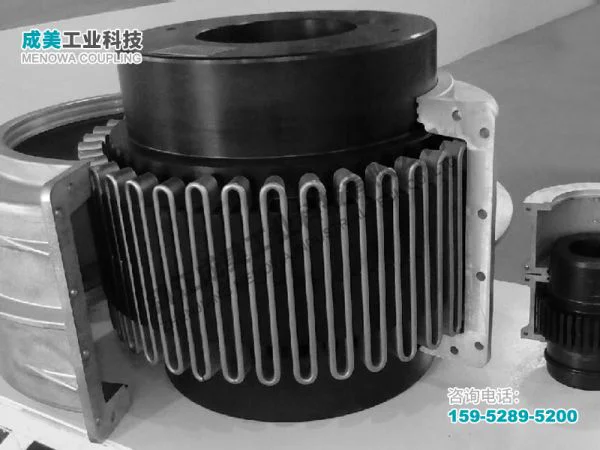
The basic structure of a typical grid spring coupling consists of two hubs, a grid spring, and a protective cover. The hubs are connected to the driving and driven shafts, usually via keys, set screws, or hydraulic fits, and feature circumferential grooves that accommodate the grid spring. The grid spring, typically made from high-strength alloy steel, is the core component that enables flexibility and vibration absorption. It is formed into a grid-like pattern, which allows it to deform slightly under load, compensating for axial, radial, and angular misalignments between the two shafts. The protective cover, often made from cast iron or aluminum alloy, encloses the grid spring and hubs to prevent contamination from dust, debris, and moisture, while also containing lubricant that reduces friction between the grid and the hub grooves. While this basic structure is consistent across most grid spring couplings, variations in design elements such as hub configuration, grid material, lubrication method, and coupling size give rise to the different types available in the market.
One of the most common types of grid spring couplings is the standard grid spring coupling, also known as the general-purpose grid coupling. This type is designed for moderate torque applications and is widely used in industrial machinery such as pumps, fans, compressors, conveyors, and electric motors. The standard grid coupling features a two-piece hub design, with each hub having a series of evenly spaced, curved grooves that match the shape of the grid spring. The grid spring is a single, continuous element made from tempered alloy steel, which is inserted into the grooves of both hubs, creating a flexible connection. The flexibility of the grid allows for axial misalignment of up to 5mm, radial misalignment of up to 0.5mm, and angular misalignment of up to 1.5 degrees, depending on the coupling size. This type of coupling is characterized by its simplicity, reliability, and cost-effectiveness, making it a popular choice for general industrial applications where moderate misalignment and vibration absorption are required. The standard grid coupling operates best at moderate speeds, typically up to 3600 revolutions per minute (RPM), and can handle torque ranges from a few Newton-meters to several thousand Newton-meters, depending on the size and material of the grid and hubs.
Another widely used type is the high-torque grid spring coupling, which is specifically designed to handle heavy-duty applications with high torque loads. Unlike the standard grid coupling, the high-torque variant features a more robust construction, with thicker hubs, a larger diameter grid spring, and reinforced grooves to withstand the increased stress associated with high torque transmission. The grid spring in high-torque couplings is often made from high-strength alloy steel with a higher carbon content or heat-treated to enhance its tensile strength and durability. Additionally, the hubs are typically made from forged steel or cast iron, which offers greater rigidity and resistance to deformation under heavy loads. High-torque grid couplings are commonly used in applications such as industrial crushers, mills, extruders, large pumps, and heavy-duty conveyors, where torque loads can exceed 10,000 Newton-meters. These couplings can accommodate similar levels of misalignment as standard grid couplings but are designed to maintain their performance under continuous heavy load conditions. The protective cover for high-torque couplings is also more robust, often featuring thicker walls and secure fastenings to prevent damage from external impacts and to contain the higher levels of lubricant required for smooth operation.
For applications where axial movement between the shafts is significant, the axial-compensating grid spring coupling is the ideal choice. This type of coupling is designed to accommodate large axial misalignments, often up to 10mm or more, while still transmitting torque efficiently and absorbing vibrations. The key difference between axial-compensating grid couplings and standard grid couplings lies in the design of the hub grooves and the grid spring. The grooves in the hubs of axial-compensating couplings are longer and more shallow, allowing the grid spring to slide axially within the grooves as the shafts move towards or away from each other. The grid spring itself is often slightly longer and more flexible, enabling it to adapt to the axial movement without losing its torque transmission capacity. Axial-compensating grid couplings are commonly used in applications such as reciprocating compressors, pumps with long shafts, and machinery where thermal expansion causes significant axial movement of the shafts. In these applications, the ability to accommodate axial misalignment prevents excessive stress on the shafts, bearings, and other components, reducing the risk of premature failure.
In environments where cleanliness is critical, such as food processing, pharmaceutical, or semiconductor manufacturing, the sealed grid spring coupling is the preferred option. This type of coupling features a fully enclosed protective cover with enhanced sealing mechanisms, such as lip seals or O-rings, to prevent the ingress of dust, dirt, moisture, and other contaminants. The sealed design also ensures that the lubricant inside the coupling remains contained, preventing contamination of the surrounding environment. The grid spring and hubs in sealed grid couplings are often made from corrosion-resistant materials, such as stainless steel, to further enhance their suitability for clean environments. Additionally, the sealed design reduces the need for frequent maintenance, as the internal components are protected from external damage. Sealed grid couplings are also used in outdoor applications or in environments with high humidity, where moisture can cause rust and corrosion of the coupling components. The enhanced sealing and corrosion resistance make these couplings durable and reliable in harsh or clean operating conditions.
For applications that require precise torque transmission with minimal backlash, the low-backlash grid spring coupling is designed to meet these requirements. Backlash, which is the slight movement between the grid spring and the hub grooves when the direction of rotation changes, can cause inaccuracies in torque transmission, especially in precision machinery. Low-backlash grid couplings minimize this backlash by ensuring a tight fit between the grid spring and the hub grooves. This is achieved through precise manufacturing of the grooves and the grid spring, with tighter tolerances than standard grid couplings. The grid spring in low-backlash couplings is often made from a harder alloy steel, which maintains its shape and fit even after prolonged use. Additionally, the hubs may feature a slightly modified groove design to reduce the clearance between the grid and the grooves. Low-backlash grid couplings are commonly used in precision machinery such as CNC machines, robotics, linear actuators, and other applications where precise motion control is essential. The minimal backlash ensures that the torque is transmitted accurately, reducing errors in positioning and movement, and improving the overall performance of the machinery.
Another specialized type of grid spring coupling is the split grid spring coupling, which is designed for easy installation and maintenance without the need to disconnect the shafts. This type of coupling features a split hub design, where each hub is split into two halves that are bolted together around the shaft. The grid spring is also split, allowing it to be installed or removed without moving the shafts. This design is particularly useful in applications where the shafts are difficult to access or where disconnection of the shafts would be time-consuming and costly, such as in large industrial machinery, power generation equipment, or marine applications. Split grid couplings offer the same performance characteristics as standard grid couplings, including misalignment compensation and vibration absorption, but with the added benefit of easy maintenance. The split design also allows for quick replacement of the grid spring if it becomes worn or damaged, reducing downtime and maintenance costs. The protective cover for split grid couplings is also split, ensuring that the internal components remain protected while still allowing easy access for maintenance.
In applications where operating speeds are extremely high, such as in turbomachinery, centrifugal compressors, or high-speed electric motors, the high-speed grid spring coupling is designed to withstand the stresses associated with high rotational speeds. High-speed grid couplings feature a lightweight construction, with hubs made from lightweight materials such as aluminum alloy or titanium, to reduce centrifugal forces at high speeds. The grid spring is also designed to be lightweight yet strong, with a streamlined shape that minimizes air resistance and centrifugal stress. Additionally, the protective cover is often aerodynamically designed to reduce drag and prevent overheating at high speeds. High-speed grid couplings are precision-balanced to ensure smooth operation, reducing vibration and noise at high RPM. These couplings can handle speeds of up to 10,000 RPM or more, depending on the size and design, and are often used in applications where high speed and reliability are critical. The high-speed design also includes enhanced lubrication systems to ensure that the grid spring and hubs remain properly lubricated even at high speeds, reducing friction and wear.
Corrosion-resistant grid spring couplings are designed for use in harsh environments where the coupling is exposed to corrosive substances, such as saltwater, chemicals, or acidic or alkaline solutions. These couplings feature components made from corrosion-resistant materials, such as stainless steel, Hastelloy, or other high-performance alloys. The grid spring is often coated with a protective layer, such as chrome or nickel, to further enhance its resistance to corrosion. The hubs and protective cover are also made from corrosion-resistant materials, ensuring that the entire coupling remains durable and reliable in corrosive environments. Corrosion-resistant grid couplings are commonly used in marine applications, chemical processing plants, wastewater treatment facilities, and other environments where exposure to corrosive substances is common. The corrosion resistance ensures that the coupling maintains its performance over time, reducing the need for frequent replacement and maintenance.
Each type of grid spring coupling has its own unique set of advantages and limitations, making it suitable for specific applications. The selection of the right type of grid spring coupling depends on several factors, including the torque load, operating speed, misalignment requirements, environmental conditions, maintenance needs, and precision requirements. For example, a standard grid coupling is suitable for general industrial applications with moderate torque and misalignment, while a high-torque grid coupling is required for heavy-duty applications. An axial-compensating grid coupling is ideal for applications with significant axial movement, while a sealed grid coupling is necessary for clean or harsh environments. Low-backlash grid couplings are best for precision machinery, split grid couplings for easy maintenance, high-speed grid couplings for high-RPM applications, and corrosion-resistant grid couplings for corrosive environments.
In addition to the different types of grid spring couplings, variations in grid spring design also contribute to the performance and suitability of the coupling. The grid spring can be designed in different shapes, such as rectangular, circular, or diamond-shaped, depending on the torque requirements and flexibility needed. The thickness and number of grid strands also vary, with thicker strands providing higher torque capacity and thinner strands offering greater flexibility. The material of the grid spring is another important factor, with high-strength alloy steel being the most common choice for most applications, while stainless steel or other corrosion-resistant alloys are used for specialized environments. The lubrication of the grid spring is also critical for its performance and service life, with most grid spring couplings requiring periodic lubrication with a high-quality grease or oil to reduce friction between the grid and the hub grooves. Some types of grid spring couplings, such as sealed or high-speed variants, may feature specialized lubrication systems to ensure continuous lubrication and reduce maintenance requirements.
The performance of grid spring couplings is also influenced by the design of the hubs. Hubs can be designed with different connection methods, such as keyed connections, set screws, hydraulic fits, or taper-lock connections, depending on the shaft size and application requirements. Keyed connections are the most common, providing a secure connection between the hub and the shaft, while hydraulic fits offer a more precise and uniform connection, ideal for high-torque applications. Taper-lock connections are easy to install and remove, making them suitable for applications where frequent maintenance is required. The size of the hubs also varies, with larger hubs being used for higher torque loads and smaller hubs for lighter applications.
Grid spring couplings offer several advantages over other types of couplings, such as gear couplings or elastomeric couplings. They provide better vibration absorption than gear couplings, reducing noise and wear on the connected equipment. They also offer greater flexibility than rigid couplings, accommodating misalignments that would otherwise cause damage to shafts and bearings. Additionally, grid spring couplings are more durable than elastomeric couplings, which can degrade over time due to heat, oil, or environmental factors. Grid spring couplings also have a longer service life when properly maintained, making them a cost-effective choice for many industrial applications.
Proper maintenance is essential for ensuring the optimal performance and longevity of grid spring couplings. This includes regular lubrication of the grid spring and hub grooves, inspection for wear or damage to the grid spring, hubs, and protective cover, and replacement of worn components as needed. The frequency of maintenance depends on the application, with heavy-duty or high-speed applications requiring more frequent inspections and lubrication. In sealed grid couplings, the seals should be checked regularly to ensure they are intact and preventing contamination. For split grid couplings, the bolts should be checked periodically to ensure they are tight, preventing the hubs from separating during operation.
In conclusion, grid spring couplings are versatile and reliable components in mechanical power transmission systems, with several distinct types designed to meet the specific needs of different applications. From standard general-purpose couplings to specialized high-torque, axial-compensating, sealed, low-backlash, split, high-speed, and corrosion-resistant variants, there is a grid spring coupling suitable for almost any industrial application. Understanding the characteristics and capabilities of each type is essential for selecting the right coupling, ensuring efficient torque transmission, accommodating misalignments, absorbing vibrations, and extending the service life of the connected equipment. By choosing the appropriate grid spring coupling and maintaining it properly, industrial operators can improve the performance, reliability, and efficiency of their machinery, reducing downtime and maintenance costs in the long run.

Types of Grid Spring Coupling

The basic structure of a typical grid spring coupling consists of two hubs, a grid spring, and a protective cover. The hubs are connected to the driving and driven shafts, usually via keys, set screws, or hydraulic fits, and feature circumferential grooves that accommodate the grid spring. The grid spring, typically made from high-strength alloy steel, is the core component that enables flexibility and vibration absorption. It is formed into a grid-like pattern, which allows it to deform slightly under load, compensating for axial, radial, and angular misalignments between the two shafts. The protective cover, often made from cast iron or aluminum alloy, encloses the grid spring and hubs to prevent contamination from dust, debris, and moisture, while also containing lubricant that reduces friction between the grid and the hub grooves. While this basic structure is consistent across most grid spring couplings, variations in design elements such as hub configuration, grid material, lubrication method, and coupling size give rise to the different types available in the market.

One of the most common types of grid spring couplings is the standard grid spring coupling, also known as the general-purpose grid coupling. This type is designed for moderate torque applications and is widely used in industrial machinery such as pumps, fans, compressors, conveyors, and electric motors. The standard grid coupling features a two-piece hub design, with each hub having a series of evenly spaced, curved grooves that match the shape of the grid spring. The grid spring is a single, continuous element made from tempered alloy steel, which is inserted into the grooves of both hubs, creating a flexible connection. The flexibility of the grid allows for axial misalignment of up to 5mm, radial misalignment of up to 0.5mm, and angular misalignment of up to 1.5 degrees, depending on the coupling size. This type of coupling is characterized by its simplicity, reliability, and cost-effectiveness, making it a popular choice for general industrial applications where moderate misalignment and vibration absorption are required. The standard grid coupling operates best at moderate speeds, typically up to 3600 revolutions per minute (RPM), and can handle torque ranges from a few Newton-meters to several thousand Newton-meters, depending on the size and material of the grid and hubs.

Another widely used type is the high-torque grid spring coupling, which is specifically designed to handle heavy-duty applications with high torque loads. Unlike the standard grid coupling, the high-torque variant features a more robust construction, with thicker hubs, a larger diameter grid spring, and reinforced grooves to withstand the increased stress associated with high torque transmission. The grid spring in high-torque couplings is often made from high-strength alloy steel with a higher carbon content or heat-treated to enhance its tensile strength and durability. Additionally, the hubs are typically made from forged steel or cast iron, which offers greater rigidity and resistance to deformation under heavy loads. High-torque grid couplings are commonly used in applications such as industrial crushers, mills, extruders, large pumps, and heavy-duty conveyors, where torque loads can exceed 10,000 Newton-meters. These couplings can accommodate similar levels of misalignment as standard grid couplings but are designed to maintain their performance under continuous heavy load conditions. The protective cover for high-torque couplings is also more robust, often featuring thicker walls and secure fastenings to prevent damage from external impacts and to contain the higher levels of lubricant required for smooth operation.

For applications where axial movement between the shafts is significant, the axial-compensating grid spring coupling is the ideal choice. This type of coupling is designed to accommodate large axial misalignments, often up to 10mm or more, while still transmitting torque efficiently and absorbing vibrations. The key difference between axial-compensating grid couplings and standard grid couplings lies in the design of the hub grooves and the grid spring. The grooves in the hubs of axial-compensating couplings are longer and more shallow, allowing the grid spring to slide axially within the grooves as the shafts move towards or away from each other. The grid spring itself is often slightly longer and more flexible, enabling it to adapt to the axial movement without losing its torque transmission capacity. Axial-compensating grid couplings are commonly used in applications such as reciprocating compressors, pumps with long shafts, and machinery where thermal expansion causes significant axial movement of the shafts. In these applications, the ability to accommodate axial misalignment prevents excessive stress on the shafts, bearings, and other components, reducing the risk of premature failure.

In environments where cleanliness is critical, such as food processing, pharmaceutical, or semiconductor manufacturing, the sealed grid spring coupling is the preferred option. This type of coupling features a fully enclosed protective cover with enhanced sealing mechanisms, such as lip seals or O-rings, to prevent the ingress of dust, dirt, moisture, and other contaminants. The sealed design also ensures that the lubricant inside the coupling remains contained, preventing contamination of the surrounding environment. The grid spring and hubs in sealed grid couplings are often made from corrosion-resistant materials, such as stainless steel, to further enhance their suitability for clean environments. Additionally, the sealed design reduces the need for frequent maintenance, as the internal components are protected from external damage. Sealed grid couplings are also used in outdoor applications or in environments with high humidity, where moisture can cause rust and corrosion of the coupling components. The enhanced sealing and corrosion resistance make these couplings durable and reliable in harsh or clean operating conditions.

For applications that require precise torque transmission with minimal backlash, the low-backlash grid spring coupling is designed to meet these requirements. Backlash, which is the slight movement between the grid spring and the hub grooves when the direction of rotation changes, can cause inaccuracies in torque transmission, especially in precision machinery. Low-backlash grid couplings minimize this backlash by ensuring a tight fit between the grid spring and the hub grooves. This is achieved through precise manufacturing of the grooves and the grid spring, with tighter tolerances than standard grid couplings. The grid spring in low-backlash couplings is often made from a harder alloy steel, which maintains its shape and fit even after prolonged use. Additionally, the hubs may feature a slightly modified groove design to reduce the clearance between the grid and the grooves. Low-backlash grid couplings are commonly used in precision machinery such as CNC machines, robotics, linear actuators, and other applications where precise motion control is essential. The minimal backlash ensures that the torque is transmitted accurately, reducing errors in positioning and movement, and improving the overall performance of the machinery.

Another specialized type of grid spring coupling is the split grid spring coupling, which is designed for easy installation and maintenance without the need to disconnect the shafts. This type of coupling features a split hub design, where each hub is split into two halves that are bolted together around the shaft. The grid spring is also split, allowing it to be installed or removed without moving the shafts. This design is particularly useful in applications where the shafts are difficult to access or where disconnection of the shafts would be time-consuming and costly, such as in large industrial machinery, power generation equipment, or marine applications. Split grid couplings offer the same performance characteristics as standard grid couplings, including misalignment compensation and vibration absorption, but with the added benefit of easy maintenance. The split design also allows for quick replacement of the grid spring if it becomes worn or damaged, reducing downtime and maintenance costs. The protective cover for split grid couplings is also split, ensuring that the internal components remain protected while still allowing easy access for maintenance.

In applications where operating speeds are extremely high, such as in turbomachinery, centrifugal compressors, or high-speed electric motors, the high-speed grid spring coupling is designed to withstand the stresses associated with high rotational speeds. High-speed grid couplings feature a lightweight construction, with hubs made from lightweight materials such as aluminum alloy or titanium, to reduce centrifugal forces at high speeds. The grid spring is also designed to be lightweight yet strong, with a streamlined shape that minimizes air resistance and centrifugal stress. Additionally, the protective cover is often aerodynamically designed to reduce drag and prevent overheating at high speeds. High-speed grid couplings are precision-balanced to ensure smooth operation, reducing vibration and noise at high RPM. These couplings can handle speeds of up to 10,000 RPM or more, depending on the size and design, and are often used in applications where high speed and reliability are critical. The high-speed design also includes enhanced lubrication systems to ensure that the grid spring and hubs remain properly lubricated even at high speeds, reducing friction and wear.

Corrosion-resistant grid spring couplings are designed for use in harsh environments where the coupling is exposed to corrosive substances, such as saltwater, chemicals, or acidic or alkaline solutions. These couplings feature components made from corrosion-resistant materials, such as stainless steel, Hastelloy, or other high-performance alloys. The grid spring is often coated with a protective layer, such as chrome or nickel, to further enhance its resistance to corrosion. The hubs and protective cover are also made from corrosion-resistant materials, ensuring that the entire coupling remains durable and reliable in corrosive environments. Corrosion-resistant grid couplings are commonly used in marine applications, chemical processing plants, wastewater treatment facilities, and other environments where exposure to corrosive substances is common. The corrosion resistance ensures that the coupling maintains its performance over time, reducing the need for frequent replacement and maintenance.

Each type of grid spring coupling has its own unique set of advantages and limitations, making it suitable for specific applications. The selection of the right type of grid spring coupling depends on several factors, including the torque load, operating speed, misalignment requirements, environmental conditions, maintenance needs, and precision requirements. For example, a standard grid coupling is suitable for general industrial applications with moderate torque and misalignment, while a high-torque grid coupling is required for heavy-duty applications. An axial-compensating grid coupling is ideal for applications with significant axial movement, while a sealed grid coupling is necessary for clean or harsh environments. Low-backlash grid couplings are best for precision machinery, split grid couplings for easy maintenance, high-speed grid couplings for high-RPM applications, and corrosion-resistant grid couplings for corrosive environments.

In addition to the different types of grid spring couplings, variations in grid spring design also contribute to the performance and suitability of the coupling. The grid spring can be designed in different shapes, such as rectangular, circular, or diamond-shaped, depending on the torque requirements and flexibility needed. The thickness and number of grid strands also vary, with thicker strands providing higher torque capacity and thinner strands offering greater flexibility. The material of the grid spring is another important factor, with high-strength alloy steel being the most common choice for most applications, while stainless steel or other corrosion-resistant alloys are used for specialized environments. The lubrication of the grid spring is also critical for its performance and service life, with most grid spring couplings requiring periodic lubrication with a high-quality grease or oil to reduce friction between the grid and the hub grooves. Some types of grid spring couplings, such as sealed or high-speed variants, may feature specialized lubrication systems to ensure continuous lubrication and reduce maintenance requirements.

The performance of grid spring couplings is also influenced by the design of the hubs. Hubs can be designed with different connection methods, such as keyed connections, set screws, hydraulic fits, or taper-lock connections, depending on the shaft size and application requirements. Keyed connections are the most common, providing a secure connection between the hub and the shaft, while hydraulic fits offer a more precise and uniform connection, ideal for high-torque applications. Taper-lock connections are easy to install and remove, making them suitable for applications where frequent maintenance is required. The size of the hubs also varies, with larger hubs being used for higher torque loads and smaller hubs for lighter applications.

Grid spring couplings offer several advantages over other types of couplings, such as gear couplings or elastomeric couplings. They provide better vibration absorption than gear couplings, reducing noise and wear on the connected equipment. They also offer greater flexibility than rigid couplings, accommodating misalignments that would otherwise cause damage to shafts and bearings. Additionally, grid spring couplings are more durable than elastomeric couplings, which can degrade over time due to heat, oil, or environmental factors. Grid spring couplings also have a longer service life when properly maintained, making them a cost-effective choice for many industrial applications.

Proper maintenance is essential for ensuring the optimal performance and longevity of grid spring couplings. This includes regular lubrication of the grid spring and hub grooves, inspection for wear or damage to the grid spring, hubs, and protective cover, and replacement of worn components as needed. The frequency of maintenance depends on the application, with heavy-duty or high-speed applications requiring more frequent inspections and lubrication. In sealed grid couplings, the seals should be checked regularly to ensure they are intact and preventing contamination. For split grid couplings, the bolts should be checked periodically to ensure they are tight, preventing the hubs from separating during operation.

In conclusion, grid spring couplings are versatile and reliable components in mechanical power transmission systems, with several distinct types designed to meet the specific needs of different applications. From standard general-purpose couplings to specialized high-torque, axial-compensating, sealed, low-backlash, split, high-speed, and corrosion-resistant variants, there is a grid spring coupling suitable for almost any industrial application. Understanding the characteristics and capabilities of each type is essential for selecting the right coupling, ensuring efficient torque transmission, accommodating misalignments, absorbing vibrations, and extending the service life of the connected equipment. By choosing the appropriate grid spring coupling and maintaining it properly, industrial operators can improve the performance, reliability, and efficiency of their machinery, reducing downtime and maintenance costs in the long run.

Post Date: May 13, 2026

https://www.menowacoupling.com/china-coupling/types-of-grid-spring-coupling.html
Supply

    Related Articles

    • Size Chart of Grid Spring Coupling

      A size chart of grid spring coupling is an indispensable reference tool in industrial transmission systems, serving as a bridge between the coupling’s design parameters and its practical application. It systematically organizes key dimensional data, enabling engineers, technicians, and procurement personnel to quickly …
    • Grid Spring Coupling Supply

      In the realm of industrial power transmission, the role of grid spring couplings is indispensable, serving as a critical link between driving and driven components across a wide range of machinery. As the demand for efficient, reliable, and durable transmission solutions continues to grow across various industries, the …
    • Dimensions of Grid Spring Coupling

      The grid spring coupling is a critical component in mechanical transmission systems, widely utilized across various industrial sectors due to its exceptional ability to accommodate misalignments, dampen vibrations, and transmit torque efficiently. While its functional advantages are well-recognized, the dimensions of a …
    • Specification of Grid Spring Coupling

      Grid spring coupling is a crucial flexible connecting component widely used in mechanical transmission systems, designed to transmit torque between two shafts while compensating for relative displacements and absorbing vibrations and shocks. Unlike rigid couplings that require precise alignment between shafts, grid spri…
    • Coaxiality of Grid Spring Coupling

      Coaxiality is a critical geometric parameter that directly determines the performance, reliability, and service life of grid spring couplings, which are widely used in various industrial transmission systems to connect two rotating shafts and transmit torque while compensating for minor misalignments. In essence, coaxia…
    • Grid Spring Coupling Supplier

      In the complex and interconnected world of industrial machinery, the role of coupling components cannot be overstated. These critical parts serve as the bridge between rotating shafts, ensuring the smooth and efficient transmission of power while accommodating misalignments and reducing operational stress. Among the var…
    • Elastic Coupling Supply

      In the realm of industrial power transmission, elastic couplings serve as a critical bridge between rotating shafts, enabling the smooth transfer of torque while mitigating the negative effects of misalignment, vibration, and shock loads. The supply of elastic couplings is a dynamic and essential component of modern man…
    • Structure of Grid Spring Coupling

      The grid spring coupling is a crucial component in industrial power transmission systems, designed to connect two rotating shafts while accommodating misalignments, absorbing vibrations, and protecting machinery from shock loads. Its unique structure combines the rigidity needed for efficient torque transmission with th…
    • Types of Elastic Coupling

      Elastic couplings are essential mechanical components designed to connect two rotating shafts in machinery, enabling the efficient transmission of torque while accommodating minor misalignments, absorbing shocks, and dampening vibrations. Unlike rigid couplings, which require precise alignment and offer no flexibility, …
    • Characteristics of Grid Spring Coupling

      A grid spring coupling is a specialized mechanical component designed to transmit torque between two rotating shafts while accommodating various forms of misalignment and mitigating the effects of vibration and shock loads. Unlike rigid couplings that require precise alignment and offer no flexibility, grid spring coupl…