What is Grid Spring Coupling
In the complex world of mechanical power transmission, the need to connect two rotating shafts efficiently, reliably, and with minimal wear has led to the development of various coupling devices. Among these, the grid spring coupling stands out as a versatile and robust solution, widely used in industrial applications where precision, flexibility, and durability are paramount. Unlike rigid couplings that require perfect alignment and offer no flexibility, or other flexible couplings that may lack load-bearing capacity, the grid spring coupling strikes a balance between rigidity and flexibility, making it suitable for a wide range of operating conditions. To fully understand what a grid spring coupling is, it is essential to explore its structure, working principle, key characteristics, applications, and maintenance requirements, as well as its role in enhancing the performance and longevity of mechanical systems.
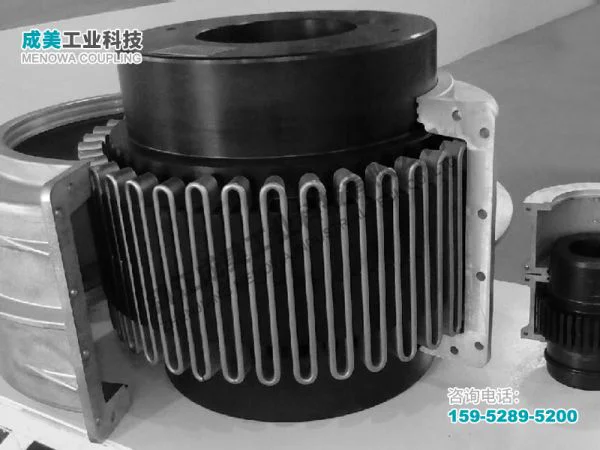
At its core, a grid spring coupling is a type of flexible coupling designed to transmit torque between two coaxial shafts while accommodating minor misalignments, absorbing vibrations, and dampening shocks. It derives its name from the grid-like spring element that serves as the central component, responsible for torque transmission and flexibility. Unlike some flexible couplings that use rubber or elastomeric elements, the grid spring coupling utilizes a metallic grid spring, typically made from high-strength alloy steel, which provides superior durability, load-bearing capacity, and resistance to high temperatures and harsh environments. This metallic construction distinguishes it from elastomeric couplings, which may degrade over time due to chemical exposure, fatigue, or extreme temperatures, making the grid spring coupling a preferred choice for heavy-duty and industrial applications.
The basic structure of a grid spring coupling consists of several key components that work together to ensure efficient power transmission and flexibility. These components include two hubs, a grid spring, and a housing or cover. The hubs are typically made from high-strength steel or alloy, designed to be mounted on the ends of the two shafts that need to be connected. Each hub features a series of teeth or grooves around its circumference, which are specifically shaped to accommodate the grid spring. The grid spring itself is a continuous, serpentine-shaped element made from a single piece of high-quality spring steel, formed into a grid pattern that allows it to flex and deform under load while maintaining its structural integrity. The grid spring fits into the teeth of both hubs, creating a secure connection that transmits torque from the driving shaft to the driven shaft. The housing, often made from cast iron or steel, encloses the grid spring and hubs, protecting them from dust, debris, and other environmental contaminants that could cause wear or damage. Some designs also include seals or gaskets to prevent lubricant leakage and further protect the internal components.
The working principle of a grid spring coupling is based on the elastic deformation of the grid spring, which allows it to transmit torque while accommodating misalignments and absorbing vibrations. When the driving shaft rotates, it imparts torque to the hub connected to it. The teeth of this hub engage with the grid spring, causing the spring to flex and transmit the torque to the other hub, which in turn drives the driven shaft. The grid spring’s serpentine shape and metallic construction enable it to deform elastically when subjected to torque, allowing for minor radial, axial, and angular misalignments between the two shafts. This flexibility is crucial in industrial applications, where perfect alignment of shafts is often difficult to achieve and maintain, due to factors such as thermal expansion, structural deflection, or installation errors. Without this flexibility, misalignments would cause excessive stress on the shafts, bearings, and other components, leading to premature wear and potential failure.
In addition to accommodating misalignments, the grid spring coupling also plays a vital role in damping vibrations and absorbing shocks. Vibrations are a common issue in mechanical systems, often caused by imbalances in rotating parts, uneven load distribution, or the operation of nearby equipment. These vibrations can be transmitted through the shafts to other components, causing noise, wear, and reduced performance. The grid spring, with its elastic properties, acts as a buffer, absorbing and dissipating vibrational energy before it can reach other parts of the system. This damping effect not only reduces noise levels but also protects sensitive components from damage, extending the overall lifespan of the mechanical system. Similarly, the grid spring can absorb sudden shocks or load spikes, such as those caused by startup, shutdown, or unexpected changes in load, preventing these shocks from being transmitted to the shafts and other critical components.
One of the key advantages of the grid spring coupling is its high load-bearing capacity. Due to the use of high-strength alloy steel for the grid spring and hubs, these couplings can transmit large amounts of torque, making them suitable for heavy-duty applications such as industrial machinery, mining equipment, and power transmission systems. The grid spring’s design allows for even distribution of torque across its entire surface, reducing stress concentrations and ensuring reliable performance even under high load conditions. Unlike some elastomeric couplings that have limited load capacity and may fail under heavy loads, the grid spring coupling can handle continuous high torque loads without significant wear or deformation. Additionally, the metallic construction of the grid spring makes it resistant to high temperatures, allowing it to operate in environments where elastomeric couplings would degrade, such as near furnaces, engines, or other heat-generating equipment.
Another important characteristic of the grid spring coupling is its durability and long service life. The high-quality materials used in its construction, combined with its simple and robust design, make it resistant to wear, corrosion, and fatigue. The grid spring is typically heat-treated to enhance its strength and resilience, ensuring that it can withstand repeated cycles of flexing and deformation without breaking or losing its elastic properties. The hubs are also designed to resist wear, with their teeth precision-machined to ensure a tight fit with the grid spring, minimizing friction and wear during operation. With proper maintenance, such as regular lubrication and inspection, a grid spring coupling can last for many years, even in harsh industrial environments, reducing the need for frequent replacements and minimizing downtime.
Flexibility in terms of misalignment accommodation is another key benefit of the grid spring coupling. It can accommodate radial misalignments (where the shafts are offset parallel to each other), axial misalignments (where the shafts are displaced along their axis), and angular misalignments (where the shafts are at an angle to each other). This flexibility is particularly important in applications where the shafts may move or shift during operation, such as in machinery that undergoes thermal expansion or in equipment that is subject to vibration or shock. The ability to accommodate these misalignments reduces stress on the shafts, bearings, and other components, preventing premature failure and ensuring smooth operation. While the grid spring coupling cannot accommodate extreme misalignments, it is capable of handling the minor misalignments that are common in most industrial applications.
The grid spring coupling also offers excellent transmission efficiency. Due to its rigid metallic construction and minimal friction between the grid spring and the hubs, it can transmit torque with very little energy loss. Unlike some flexible couplings that may have significant friction or slip, the grid spring coupling maintains a tight connection between the shafts, ensuring that almost all of the torque from the driving shaft is transmitted to the driven shaft. This high efficiency is particularly important in applications where energy conservation is a priority, as it helps to reduce energy consumption and lower operating costs. Additionally, the smooth transmission of torque reduces vibration and noise, creating a more efficient and comfortable working environment.
When it comes to applications, the grid spring coupling is widely used in a variety of industrial sectors due to its versatility and robust performance. One of the most common applications is in the mining industry, where it is used to connect the shafts of crushers, conveyors, and other heavy machinery. In these applications, the coupling must be able to handle high torque loads, accommodate misalignments caused by the heavy vibrations of the equipment, and resist wear and corrosion from dust and debris. The grid spring coupling is also used in the manufacturing industry, where it connects the shafts of motors, pumps, compressors, and other machinery. In manufacturing, the coupling’s ability to dampen vibrations and accommodate misalignments helps to ensure the precision and reliability of the equipment, reducing downtime and improving productivity.
Another important application area is the power generation industry, where the grid spring coupling is used to connect the shafts of turbines, generators, and other power transmission equipment. In power generation, reliability is critical, as any failure can result in significant downtime and financial losses. The grid spring coupling’s durability, high load-bearing capacity, and vibration-damping properties make it an ideal choice for these applications, ensuring that power is transmitted efficiently and reliably. It is also used in the automotive industry, particularly in heavy-duty vehicles such as trucks and buses, where it connects the engine to the transmission, handling the high torque loads and vibrations associated with vehicle operation.
In addition to these industrial applications, the grid spring coupling is also used in marine applications, where it connects the shafts of ship engines to propellers. Marine environments are particularly harsh, with high levels of moisture, salt, and corrosion, but the grid spring coupling’s metallic construction and corrosion-resistant materials make it suitable for these conditions. It is also used in aerospace applications, where it is used to connect the shafts of aircraft engines and other components, requiring high precision, durability, and reliability.
Proper maintenance is essential to ensure the optimal performance and longevity of a grid spring coupling. One of the most important maintenance tasks is regular lubrication. The grid spring and the teeth of the hubs must be lubricated to minimize friction and wear, as well as to prevent corrosion. The type of lubricant used depends on the operating conditions, such as temperature, load, and environmental factors. In general, a high-quality grease or oil that is resistant to high temperatures and wear is recommended. The lubricant should be checked regularly and replaced as needed, typically during routine maintenance inspections.
Regular inspection is also crucial to identify any signs of wear, damage, or misalignment. During inspections, the coupling should be checked for cracks in the grid spring, wear on the hub teeth, and any signs of lubricant leakage. The housing should also be inspected to ensure that it is intact and properly sealed, protecting the internal components from dust and debris. If any damage or wear is detected, the affected components should be replaced immediately to prevent further damage to the coupling or other parts of the mechanical system. Additionally, the alignment of the shafts should be checked regularly, as excessive misalignment can cause premature wear and failure of the coupling.
When replacing components of a grid spring coupling, it is important to use parts that are compatible with the original design. The grid spring, in particular, should be replaced with a spring of the same material, size, and design, as using an incompatible spring can affect the coupling’s performance and durability. The hubs should also be inspected for wear and replaced if necessary, ensuring that the teeth are in good condition and can properly engage with the grid spring. Proper installation is also important, as incorrect installation can lead to misalignment, excessive stress, and premature failure. The coupling should be installed according to the manufacturer’s instructions, with the correct torque applied to the fasteners and proper alignment of the shafts.
While the grid spring coupling offers many advantages, it is important to consider its limitations when selecting a coupling for a specific application. One of the main limitations is that it cannot accommodate extreme misalignments, and excessive misalignment can lead to premature wear and failure. Additionally, the grid spring coupling is not suitable for applications where electrical insulation is required, as the metallic components conduct electricity. In such cases, an elastomeric coupling or other insulated coupling may be more appropriate. Another limitation is that the grid spring coupling can be relatively heavy and bulky compared to some other types of couplings, which may be a consideration in applications where space is limited.
Despite these limitations, the grid spring coupling remains a popular choice for many industrial applications due to its unique combination of flexibility, durability, and load-bearing capacity. Its ability to transmit high torque, accommodate minor misalignments, dampen vibrations, and resist harsh environments makes it an essential component in many mechanical systems. As technology continues to advance, the design and materials used in grid spring couplings are likely to improve, further enhancing their performance and expanding their range of applications.
In conclusion, the grid spring coupling is a versatile and robust flexible coupling that plays a crucial role in mechanical power transmission. Its structure, consisting of two hubs, a grid spring, and a housing, allows it to transmit torque efficiently while accommodating minor misalignments, absorbing vibrations, and dampening shocks. The use of high-strength alloy steel for the grid spring and hubs ensures high load-bearing capacity, durability, and resistance to harsh environments. Widely used in industries such as mining, manufacturing, power generation, automotive, marine, and aerospace, the grid spring coupling is a reliable and efficient solution for connecting rotating shafts. Proper maintenance, including regular lubrication and inspection, is essential to ensure its optimal performance and longevity. While it has some limitations, its many advantages make it a preferred choice for a wide range of industrial applications, contributing to the efficiency, reliability, and longevity of mechanical systems around the world.
Post Date: May 13, 2026
https://www.menowacoupling.com/china-coupling/what-is-grid-spring-coupling.html
Supply
Related Articles
Grid Spring Coupling Exporter
In the field of industrial power transmission, the role of couplings is irreplaceable. They serve as the critical connection between driving devices and driven equipment, ensuring the stable transfer of torque while compensating for alignment errors and reducing operational vibrations. Among the various types of couplin…Material of Grid Spring Coupling
Grid spring couplings are essential components in mechanical transmission systems, designed to connect two shafts and transmit torque while compensating for axial, radial, and angular misalignments, absorbing vibrations, and reducing shock loads. The performance, reliability, and service life of a grid spring coupling a…Maintenance of Grid Spring Coupling
Grid spring couplings are widely used in various industrial transmission systems, serving as a critical connection between driving and driven shafts to transmit torque while compensating for axial, radial, and angular misalignments. Their unique structure, which relies on grid springs embedded in the tooth grooves of tw…Diagram of Grid Spring Coupling
A grid spring coupling is a versatile mechanical device designed to transmit torque between two rotating shafts while accommodating misalignments, absorbing shock loads, and reducing vibration in various industrial applications. Its unique structural design, which combines rigidity with flexibility, makes it an indispen…Grid Spring Coupling Manufacture
Grid spring couplings are essential mechanical components widely used in industrial power transmission systems, serving as the critical connection between driving and driven shafts to transmit torque while accommodating misalignments and absorbing shocks. The manufacture of grid spring couplings requires precise enginee…Grid Spring Coupling Factory
In the complex ecosystem of industrial machinery, the role of grid spring couplings is often underestimated, yet they are the unsung heroes that ensure the smooth and efficient transmission of power between rotating shafts. These precision components are integral to a wide range of industrial applications, from heavy-du…
 WeChat
 WhatsApp