Material of Flexible Diaphragm Coupling
Flexible diaphragm couplings stand as critical mechanical components in modern power transmission systems, renowned for their exceptional alignment compensation capability, high transmission efficiency, and maintenance-free operational characteristics. Unlike traditional flexible couplings that rely on elastomer deformation or gear meshing for flexibility, the working performance, service life, and environmental adaptability of flexible diaphragm couplings are entirely determined by the mechanical and chemical properties of their core component—the flexible diaphragm. The selection of diaphragm materials directly influences the coupling’s tolerance for shaft misalignment, resistance to dynamic fatigue, adaptability to extreme temperatures, and durability in harsh working conditions, making material research and selection a core link in the design and application of flexible diaphragm couplings. In industrial transmission scenarios ranging from high-speed rotating equipment to heavy-duty power machinery, rational material matching can effectively reduce equipment vibration, avoid power transmission loss, and extend the overall service cycle of mechanical systems.
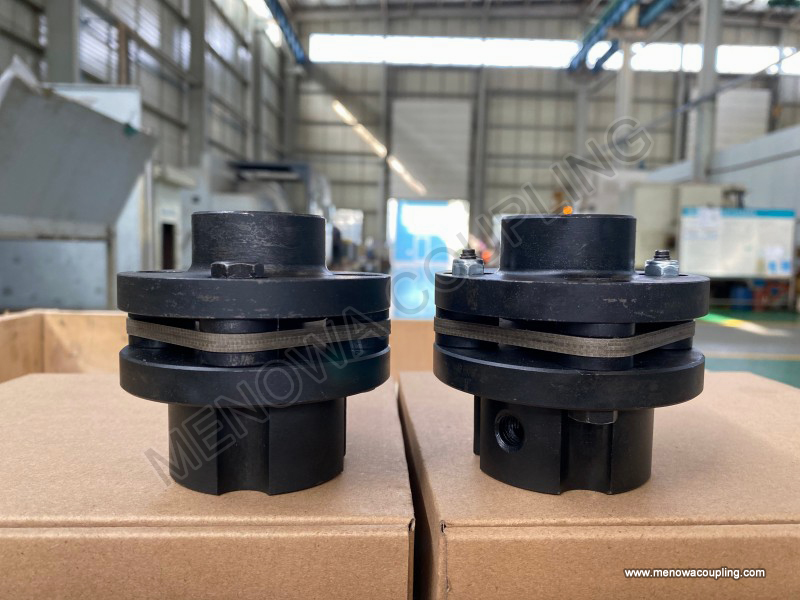
The core working principle of flexible diaphragm couplings is based on the elastic deformation of thin metal diaphragms. During operation, the diaphragms bear cyclic torque loads and frequent elastic deformations to compensate for axial, radial, and angular misalignments between the driving shaft and driven shaft. This continuous cyclic working state imposes stringent requirements on the comprehensive performance of diaphragm materials. First and foremost, the material must possess outstanding fatigue resistance, as long-term repeated elastic deformation is the primary cause of component failure in diaphragm couplings. Materials with poor fatigue performance are prone to micro-crack generation and gradual expansion under cyclic loads, eventually leading to diaphragm fracture and equipment shutdown. Secondly, high tensile strength and yield strength are essential to ensure that the diaphragm can withstand high torque impact and high-speed centrifugal force without permanent plastic deformation. In addition, excellent elastic recovery performance is required to guarantee that the diaphragm can return to its original state after deformation, maintaining stable transmission accuracy and avoiding cumulative deformation errors during long-term operation.
Beyond basic mechanical properties, the environmental adaptability of materials is another key factor restricting the application scope of flexible diaphragm couplings. Most industrial production scenarios involve complex working environments, including high-temperature heat radiation, low-temperature cold condensation, humid and rainy conditions, and corrosive media such as acid, alkali, and salt fog. Diaphragm materials need to maintain stable mechanical properties within a wide temperature range, avoiding strength attenuation, elastic modulus change, or brittle fracture caused by temperature fluctuation. Meanwhile, good chemical stability and corrosion resistance can prevent material oxidation, rust, and chemical erosion, ensuring the structural integrity and working stability of the diaphragm in long-term service. Moreover, appropriate processing performance is also indispensable. Qualified diaphragm materials need to be suitable for precision sheet metal processing, laser cutting, and surface treatment, enabling the production of ultra-thin, uniform, and high-precision diaphragm structures that meet assembly and deformation requirements.
Stainless steel alloys are the most widely used conventional materials for flexible diaphragm coupling diaphragms, occupying a dominant position in medium and low-load, conventional industrial transmission scenarios. This type of material achieves a balanced performance in mechanical strength, fatigue resistance, and corrosion resistance, with moderate comprehensive cost and excellent process adaptability, fully meeting the operational needs of most general mechanical equipment. Common stainless steel materials for diaphragms include martensitic and precipitation-hardening stainless steels, each with distinct performance characteristics and application orientations. Precipitation-hardening stainless steel has become a preferred material for high-precision standard diaphragms due to its ultra-high fatigue strength and uniform internal structure. After aging heat treatment, this material forms fine precipitation phases inside the metal matrix, which significantly improve tensile strength and fatigue limit while maintaining good toughness and elastic stability. Its excellent resistance to cyclic deformation enables it to operate stably for a long time under high-speed and frequent misalignment conditions, effectively resisting fatigue crack growth caused by alternating loads.
Martensitic stainless steel is another mainstream conventional material, featuring high hardness, good wear resistance, and outstanding structural stability. Compared with precipitation-hardening stainless steel, its mechanical strength is slightly lower, but it has better toughness and impact resistance, making it suitable for medium-torque transmission scenarios with occasional load impact. This material exhibits stable performance in normal temperature and conventional humidity environments, with good oxidation resistance that prevents surface rust and corrosion during long-term static and dynamic operation. However, martensitic stainless steel has obvious limitations in extreme environments. Its mechanical properties will decline significantly in long-term high-temperature working conditions above 200 degrees Celsius, and it is prone to oxidation and scaling on the surface. In low-temperature environments below minus 50 degrees Celsius, the material will undergo brittle transition, resulting in reduced toughness and increased risk of sudden fracture under deformation load.
Alloy steel materials are mainly applied in heavy-duty and high-temperature special working scenarios, serving as an important supplement to stainless steel materials. Low-alloy high-strength steel represented by 4340 alloy steel has excellent comprehensive mechanical properties, with ultra-high tensile strength and impact toughness, and can maintain stable structural strength in high-temperature environments up to 300 degrees Celsius. The internal grain structure of alloy steel is refined through vacuum smelting and heat treatment processes, which effectively reduces internal impurities and structural defects, greatly improving the material’s fatigue life and load-bearing capacity. This material is often used to manufacture thickened single-layer or multi-layer stacked diaphragms for heavy-duty diaphragm couplings, adapting to high-power and high-torque transmission equipment such as industrial fans, large water pumps, and mechanical transmission systems of engineering machinery. In addition, tool steel materials with high-temperature resistance are selected for ultra-high temperature working scenarios. This type of material has excellent high-temperature structural stability, does not undergo softening deformation or strength attenuation in long-term high-temperature operation, and can maintain accurate elastic deformation performance, meeting the power transmission needs of high-temperature thermal equipment and gas turbine supporting systems.
For extreme working environments with special requirements such as ultra-low temperature, strong corrosion, and lightweight high strength, special metal alloy materials have become the optimal choice for diaphragm manufacturing. Titanium alloy is a typical high-performance special material, characterized by low density, high specific strength, and excellent comprehensive environmental adaptability. The density of titanium alloy is much lower than that of stainless steel and alloy steel, which can effectively reduce the overall weight of the coupling and the centrifugal force generated during high-speed operation, significantly improving the dynamic balance performance of high-speed transmission systems. Meanwhile, titanium alloy has extremely strong corrosion resistance, able to resist erosion of various acid, alkali, salt media and marine atmospheric salt fog, and can work stably for a long time in humid and corrosive chemical industry and marine engineering environments. In terms of temperature adaptability, titanium alloy maintains stable mechanical properties in the temperature range of minus 196 degrees Celsius to 350 degrees Celsius, without brittle fracture at ultra-low temperature or thermal softening at high temperature, making it suitable for extreme temperature transmission scenarios that conventional steel materials cannot adapt to.
Aluminum alloy materials are mostly used in lightweight and low-load precision transmission scenarios. This type of material has the advantages of light weight, good processing performance, and low inertia. The diaphragm made of high-precision aluminum alloy can realize sensitive micro-deformation, with small transmission resistance and high motion accuracy, which is very suitable for precision mechanical equipment, automated transmission systems, and small high-speed rotating machinery. The elastic deformation performance of aluminum alloy is uniform and stable, which can effectively compensate for tiny shaft misalignment and reduce equipment operation vibration. However, the defects of aluminum alloy are also obvious. Its overall strength and fatigue resistance are far lower than those of steel materials, and it is prone to permanent deformation and fatigue failure under long-term high-load and high-speed cyclic loads. In addition, aluminum alloy has poor high-temperature resistance, and its elastic modulus will decrease sharply when the temperature exceeds 120 degrees Celsius, unable to meet the transmission needs of medium and high-temperature working environments.
The material selection of flexible diaphragm couplings needs to follow the matching principle of working conditions and material performance, comprehensively considering load characteristics, operating speed, environmental conditions, and service life requirements. For conventional indoor industrial equipment with normal temperature, normal humidity, medium and low load, and stable operation, precipitation-hardening stainless steel is the most cost-effective choice, balancing fatigue resistance, precision stability, and service life. For heavy-duty industrial equipment with high torque, frequent load impact, and long-term continuous operation, high-strength alloy steel should be selected to improve the overall load-bearing capacity and impact resistance of the coupling. For chemical industry, marine, and coastal equipment exposed to corrosive media for a long time, titanium alloy or high-corrosion-resistant stainless steel is required to avoid material corrosion failure and extend maintenance cycles.
In high-speed precision transmission scenarios such as precision machine tools and automated production lines, materials with stable elastic performance and low deformation hysteresis should be prioritized to ensure the accuracy and consistency of power transmission. For low-temperature cold storage equipment and high-temperature thermal power equipment, materials with excellent temperature resistance and stable low-temperature toughness or high-temperature strength must be selected to prevent structural failure caused by temperature-induced material performance changes. In lightweight industrial equipment pursuing low inertia and high response speed, aluminum alloy materials can be used appropriately under the premise of meeting load requirements to optimize the dynamic performance of the transmission system.
In addition to the inherent performance of the material itself, post-processing technology also plays a vital role in optimizing the service performance of diaphragm materials. Common surface treatment processes such as shot peening can form a uniform compressive stress layer on the diaphragm surface, effectively eliminating micro-defects on the material surface, inhibiting the generation and expansion of fatigue cracks, and significantly improving the fatigue life of the diaphragm. Heat treatment processes including quenching and tempering and aging treatment can refine the internal grain structure of the material, eliminate internal stress generated during processing, and improve the uniformity and stability of mechanical properties. Precision leveling and fine polishing treatments can ensure the flatness and surface smoothness of the diaphragm, reduce friction loss during operation, and avoid local stress concentration caused by surface defects.
With the continuous upgrading of industrial manufacturing technology and the increasingly stringent working condition requirements of modern mechanical equipment, the material technology of flexible diaphragm couplings is also developing towards high performance, specialization, and composite optimization. Traditional single metal materials are gradually unable to meet the extreme working requirements of ultra-high speed, ultra-high temperature, strong corrosion, and long-life continuous operation. The research and development of new high-strength fatigue-resistant alloys, composite metal materials, and surface modified materials have become the main development directions in the industry. By optimizing the material ratio, improving smelting and processing technology, and innovating surface strengthening treatment methods, the comprehensive performance of diaphragm materials can be further improved, including higher specific strength, better fatigue resistance, stronger environmental adaptability, and more stable elastic deformation performance.
In practical industrial applications, reasonable material selection and scientific processing matching are the key to giving full play to the performance advantages of flexible diaphragm couplings. Excellent structural design must be based on reliable material performance. Only by accurately grasping the performance characteristics of different materials and matching them with actual working conditions can we effectively avoid equipment failure caused by material mismatch, reduce operating and maintenance costs, and improve the overall operational efficiency and stability of mechanical transmission systems. As the core carrier of the flexible performance of diaphragm couplings, the continuous innovation and optimization of diaphragm materials will surely promote the further upgrading of flexible diaphragm coupling technology and expand its application scope in more high-end and extreme industrial fields.
Post Date: May 25, 2026
https://www.menowacoupling.com/china-coupling/material-of-flexible-diaphragm-coupling.html
Products
Tags
Related Articles
Types of Flexible Diaphragm Coupling
Types of Flexible Diaphragm CouplingFlexible diaphragm couplings are essential mechanical transmission components designed to connect two rotating shafts while compensating for various forms of shaft misalignment, absorbing vibration, and ensuring precise and efficient torque transmission in mechanical systems. Unlike r…Components of Flexible Diaphragm Coupling
A flexible diaphragm coupling is a high-performance mechanical component widely used in various industrial applications to connect two shafts and transmit torque while compensating for relative displacements between them. Unlike rigid couplings that require precise alignment, flexible diaphragm couplings utilize the ela…Flexible Diaphragm Coupling Price
In the realm of industrial power transmission, flexible diaphragm couplings stand out as a critical component, valued for their ability to connect two rotating shafts while compensating for misalignments, absorbing minor vibrations, and ensuring efficient torque transfer. As businesses across various industries—from ma…Size Chart of Flexible Diaphragm Coupling
The size chart of flexible diaphragm coupling is an essential reference tool for engineers, procurement personnel, and maintenance technicians in various industrial fields, as it provides precise dimensional parameters and matching guidelines to ensure the coupling can perfectly adapt to different equipment and working …Types of Shim Pack Coupling
Shim pack couplings stand as a vital category of metal flexible transmission components widely applied in modern industrial mechanical shaft connection systems, serving the core purpose of stable torque transmission between driving and driven equipment while effectively absorbing and compensating for various minor misal…Uses of Flexible Diaphragm Coupling
In modern mechanical transmission systems, the stable connection and efficient torque transmission between rotating shafts are the core guarantees for the normal operation of all kinds of mechanical equipment. As a high-performance metal flexible transmission component, flexible diaphragm coupling has gradually become a…
 WeChat
 WhatsApp