Grid Spring Coupling Price
In the realm of mechanical power transmission, grid spring couplings stand out as a versatile and reliable component, widely used across various industries to connect rotating shafts and ensure efficient torque transfer. While their functionality and performance are critical considerations for engineers and procurement professionals, the topic of price remains a central concern that influences purchasing decisions, budget planning, and overall project viability. Understanding the factors that shape the price of grid spring couplings is essential for anyone involved in specifying, sourcing, or maintaining mechanical systems, as it allows for informed choices that balance cost with performance, durability, and application requirements. Unlike many mechanical components where price is determined by a single factor, the cost of grid spring couplings is influenced by a complex interplay of design features, material selection, manufacturing processes, market dynamics, and application-specific demands. This article explores these factors in detail, shedding light on why prices vary, what drives cost differences, and how buyers can navigate the market to find solutions that meet their needs without unnecessary expenditure.
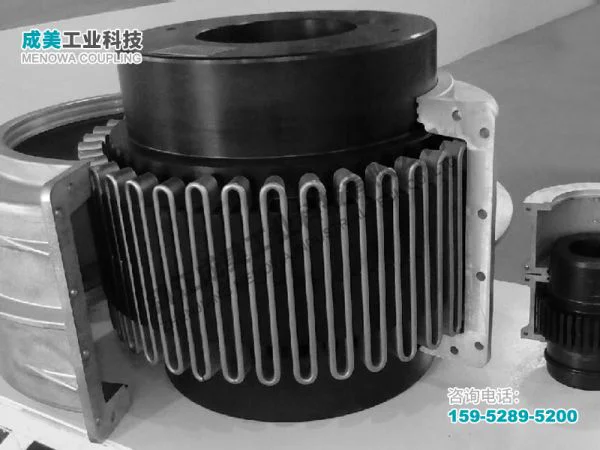
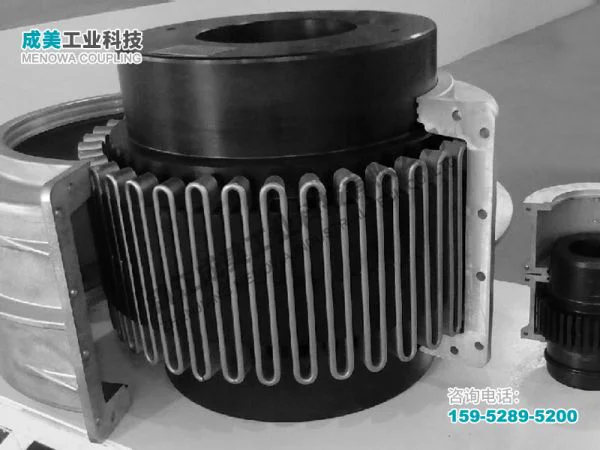
At the core of grid spring coupling pricing is the design complexity and engineering specifications that define the component’s performance capabilities. Grid spring couplings are designed to accommodate misalignments between shafts, absorb shocks and vibrations, and transmit torque efficiently—features that require careful engineering to balance flexibility and strength. The design process involves determining the appropriate grid size, spring configuration, hub dimensions, and overall structure to meet specific torque requirements, misalignment tolerances, and operating conditions. Couplings designed for high-torque applications, for example, require thicker grids, stronger springs, and more robust hubs to withstand the forces involved, which inherently increases material usage and manufacturing complexity. Similarly, couplings intended for applications with significant misalignment (radial, angular, or axial) must be engineered with greater flexibility, often involving more intricate grid patterns or specialized spring designs that add to the production cost. The level of precision required in the design also impacts price; couplings used in precision machinery, where even minor deviations can affect performance, demand tighter tolerances and more rigorous engineering, leading to higher costs compared to standard-duty couplings.
Material selection is another primary factor that directly influences the price of grid spring couplings. The materials used for the grid, springs, hubs, and other components must be chosen based on the application’s operating conditions, including temperature, load, speed, and environmental exposure. Common materials for grid spring couplings include various types of steel, such as carbon steel, alloy steel, and stainless steel, each with distinct properties that affect cost and performance. Carbon steel is often used for standard-duty applications due to its affordability and adequate strength, but it may not be suitable for high-temperature or corrosive environments. Alloy steel, which contains additional elements like chromium, nickel, or molybdenum, offers superior strength, durability, and resistance to wear and fatigue, making it ideal for heavy-duty or high-performance applications—but it comes at a higher cost than carbon steel. Stainless steel is chosen for applications where corrosion resistance is critical, such as in food processing, chemical, or marine environments, but its higher material cost significantly impacts the overall price of the coupling. In addition to the main components, the materials used for fasteners, seals, and lubricants can also contribute to price variations; high-quality seals and specialized lubricants, for example, may be required for harsh environments, adding to the total cost.
Manufacturing processes play a vital role in determining the price of grid spring couplings, as different production methods vary in complexity, efficiency, and cost. The grid, which is the core flexible component of the coupling, is typically manufactured using processes like stamping, forging, or machining. Stamping is a cost-effective method for high-volume production, as it allows for rapid manufacturing of consistent, uniform grids. However, stamping has limitations in terms of the thickness and complexity of the grid, making it suitable for standard designs but not for heavy-duty or custom configurations. Forging, on the other hand, involves shaping metal through high pressure and heat, resulting in a stronger, more durable grid with improved mechanical properties. Forged grids are ideal for high-torque applications but require more energy and specialized equipment, leading to higher production costs. Machining, which involves removing material from a solid block to create the grid and other components, offers the highest level of precision and flexibility, allowing for custom designs and tight tolerances. However, machining is a time-consuming process, especially for complex geometries, and thus increases the cost of the coupling. The choice of manufacturing process is often dictated by the volume of production, the complexity of the design, and the performance requirements of the application—all of which influence the final price.
The size and dimensions of grid spring couplings also have a direct impact on their price. Larger couplings, which are designed to handle higher torque and connect larger shafts, require more material and more complex manufacturing processes, leading to higher costs. The diameter of the hub, the length of the coupling, and the size of the grid all contribute to the overall material usage; a larger coupling will use more steel or other materials, increasing the raw material cost. Additionally, larger couplings may require specialized manufacturing equipment to handle their size, further adding to production expenses. Smaller couplings, by contrast, use less material and can be manufactured with standard equipment, making them more affordable. However, even small couplings can be expensive if they require custom dimensions or high-precision manufacturing to fit specific equipment. The shaft size and keyway specifications also influence price, as custom keyways or non-standard shaft diameters may require additional machining steps, increasing the production cost.
Customization and special requirements are significant drivers of price variations in grid spring couplings. Many applications require couplings that are tailored to specific operating conditions, such as extreme temperatures, high speeds, corrosive environments, or unique misalignment requirements. Custom designs may involve modifying the grid pattern, adjusting the hub dimensions, adding specialized seals or lubrication systems, or using exotic materials to meet these demands. Each customization adds complexity to the design and manufacturing process, requiring additional engineering time, specialized tooling, and unique production steps—all of which increase the cost. For example, a coupling designed for use in a high-temperature environment may require heat-resistant materials and specialized lubricants, while a coupling for a corrosive environment may need a protective coating or stainless steel construction. Customized couplings are often produced in smaller quantities, which further increases the unit cost due to the lack of economies of scale. In contrast, standard, off-the-shelf couplings are mass-produced, allowing manufacturers to spread their fixed costs over a larger number of units, resulting in lower prices.
Market dynamics and supply chain factors also play a role in determining the price of grid spring couplings. The global market for mechanical couplings is influenced by factors such as raw material prices, labor costs, transportation costs, and market demand. Fluctuations in the price of steel, which is the primary material used in grid spring couplings, can have a significant impact on manufacturing costs. When steel prices rise, manufacturers may pass on these increases to buyers, leading to higher coupling prices. Labor costs also vary by region; manufacturing in regions with higher labor costs may result in more expensive couplings, while production in areas with lower labor costs can offer more competitive prices. Transportation costs, including shipping fees, tariffs, and logistics expenses, can also affect the final price, especially for international buyers. Market demand is another key factor; when demand for grid spring couplings is high, manufacturers may increase prices to capitalize on the market, while low demand may lead to lower prices to stimulate sales. Additionally, the number of suppliers in the market can influence competition; a market with many suppliers may result in lower prices due to competition, while a market with few suppliers may allow for higher prices.
The performance and durability of grid spring couplings also contribute to their price. Couplings that are designed to last longer, require less maintenance, and perform reliably under harsh conditions are typically more expensive than those with shorter lifespans or lower performance specifications. Durability is often achieved through the use of high-quality materials, robust design, and rigorous quality control during manufacturing—all of which add to the cost. For example, a coupling with a longer service life may use alloy steel instead of carbon steel, have a more robust grid design, and include high-quality seals to prevent wear and tear. While these features increase the initial price, they can reduce long-term costs by minimizing downtime, maintenance expenses, and the need for frequent replacements. Buyers must balance the initial cost with the total cost of ownership, considering factors such as maintenance requirements, service life, and potential downtime costs when evaluating coupling prices. In many cases, investing in a more expensive, high-performance coupling can be more cost-effective in the long run than choosing a cheaper, lower-quality option that may fail prematurely.
Another factor that influences grid spring coupling prices is the level of quality control and testing during manufacturing. Manufacturers that implement strict quality control processes and conduct rigorous testing to ensure the performance and reliability of their couplings will have higher production costs, which are reflected in the final price. Quality control measures may include inspecting raw materials for defects, testing components for strength and durability, and verifying that the coupling meets all design specifications. Testing may involve torque testing, misalignment testing, fatigue testing, and environmental testing to ensure the coupling can withstand the intended operating conditions. Couplings that undergo extensive testing are more likely to be reliable and durable, but the cost of these tests adds to the overall manufacturing cost. In contrast, manufacturers that cut corners on quality control and testing may offer lower prices, but their couplings may be more prone to failure, leading to additional costs for the buyer.
Application-specific requirements also play a role in determining the price of grid spring couplings. Different industries have unique needs that influence the design and cost of the couplings used. For example, the automotive industry may require compact, lightweight couplings that can handle high speeds and frequent start-stop cycles, while the mining industry may need heavy-duty couplings that can withstand extreme loads, vibrations, and harsh environmental conditions. The aerospace industry, which demands the highest levels of precision and reliability, may require couplings with tight tolerances, exotic materials, and extensive testing, leading to significantly higher prices. The food and beverage industry may require couplings that are easy to clean, corrosion-resistant, and compliant with hygiene standards, which can also increase cost. Each industry’s specific requirements dictate the design, materials, and manufacturing processes used, all of which contribute to price variations.
It is important to note that the price of grid spring couplings is not solely determined by a single factor, but by a combination of all the elements discussed above. A coupling with a simple design, standard materials, and no customization will be significantly cheaper than a custom-designed coupling made from high-quality alloy steel, manufactured with precision machining, and tested extensively for high-performance applications. Buyers should carefully evaluate their application requirements to determine which factors are most critical, as this will help them balance cost with performance. For example, if a coupling is used in a low-torque, standard environment, a basic, off-the-shelf model may be sufficient and cost-effective. However, if the coupling is used in a high-torque, harsh environment with unique misalignment requirements, a more expensive, custom-designed coupling may be necessary to ensure reliability and avoid costly downtime.
In addition to the factors directly related to the coupling itself, other considerations can influence the total cost of purchasing and using grid spring couplings. For example, installation costs may vary depending on the complexity of the coupling and the required tools and labor. Couplings that are easy to install may reduce installation costs, while complex or custom couplings may require specialized labor, increasing the total cost. Maintenance costs are also an important consideration; couplings that require frequent lubrication, inspection, or part replacement will have higher long-term costs, even if their initial price is lower. Buyers should also consider the availability of spare parts, as couplings with readily available spare parts may be more cost-effective to maintain than those with rare or custom parts.
The global trend towards industrial automation and the increasing demand for high-performance machinery have also influenced the price of grid spring couplings. As industries adopt more advanced equipment that requires precise torque transmission, vibration absorption, and misalignment compensation, the demand for high-quality, high-performance couplings has increased. This increased demand has led to the development of more advanced coupling designs, using new materials and manufacturing processes, which can be more expensive than traditional designs. However, these advanced couplings often offer improved efficiency, durability, and performance, making them a worthwhile investment for many applications. Additionally, the growing focus on sustainability and energy efficiency has led to the development of couplings that reduce energy loss during transmission, which can help lower long-term operating costs, even if their initial price is higher.
When evaluating grid spring coupling prices, it is essential for buyers to avoid focusing solely on the initial cost. Instead, they should consider the total cost of ownership, which includes the initial purchase price, installation costs, maintenance costs, downtime costs, and the service life of the coupling. A cheaper coupling may have a shorter service life, require more frequent maintenance, and be more prone to failure, leading to higher total costs over time. Conversely, a more expensive coupling may have a longer service life, lower maintenance requirements, and higher reliability, resulting in lower total costs in the long run. By taking a holistic approach to cost evaluation, buyers can make more informed decisions that align with their budget and application needs.
In conclusion, the price of grid spring couplings is shaped by a complex interplay of design complexity, material selection, manufacturing processes, size and dimensions, customization, market dynamics, performance and durability, quality control, and application-specific requirements. Each of these factors contributes to the final cost, and understanding how they interact is essential for buyers to navigate the market effectively. By carefully evaluating their application needs, balancing initial cost with total cost of ownership, and considering the long-term reliability and performance of the coupling, buyers can select the right grid spring coupling at a price that meets their budget and delivers the required performance. As industrial technology continues to advance, the demand for high-quality, efficient grid spring couplings will remain strong, and prices will continue to reflect the evolving needs of various industries and the technological innovations that drive the market.
Post Date: May 13, 2026
https://www.menowacoupling.com/china-coupling/grid-spring-coupling-price.html
Supply
Related Articles
Grid Spring Coupling For Sale
In the complex world of mechanical power transmission, the search for reliable, efficient, and durable coupling solutions is a constant priority for industries across the globe. Grid spring couplings have emerged as a versatile and high-performance option, designed to address the challenges of connecting rotating shafts…Size Chart of Grid Spring Coupling
A size chart of grid spring coupling is an indispensable reference tool in industrial transmission systems, serving as a bridge between the coupling’s design parameters and its practical application. It systematically organizes key dimensional data, enabling engineers, technicians, and procurement personnel to quickly …Grid Spring Coupling Supply
In the realm of industrial power transmission, the role of grid spring couplings is indispensable, serving as a critical link between driving and driven components across a wide range of machinery. As the demand for efficient, reliable, and durable transmission solutions continues to grow across various industries, the …Dimensions of Grid Spring Coupling
The grid spring coupling is a critical component in mechanical transmission systems, widely utilized across various industrial sectors due to its exceptional ability to accommodate misalignments, dampen vibrations, and transmit torque efficiently. While its functional advantages are well-recognized, the dimensions of a …Specification of Grid Spring Coupling
Grid spring coupling is a crucial flexible connecting component widely used in mechanical transmission systems, designed to transmit torque between two shafts while compensating for relative displacements and absorbing vibrations and shocks. Unlike rigid couplings that require precise alignment between shafts, grid spri…Coaxiality of Grid Spring Coupling
Coaxiality is a critical geometric parameter that directly determines the performance, reliability, and service life of grid spring couplings, which are widely used in various industrial transmission systems to connect two rotating shafts and transmit torque while compensating for minor misalignments. In essence, coaxia…
 WeChat
 WhatsApp