Grid Spring Coupling Factory
In the complex ecosystem of industrial machinery, the role of grid spring couplings is often underestimated, yet they are the unsung heroes that ensure the smooth and efficient transmission of power between rotating shafts. These precision components are integral to a wide range of industrial applications, from heavy-duty manufacturing to delicate precision machinery, and the factories that produce them play a critical role in supporting global industrial operations. A grid spring coupling factory is more than just a production facility; it is a hub of engineering expertise, precision manufacturing, and quality control, where every component is crafted to meet the rigorous demands of modern industry. This article delves into the inner workings of a grid spring coupling factory, exploring the manufacturing processes, technical considerations, application scenarios, maintenance practices, and future trends that define this essential sector.
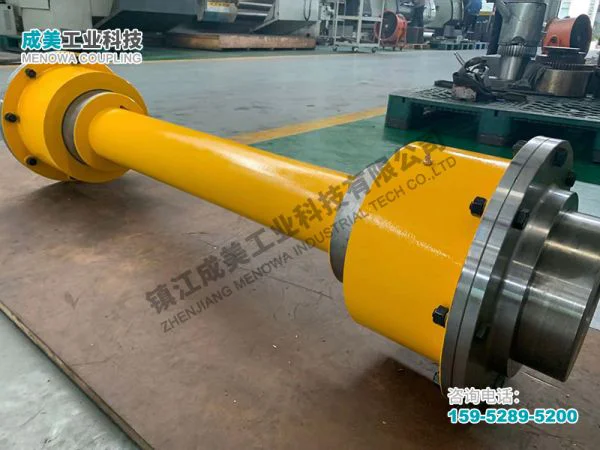
At the core of any grid spring coupling factory is a commitment to precision and quality, as these components are responsible for transmitting torque while compensating for misalignments and absorbing vibrations. The manufacturing process begins with the careful selection of raw materials, a step that directly impacts the performance and durability of the final product. High-quality alloy steels are the primary material of choice for most grid spring couplings, as they offer an optimal balance of strength, flexibility, and resistance to wear and corrosion. These steels are carefully sourced from reputable suppliers and undergo rigorous testing to ensure they meet the required mechanical properties, including tensile strength, hardness, and ductility. In some cases, specialized materials such as stainless steel or heat-resistant alloys may be used for couplings intended for use in harsh environments, such as high-temperature industrial processes or corrosive chemical applications.
Once the raw materials are approved, the manufacturing process moves to the forging or machining stage. Forging is a common method used to shape the metal into the basic form of the coupling components, as it enhances the material’s strength by aligning its grain structure. The forging process involves heating the metal to a high temperature and then applying pressure to shape it into the desired shape using dies and presses. This step requires precise control of temperature and pressure to ensure the component meets the required dimensions and mechanical properties. After forging, the components are subjected to a series of machining operations to achieve the final precision. CNC (Computer Numerical Control) machines are used extensively in this stage, as they offer unparalleled accuracy and consistency. The machining process includes turning, milling, drilling, and grinding, each performed with meticulous attention to detail to ensure the components fit together perfectly. The grid spring itself, which is the heart of the coupling, is precision-formed to ensure it can flex and absorb vibrations while maintaining the ability to transmit torque efficiently.
Following machining, the components undergo a series of heat treatment processes to enhance their durability and performance. Heat treatment involves heating the components to specific temperatures and then cooling them at controlled rates to alter their microstructure. This process can improve the hardness, toughness, and wear resistance of the metal, ensuring the coupling can withstand the high stresses and loads encountered in industrial applications. Common heat treatment methods include annealing, quenching, and tempering, each tailored to the specific material and desired properties. After heat treatment, the components are subjected to surface finishing processes, such as shot blasting or painting, to protect them from corrosion and improve their appearance. Shot blasting removes any surface imperfections and creates a rough surface that helps the paint adhere better, while painting provides an additional layer of protection against environmental factors such as moisture and chemicals.
Quality control is a贯穿 (pervasive) aspect of every stage of the manufacturing process in a grid spring coupling factory. From the initial inspection of raw materials to the final testing of the assembled coupling, every step is monitored to ensure the product meets the highest standards. Advanced testing equipment is used to measure dimensions, check for defects, and verify mechanical properties. Dimensional testing is performed using coordinate measuring machines (CMMs), which can accurately measure the size and shape of components to within a few micrometers. Non-destructive testing (NDT) methods, such as ultrasonic testing and magnetic particle inspection, are used to detect internal and surface defects that may not be visible to the naked eye. These tests are critical for ensuring the safety and reliability of the couplings, as even a small defect can lead to catastrophic failure in high-load applications. Additionally, assembled couplings are tested for torque capacity, vibration absorption, and misalignment compensation to ensure they perform as expected under real-world conditions.
The design of grid spring couplings is a complex engineering process that requires a deep understanding of mechanical principles and industrial applications. Engineers in the factory work closely with customers to design couplings that meet their specific requirements, taking into account factors such as torque capacity, shaft misalignment, operating speed, and environmental conditions. The grid spring design is particularly important, as it determines the coupling’s ability to absorb vibrations and compensate for misalignments. The spring is typically shaped in a spiral or grid pattern, which allows it to flex in multiple directions while maintaining its structural integrity. The number of coils, the thickness of the spring, and the material used all impact the coupling’s performance, and engineers use advanced software to simulate and optimize the design before production begins. This computer-aided design (CAD) software allows engineers to model the coupling and test its performance under various conditions, ensuring it will meet the customer’s needs without the need for expensive physical prototypes.
Grid spring couplings are used in a wide range of industrial applications, and the factory must be able to produce couplings that are tailored to each industry’s unique requirements. In the manufacturing sector, they are used in conveyor systems, pumps, compressors, and machine tools, where they help to transmit power efficiently and reduce vibration. In the automotive industry, they are used in powertrain systems, where they compensate for misalignments between the engine and transmission. In the energy sector, they are used in wind turbines, hydroelectric generators, and thermal power plants, where they must withstand high loads and extreme environmental conditions. In the mining industry, they are used in crushers, conveyors, and pumps, where they are exposed to dust, moisture, and heavy loads. Each of these applications requires a different type of grid spring coupling, and the factory must be flexible enough to adapt its production processes to meet these varying needs. This flexibility is achieved through modular production systems, which allow the factory to quickly switch between different product configurations and sizes.
One of the key advantages of grid spring couplings is their ability to compensate for shaft misalignments, which is a common problem in industrial machinery. Shaft misalignment can occur due to a variety of factors, including installation errors, thermal expansion, and mechanical wear. If left unaddressed, misalignment can lead to increased vibration, premature wear of bearings and other components, and even catastrophic failure. Grid spring couplings are designed to absorb these misalignments, including radial, angular, and axial misalignments, without sacrificing torque transmission. The grid spring acts as a flexible element that can bend and twist to accommodate the misalignment, while still maintaining a secure connection between the two shafts. This ability to compensate for misalignments makes grid spring couplings ideal for use in applications where precise alignment is difficult to maintain, such as in large industrial machinery or equipment that operates under varying temperature conditions.
Another important feature of grid spring couplings is their ability to absorb vibrations and shocks, which helps to protect the connected machinery and extend its lifespan. Industrial machinery often generates vibrations during operation, which can be transmitted through the shafts to other components, causing noise, wear, and fatigue. Grid spring couplings absorb these vibrations by flexing, which converts the vibrational energy into heat, thereby reducing the amount of vibration transmitted to the connected equipment. This not only protects the machinery but also improves the working environment by reducing noise levels. In applications where there are frequent start-ups and shutdowns or sudden changes in load, the shock-absorbing properties of grid spring couplings are particularly valuable, as they help to reduce the stress on the machinery and prevent damage.
Proper maintenance is essential for ensuring the long-term performance and reliability of grid spring couplings, and the factory often provides guidance and support to customers on maintenance practices. Regular inspection is the first step in maintaining grid spring couplings, and customers are advised to check the coupling for signs of wear, damage, or misalignment. This includes inspecting the grid spring for cracks or fatigue, checking the bolts and fasteners for tightness, and ensuring the coupling is properly lubricated. Lubrication is particularly important, as it reduces friction between the moving parts of the coupling and prevents wear. The factory typically recommends using a high-quality lubricant that is compatible with the material of the coupling and the operating conditions. In addition, customers are advised to replace worn or damaged components promptly to prevent further damage to the coupling or the connected machinery. The factory may also offer maintenance services or supply replacement parts to ensure customers can keep their couplings in optimal condition.
The grid spring coupling industry is constantly evolving, driven by advances in technology, changes in industrial requirements, and a growing focus on sustainability. In recent years, there has been a trend towards the development of more efficient and durable couplings, as well as couplings that are designed to be more environmentally friendly. For example, some factories are exploring the use of lightweight materials, such as aluminum alloys or composite materials, to reduce the weight of the couplings and improve energy efficiency. Others are developing couplings with improved lubrication systems that reduce the need for frequent maintenance and minimize the environmental impact of lubricant disposal. Additionally, the rise of industrial automation has led to an increased demand for couplings that can be integrated with smart monitoring systems, which allow for real-time monitoring of the coupling’s performance and early detection of potential issues. These smart couplings can provide data on torque, temperature, vibration, and misalignment, allowing customers to optimize their maintenance schedules and reduce downtime.
The global market for grid spring couplings is also expanding, driven by the growth of industrialization in emerging economies and the increasing demand for high-performance machinery. Factories that produce grid spring couplings must be able to compete in a global marketplace, which requires them to maintain high standards of quality, efficiency, and innovation. This often involves investing in advanced manufacturing technology, such as robotics and automation, to improve production efficiency and reduce costs. It also requires a commitment to research and development, to stay ahead of the latest technological trends and meet the evolving needs of customers. Many factories are also focusing on improving their supply chain management, to ensure a steady supply of raw materials and reduce lead times for customers.
In addition to technological advances, the grid spring coupling industry is also facing challenges related to environmental regulations and sustainability. Governments around the world are implementing stricter environmental standards, which are driving factories to adopt more eco-friendly manufacturing processes. This includes reducing energy consumption, minimizing waste, and using environmentally friendly materials and lubricants. Factories are also exploring ways to recycle and reuse materials, to reduce their environmental footprint. For example, some factories are recycling scrap metal from the manufacturing process to produce new components, while others are using water-based paints and lubricants to reduce the use of harmful chemicals.
The role of a grid spring coupling factory extends beyond just production; it also involves providing technical support and customer service to ensure customers get the most out of their couplings. This includes helping customers select the right coupling for their application, providing installation guidance, and offering troubleshooting support. Many factories have a team of experienced engineers who can work with customers to solve complex problems and optimize the performance of their couplings. This level of customer support is essential for building long-term relationships with customers and ensuring their satisfaction.
In conclusion, a grid spring coupling factory is a vital part of the industrial ecosystem, producing precision components that are essential for the smooth and efficient operation of a wide range of machinery. From the careful selection of raw materials to the final testing of the assembled product, every step of the manufacturing process is guided by a commitment to quality and precision. The factory’s ability to adapt to changing industrial requirements, invest in new technology, and provide exceptional customer support is what sets it apart in a competitive global market. As industrial technology continues to evolve, grid spring coupling factories will play an increasingly important role in supporting the growth and development of industries around the world, ensuring that machinery operates reliably, efficiently, and sustainably for years to come.
Post Date: May 13, 2026
https://www.menowacoupling.com/china-coupling/grid-spring-coupling-factory.html
Supply
Related Articles
Grid Spring Coupling Production
Grid spring couplings are essential mechanical components widely used in various industrial applications to connect two rotating shafts, transmit torque, and compensate for axial, radial, and angular misalignments between them. Unlike rigid couplings that require precise alignment and offer no flexibility, grid spring c…Types of Grid Spring Coupling
Types of Grid Spring CouplingGrid spring couplings are essential components in mechanical power transmission systems, designed to connect two rotating shafts while accommodating misalignments, absorbing vibrations, and transmitting torque efficiently. Unlike rigid couplings that require precise alignment and offer no fl…Elastic Coupling Supply
In the realm of industrial power transmission, elastic couplings serve as a critical bridge between rotating shafts, enabling the smooth transfer of torque while mitigating the negative effects of misalignment, vibration, and shock loads. The supply of elastic couplings is a dynamic and essential component of modern man…Structure of Grid Spring Coupling
The grid spring coupling is a crucial component in industrial power transmission systems, designed to connect two rotating shafts while accommodating misalignments, absorbing vibrations, and protecting machinery from shock loads. Its unique structure combines the rigidity needed for efficient torque transmission with th…Grid Spring Coupling Vendor In China
In the global mechanical transmission industry, grid spring couplings play an indispensable role as key components that connect rotating shafts, transmit torque, and compensate for relative displacements between shafts. As one of the world’s largest manufacturing hubs, China has nurtured a large number of professional …Uses of Grid Spring Coupling
In the realm of mechanical power transmission, the grid spring coupling stands as a versatile and reliable component that plays a critical role in connecting rotating shafts across a wide range of industrial applications. Unlike rigid couplings that demand precise alignment and offer no flexibility, or flexible coupling…
 WeChat
 WhatsApp