Diagram of Grid Spring Coupling
A grid spring coupling is a versatile mechanical device designed to transmit torque between two rotating shafts while accommodating misalignments, absorbing shock loads, and reducing vibration in various industrial applications. Its unique structural design, which combines rigidity with flexibility, makes it an indispensable component in power transmission systems across a wide range of industries, from mining and manufacturing to automotive and marine engineering. Unlike rigid couplings that require precise alignment and offer no flexibility, grid spring couplings utilize a specialized grid-like spring element to bridge the gap between two shaft hubs, enabling smooth power transfer even when the shafts are not perfectly aligned. To fully understand the functionality and advantages of this coupling type, it is essential to examine its structural components, working principles, material selection, design variations, applications, maintenance requirements, and performance characteristics in detail.
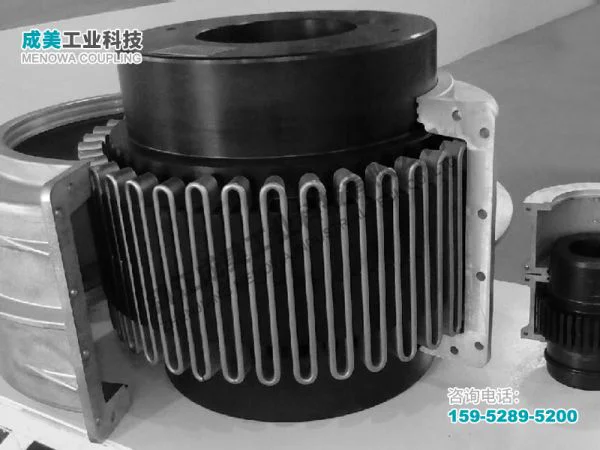
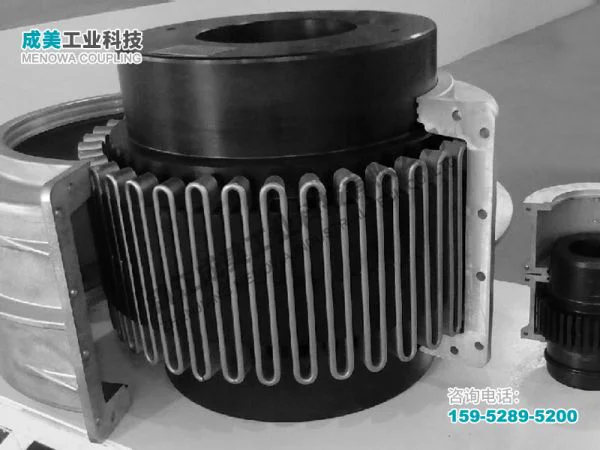
At the core of a grid spring coupling lies a set of interconnected components that work together to achieve torque transmission, misalignment compensation, and shock absorption. The primary components include two shaft hubs, a grid spring element, and a split cover assembly. Each component plays a critical role in the overall performance and durability of the coupling, and their design and construction are carefully engineered to meet the demands of different operating conditions. The shaft hubs are precision-machined components that attach to the driving and driven shafts, providing a secure connection that ensures torque is efficiently transferred from one shaft to the other. These hubs are typically designed with curved tooth profiles that mesh with the grid spring element, allowing for both torque transmission and flexibility. The tooth profiles are carefully shaped to ensure progressive contact with the grid, which helps to distribute loads evenly and reduce stress concentrations during operation.
The grid spring element is the heart of the coupling, responsible for providing the necessary flexibility, resilience, and shock absorption capabilities. This element is typically made from high-elastic alloy steel that is formed into a grid-like shape before undergoing controlled hardening and tempering processes. The grid structure is designed to be both strong and flexible, allowing it to deform elastically under load and then return to its original shape once the load is removed. This elastic deformation enables the coupling to accommodate three types of misalignment: angular misalignment, where the shafts are inclined relative to each other; parallel misalignment, where the shafts are offset but parallel; and axial misalignment, where the shafts move along their central axes. The grid’s design also allows it to absorb shock loads by spreading the impact energy over time, reducing the magnitude of peak loads and protecting the connected machinery from damage. In light load applications, the grid bears near the outer edges of the hub teeth, maintaining a long span between contact points that remains free to flex under load variations. As the load increases, more of the hub tooth surface comes into contact with the grid, providing additional support and protection while maintaining flexibility within the coupling’s rated capacity. Under extreme overloads, the grid fully engages with the hub teeth, transmitting the full load directly to ensure the system can handle unexpected spikes in torque.
The split cover assembly is another essential component of the grid spring coupling, serving to protect the internal components from external contaminants such as dust, dirt, and moisture, while also containing the lubricant required for smooth operation. The cover is typically split into two halves, either horizontally or vertically, which allows for easy installation, inspection, and maintenance without removing the entire coupling from the shafts. Horizontal split covers are ideal for applications with limited space, as they provide convenient access to the grid spring element for inspection and replacement. Vertical split covers, on the other hand, are better suited for higher operating speeds and applications where space constraints are less of a concern. The cover assembly also includes gaskets, seals, and hardware to ensure a tight, secure fit that prevents lubricant leakage and keeps contaminants out. The lubricant within the cover is crucial for reducing friction between the grid spring element and the hub teeth, minimizing wear and extending the service life of the coupling. Without proper lubrication, the metal components would experience excessive friction, leading to premature wear, overheating, and potential failure.
The material selection for grid spring couplings is a critical factor that directly impacts their performance, durability, and suitability for specific applications. The grid spring element is most commonly made from high-tensile alloy steel, which offers excellent strength, elasticity, and resistance to fatigue. This steel is subjected to a series of heat treatment processes, including hardening and tempering, to enhance its mechanical properties and ensure it can withstand the repeated stress of torque transmission and elastic deformation. Some grid elements may also undergo shot-peening, a process that compresses the surface molecules and creates a residual stress layer, significantly increasing the component’s fatigue strength and resistance to wear. The shaft hubs are typically made from high-strength steel or cast iron, which provide the rigidity and durability needed to withstand the torque loads and maintain a secure connection to the shafts. In applications where corrosion resistance is required, such as marine or chemical environments, the components may be made from stainless steel or coated with corrosion-resistant materials like nickel plating. For high-temperature applications, specialized alloys that can withstand extreme temperatures without losing their mechanical properties are used, ensuring the coupling remains functional even in harsh operating conditions.
Grid spring couplings are available in several design variations, each tailored to meet the specific requirements of different applications. The most common types include standard, flange, double flange, brake disc, high-temperature, corrosion-resistant, and high-flexibility designs. Standard grid spring couplings feature serpentine spring strips embedded in the gear slots of two coupling halves, offering a simple, cost-effective solution with easy maintenance. They are ideal for general industrial equipment such as pumps, fans, and conveyors, where moderate misalignment and torque loads are common. Flange-type couplings feature flange connections on both ends, secured by bolts, with the spring element sandwiched between them. This design offers high torque capacity and stable installation, making it suitable for heavy machinery such as compressors and marine drives, though it requires precise alignment and has a larger size. Double flange-type couplings have a modular design with flanges on both sides and a grid spring in the middle, allowing them to handle larger misalignments and facilitating easy disassembly. They are commonly used in long-shaft systems, such as mining equipment, where misalignment is more pronounced.
Brake disc-type grid spring couplings integrate a brake disc or flywheel into their design, offering space-saving benefits and fast braking response. They are ideal for applications such as cranes and elevator drives, where braking integration is essential. High-temperature grid spring couplings use high-temperature alloy springs, such as Inconel, with hard-chrome-plated teeth, enabling them to withstand temperatures above 400°C and resist oxidation. These couplings are commonly used in metallurgical equipment and kilns. Corrosion-resistant couplings are made from stainless steel, such as 316L, or feature nickel-plated surfaces, making them suitable for chemical pumps, marine systems, and other environments where exposure to chemicals or salt spray is a concern. While they offer excellent corrosion resistance, they typically have a slightly lower load capacity compared to standard steel couplings. High-flexibility grid spring couplings have an optimized spring curvature that enhances elasticity, providing superior vibration damping and shock absorption. They are ideal for applications with high vibration levels, such as crushers and vibrating screens, where reducing vibration transmission is critical to protecting the connected machinery.
The working principle of a grid spring coupling is based on the interaction between the grid spring element and the curved tooth profiles of the shaft hubs. When torque is applied to the driving shaft, the hub attached to this shaft transfers the torque to the grid spring element through the meshing of the hub teeth and the grid. The grid, which is designed to be flexible, undergoes elastic deformation as it transmits the torque to the driven hub, which then transfers the torque to the driven shaft. This elastic deformation allows the coupling to accommodate misalignments between the two shafts, as the grid can flex and adjust to the relative movement of the hubs. The progressive contact between the grid and the hub teeth ensures that the load is distributed evenly across the components, reducing stress concentrations and minimizing wear. Additionally, the grid’s ability to absorb shock loads is achieved by spreading the impact energy over time, which reduces the peak load experienced by the connected machinery. This shock absorption capability is particularly important in applications with frequent start-stop cycles or sudden load changes, as it helps to extend the service life of the equipment and prevent premature failure.
One of the key advantages of grid spring couplings is their exceptional torsional flexibility and vibration damping capabilities. Unlike rigid couplings, which transmit all vibrations and shocks from the driving shaft to the driven shaft, grid spring couplings use the elastic deformation of the grid element to absorb and dampen vibrations, reducing the amount of vibration transmitted to the driven equipment by up to 30%. This vibration reduction not only protects the connected machinery but also improves the overall efficiency and performance of the power transmission system. Another significant advantage is their ability to accommodate multiple types of misalignment, which is common in industrial applications due to factors such as thermal expansion, shaft deflection, and installation errors. By compensating for these misalignments, grid spring couplings reduce the stress on the shafts, bearings, and other components, extending their service life and reducing maintenance costs.
Grid spring couplings also offer excellent durability and long service life when properly maintained. The use of high-quality materials and precision manufacturing processes ensures that the components can withstand the harsh operating conditions of industrial environments, including high torque loads, extreme temperatures, and exposure to contaminants. Additionally, their design allows for easy maintenance, as the split cover assembly provides convenient access to the grid spring element and other internal components. This ease of maintenance reduces downtime and labor costs, making grid spring couplings a cost-effective solution for many industrial applications. Another advantage is their versatility, as they can be used in a wide range of applications with varying torque requirements, misalignment levels, and environmental conditions. They are also fully interchangeable with industry standards, allowing for easy replacement and compatibility with existing equipment.
The selection of a grid spring coupling for a specific application requires careful consideration of several key factors, including load characteristics, misalignment compensation needs, environmental conditions, space constraints, and special requirements. Load characteristics are particularly important, as different applications have varying torque and shock load requirements. High torque and impact loads, such as those encountered in crushers and compressors, require flange or double flange-type couplings that offer high torque capacity and shock resistance. Vibration-sensitive systems, such as generators and CNC machines, benefit from high-flexibility or damped designs that provide superior vibration damping. Misalignment compensation needs also play a critical role in selection: applications with large angular or radial misalignment require double flange or high-flexibility types, which can accommodate angular tolerances of up to ±3°, while applications with precise alignment require standard or compact flange types.
Environmental conditions are another important consideration. High-temperature applications require high-temperature type couplings with heat-resistant grease, such as molybdenum disulfide, to ensure proper lubrication and performance. Corrosive environments require stainless steel or nickel-plated couplings to resist chemical or saltwater damage. Dust and moisture-prone environments benefit from sealed designs that prevent contaminants from entering the coupling. Space constraints also influence selection: compact installations are well-suited for standard or brake disc-type couplings, while long shaft spans require double flange-type couplings with extended middle sections. Special requirements, such as braking integration or quick disassembly, may require specialized designs like brake disc-type or modular double flange-type couplings.
Proper maintenance is essential to ensure the optimal performance and long service life of grid spring couplings. Regular inspection is critical to identify any signs of wear, damage, or lubricant leakage. The grid spring element should be inspected for signs of fatigue, such as cracks or deformation, which can compromise the coupling’s performance. The hub teeth should also be checked for wear, as excessive wear can reduce the efficiency of torque transmission and increase the risk of failure. Lubrication is another key maintenance task, as proper lubrication reduces friction between the grid and hub teeth, minimizing wear and preventing overheating. The lubricant should be checked regularly and replaced according to the manufacturer’s recommendations, taking into account the operating conditions and load requirements. In addition, the split cover assembly should be inspected to ensure that the gaskets and seals are intact and that the hardware is properly tightened, preventing lubricant leakage and the entry of contaminants.
Common pitfalls in the selection and use of grid spring couplings include overemphasizing flexibility, which can lead to torque loss and reduced efficiency, and ignoring thermal expansion, which can cause excessive stress on the coupling components in high-temperature applications. It is also important to avoid under-sizing the coupling, as this can lead to premature failure due to excessive torque loads. Proper installation is another critical factor, as incorrect alignment or improper attachment of the hubs to the shafts can reduce the coupling’s performance and service life. During installation, the shafts should be aligned as closely as possible, and the hubs should be securely fastened to prevent slippage. The split cover assembly should be properly installed to ensure a tight seal, and the correct lubricant should be used to ensure smooth operation.
In conclusion, grid spring couplings are a versatile and reliable solution for power transmission in a wide range of industrial applications. Their unique structural design, which combines a flexible grid spring element with rigid shaft hubs and a protective cover assembly, enables them to transmit torque efficiently, accommodate misalignments, absorb shock loads, and reduce vibration. The selection of the appropriate grid spring coupling depends on a variety of factors, including load characteristics, misalignment needs, environmental conditions, and space constraints. Proper maintenance, including regular inspection and lubrication, is essential to ensure the coupling’s optimal performance and long service life. By understanding the components, working principles, and performance characteristics of grid spring couplings, engineers and maintenance professionals can select and use these devices effectively, ensuring the reliable and efficient operation of industrial machinery and power transmission systems. Whether in mining, manufacturing, automotive, or marine applications, grid spring couplings continue to play a critical role in enabling smooth, reliable power transmission, making them an indispensable component in modern industrial systems.
Post Date: May 6, 2026
https://www.menowacoupling.com/china-coupling/diagram-of-grid-spring-coupling.html
Supply
Related Articles
Grid Spring Coupling Price
In the realm of mechanical power transmission, grid spring couplings stand out as a versatile and reliable component, widely used across various industries to connect rotating shafts and ensure efficient torque transfer. While their functionality and performance are critical considerations for engineers and procurement …Specification of Grid Spring Coupling
Grid spring coupling is a crucial flexible connecting component widely used in mechanical transmission systems, designed to transmit torque between two shafts while compensating for relative displacements and absorbing vibrations and shocks. Unlike rigid couplings that require precise alignment between shafts, grid spri…Coaxiality of Grid Spring Coupling
Coaxiality is a critical geometric parameter that directly determines the performance, reliability, and service life of grid spring couplings, which are widely used in various industrial transmission systems to connect two rotating shafts and transmit torque while compensating for minor misalignments. In essence, coaxia…Grid Spring Coupling Supplier
In the complex and interconnected world of industrial machinery, the role of coupling components cannot be overstated. These critical parts serve as the bridge between rotating shafts, ensuring the smooth and efficient transmission of power while accommodating misalignments and reducing operational stress. Among the var…Grid Spring Coupling Production
Grid spring couplings are essential mechanical components widely used in various industrial applications to connect two rotating shafts, transmit torque, and compensate for axial, radial, and angular misalignments between them. Unlike rigid couplings that require precise alignment and offer no flexibility, grid spring c…Types of Grid Spring Coupling
Types of Grid Spring CouplingGrid spring couplings are essential components in mechanical power transmission systems, designed to connect two rotating shafts while accommodating misalignments, absorbing vibrations, and transmitting torque efficiently. Unlike rigid couplings that require precise alignment and offer no fl…
 WeChat
 WhatsApp