Grid Spring Coupling Manufacture
Grid spring couplings are essential mechanical components widely used in industrial power transmission systems, serving as the critical connection between driving and driven shafts to transmit torque while accommodating misalignments and absorbing shocks. The manufacture of grid spring couplings requires precise engineering, strict material selection, and rigorous quality control to ensure their reliability, durability, and performance in various harsh industrial environments. Unlike other types of couplings, grid spring couplings feature a unique structure that combines flexibility and robustness, making them suitable for a wide range of applications, from light-duty machinery to heavy-duty industrial equipment. The manufacturing process of these couplings is a complex sequence of steps, each requiring meticulous attention to detail to meet the demanding operational requirements of modern industry.
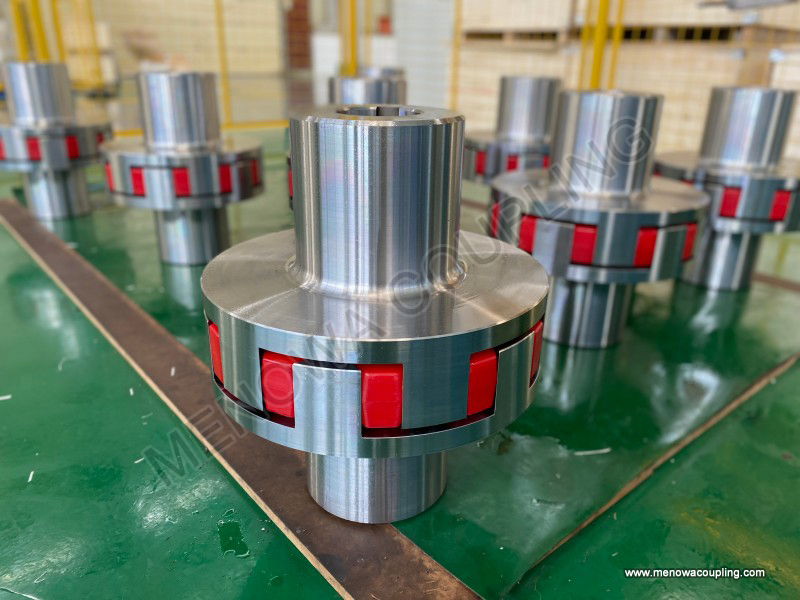
The foundation of high-quality grid spring coupling manufacture lies in the careful selection of materials, as the performance and lifespan of the coupling are directly determined by the properties of the materials used. Each component of the grid spring coupling—including the hubs, grid spring, and cover—requires materials with specific characteristics to fulfill their respective functions. The hubs, which are responsible for connecting the coupling to the shafts and transmitting torque, are typically made from high-strength metals that offer excellent tensile strength, impact resistance, and wear resistance. Common materials for hubs include cast steel, forged steel, and aluminum alloy, each chosen based on the specific application requirements. Cast steel is widely used due to its balanced combination of strength and toughness, making it suitable for most general industrial applications. Forged steel, on the other hand, is preferred for high-performance scenarios where superior mechanical properties are needed, as the forging process aligns the steel’s grain structure, enhancing its tensile strength and impact resistance. Aluminum alloy is utilized in applications where weight reduction is a priority, as it is strong yet lightweight, improving energy efficiency and reducing strain on connected components.
The grid spring, which is the core flexible element of the coupling, plays a crucial role in absorbing vibrations, cushioning shock loads, and accommodating misalignments. As such, the material selected for the grid spring must possess high elasticity, fatigue resistance, and ductility. High-tensile alloy steel is the most common material for grid springs, as it can withstand repeated torsional stresses without permanent deformation. The alloy steel is carefully formulated to include elements that enhance its mechanical properties, such as chromium, manganese, and silicon, which improve its strength, hardness, and corrosion resistance. Before being formed into the grid shape, the alloy steel undergoes a series of heat treatment processes to optimize its properties. These processes include annealing, hardening, and tempering, which help to relieve internal stresses, increase hardness, and improve toughness, ensuring that the grid spring can endure the harsh conditions of industrial operation.
The cover of the grid spring coupling, which encloses the grid spring and hubs, serves to protect the internal components from dust, moisture, and other contaminants, while also preventing the grid spring from being thrown out due to centrifugal force during operation. The cover is typically made from lightweight yet durable materials, such as aluminum alloy or stamped steel. Aluminum alloy covers are preferred for applications where weight is a concern, as they are lightweight and corrosion-resistant, making them suitable for outdoor or humid environments. Stamped steel covers, on the other hand, are used in high-speed applications, as they offer superior strength and stability at higher rotational speeds. The cover is also designed with seals and gaskets to ensure a tight fit, preventing lubricant leakage and protecting the internal components from external damage.
Once the materials have been selected, the manufacturing process begins with the production of the hubs. The hub manufacturing process starts with raw material preparation, where the selected metal is cut into the appropriate size and shape using cutting tools such as saws or plasma cutters. The cut blanks are then subjected to machining processes to achieve the required dimensions and surface finish. Precision turning is used to shape the outer and inner surfaces of the hubs, ensuring that they are concentric with the shaft mounting holes. Milling is then employed to create the tapered grooves on the outer surface of the hubs, which are designed to engage with the grid spring. These grooves are machined with high precision to ensure a proper fit with the grid spring, as any inaccuracies can lead to uneven torque transmission, increased wear, and reduced coupling performance. The hub machining process is typically performed using computer numerical control (CNC) machines, which offer high precision and repeatability, ensuring that each hub meets the exact specifications.
After the hubs have been machined, they undergo heat treatment to enhance their mechanical properties. The heat treatment process for hubs typically involves hardening and tempering. Hardening is done by heating the hubs to a high temperature, usually between 800 and 900 degrees Celsius, and then quenching them in a cooling medium such as oil or water. This process increases the hardness and strength of the hubs, making them more resistant to wear and deformation. Tempering is then performed by reheating the hardened hubs to a lower temperature, typically between 200 and 400 degrees Celsius, and then cooling them slowly. This process relieves the internal stresses caused by hardening, improves the toughness of the hubs, and reduces their brittleness. The heat treatment parameters are carefully controlled to ensure that the hubs achieve the desired balance of hardness and toughness, as improper heat treatment can lead to premature failure of the coupling.
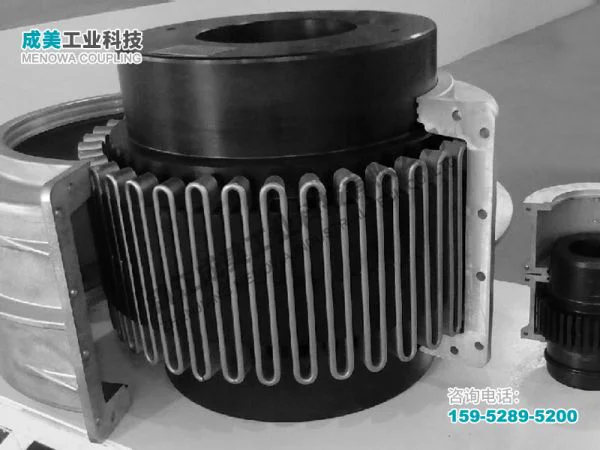
The next step in the manufacturing process is the production of the grid spring. The grid spring is formed from high-tensile alloy steel wire, which is first drawn to the required diameter using a wire drawing machine. The drawn wire is then cut into the appropriate length, and the ends are shaped to ensure a proper fit with the hub grooves. The wire is then formed into the characteristic grid shape using a specialized forming machine. The forming process involves bending the wire into a series of alternating curves, which create the flexible structure that allows the grid spring to absorb vibrations and accommodate misalignments. The forming process must be precise, as the shape and dimensions of the grid spring directly affect the coupling’s performance. After forming, the grid spring undergoes heat treatment to enhance its elasticity and fatigue resistance. The heat treatment process for the grid spring is similar to that of the hubs, involving hardening and tempering, but with specific parameters tailored to the material and shape of the spring.
Once the grid spring has been heat-treated, it is subjected to a shot-peening process. Shot peening involves bombarding the surface of the grid spring with small, hard particles, such as steel shot, at high velocity. This process compresses the surface molecules of the spring, creating a residual compressive stress layer on the surface. This residual stress helps to prevent the propagation of cracks and increases the fatigue life of the grid spring, as any tensile stress applied during operation must first overcome the compressive stress created by shot peening. Shot peening also improves the surface finish of the grid spring, reducing the risk of stress concentrations and enhancing its resistance to wear.
The cover manufacturing process begins with the selection of the appropriate material, which is then cut into the required shape using stamping or cutting tools. For aluminum alloy covers, die casting is often used to create the desired shape, as it allows for complex geometries and high precision. For stamped steel covers, a stamping press is used to shape the metal into the required form. The cover is then machined to create the mounting holes and other features, such as seals and gaskets, which are necessary for proper installation and protection. The cover is also treated with a corrosion-resistant coating, such as paint or powder coating, to protect it from environmental damage and extend its lifespan.
Once all the components have been manufactured, the assembly process begins. The assembly of grid spring couplings involves several steps, starting with the installation of the grid spring onto the hubs. The grid spring is carefully placed into the tapered grooves of one hub, and then the other hub is aligned and pressed onto the grid spring. The hubs are then secured to the shafts using keys and set screws, ensuring a tight and secure connection. The cover is then placed over the assembled hubs and grid spring, and secured using bolts or screws. Seals and gaskets are installed to prevent lubricant leakage and protect the internal components from dust and moisture. Before the assembly is complete, a lubricant is applied to the grid spring and hub grooves to reduce friction and wear. The type of lubricant used depends on the application requirements, but typically includes grease or oil that is resistant to high temperatures and heavy loads.
Quality control is a critical aspect of grid spring coupling manufacture, as any defects or inconsistencies can lead to premature failure and potentially costly downtime. Quality control measures are implemented throughout the entire manufacturing process, starting with the inspection of raw materials. Raw materials are tested for chemical composition, mechanical properties, and surface quality to ensure that they meet the required specifications. During the machining process, each component is inspected using precision measuring tools, such as calipers, micrometers, and coordinate measuring machines (CMMs), to ensure that the dimensions and surface finish are within the acceptable tolerances. Heat treatment processes are monitored to ensure that the components achieve the desired hardness and toughness, and the grid spring is inspected for proper shape and dimensions after forming and shot peening.
After assembly, the completed grid spring coupling undergoes a series of tests to verify its performance. These tests include torque transmission tests, which measure the coupling’s ability to transmit torque without slipping or deformation. Misalignment tests are also performed to ensure that the coupling can accommodate angular, parallel, and axial misalignments within the specified limits. Vibration and shock absorption tests are conducted to evaluate the coupling’s ability to absorb vibrations and cushion shock loads, protecting the connected equipment. Additionally, the coupling is subjected to endurance tests, where it is operated under simulated operating conditions for an extended period to ensure its durability and reliability. Any couplings that fail these tests are rejected and either reworked or discarded.
The performance characteristics of grid spring couplings are directly influenced by the manufacturing processes and quality control measures implemented. A well-manufactured grid spring coupling should exhibit excellent torque transmission efficiency, allowing for the smooth transfer of power between shafts. It should also have good misalignment compensation capabilities, able to accommodate small variations in shaft alignment that are common in industrial applications. The coupling should effectively absorb vibrations and cushion shock loads, reducing the stress on connected equipment and extending its lifespan. Additionally, the coupling should be durable and reliable, able to withstand the harsh conditions of industrial operation, including high temperatures, heavy loads, and exposure to dust and moisture.
Grid spring couplings are used in a wide range of industrial applications, including pumps, fans, compressors, conveyors, crushers, and mixers. In pump applications, for example, grid spring couplings are used to connect the motor to the pump shaft, accommodating misalignments and absorbing vibrations that can cause pump damage. In crusher applications, the coupling must withstand high torque and shock loads, making the robust construction of grid spring couplings ideal. The versatility of grid spring couplings is due in large part to their unique design and manufacturing process, which allows them to be tailored to specific application requirements. Manufacturers can adjust the material selection, dimensions, and design of the coupling to meet the specific torque, speed, and environmental requirements of each application.
Continuous improvement is an important part of grid spring coupling manufacture, as manufacturers strive to enhance the performance and reliability of their products. Advances in materials science have led to the development of new alloys that offer improved strength, fatigue resistance, and corrosion resistance, allowing for the manufacture of couplings that can withstand even more demanding operating conditions. Improvements in manufacturing technology, such as the use of advanced CNC machines and automated assembly systems, have increased the precision and efficiency of the manufacturing process, reducing production time and costs while improving product quality. Additionally, advancements in quality control techniques, such as non-destructive testing, have allowed manufacturers to detect defects more accurately and early in the manufacturing process, reducing the risk of premature failure.
In conclusion, the manufacture of grid spring couplings is a complex and precise process that requires careful material selection, advanced manufacturing techniques, and rigorous quality control. Each component of the coupling is manufactured with meticulous attention to detail, ensuring that the final product meets the demanding performance requirements of modern industry. From the selection of high-quality materials to the precision machining, heat treatment, and assembly processes, every step plays a crucial role in determining the reliability, durability, and performance of the coupling. As industrial applications continue to evolve, manufacturers of grid spring couplings will continue to innovate, developing new designs and manufacturing processes to meet the changing needs of the industry. The importance of grid spring couplings in industrial power transmission cannot be overstated, as they provide a reliable and efficient means of connecting shafts, absorbing vibrations, and protecting equipment, ensuring the smooth and efficient operation of industrial machinery.
Post Date: May 1, 2026
https://www.menowacoupling.com/china-coupling/grid-spring-coupling-manufacture.html
Supply
Related Articles
Grid Spring Coupling For Sale
In the complex world of mechanical power transmission, the search for reliable, efficient, and durable coupling solutions is a constant priority for industries across the globe. Grid spring couplings have emerged as a versatile and high-performance option, designed to address the challenges of connecting rotating shafts…Size Chart of Grid Spring Coupling
A size chart of grid spring coupling is an indispensable reference tool in industrial transmission systems, serving as a bridge between the coupling’s design parameters and its practical application. It systematically organizes key dimensional data, enabling engineers, technicians, and procurement personnel to quickly …Grid Spring Coupling Supply
In the realm of industrial power transmission, the role of grid spring couplings is indispensable, serving as a critical link between driving and driven components across a wide range of machinery. As the demand for efficient, reliable, and durable transmission solutions continues to grow across various industries, the …Dimensions of Grid Spring Coupling
The grid spring coupling is a critical component in mechanical transmission systems, widely utilized across various industrial sectors due to its exceptional ability to accommodate misalignments, dampen vibrations, and transmit torque efficiently. While its functional advantages are well-recognized, the dimensions of a …Grid Spring Coupling Price
In the realm of mechanical power transmission, grid spring couplings stand out as a versatile and reliable component, widely used across various industries to connect rotating shafts and ensure efficient torque transfer. While their functionality and performance are critical considerations for engineers and procurement …Specification of Grid Spring Coupling
Grid spring coupling is a crucial flexible connecting component widely used in mechanical transmission systems, designed to transmit torque between two shafts while compensating for relative displacements and absorbing vibrations and shocks. Unlike rigid couplings that require precise alignment between shafts, grid spri…
 WeChat
 WhatsApp