Characteristics of Grid Spring Coupling
A grid spring coupling is a specialized mechanical component designed to transmit torque between two rotating shafts while accommodating various forms of misalignment and mitigating the effects of vibration and shock loads. Unlike rigid couplings that require precise alignment and offer no flexibility, grid spring couplings leverage a unique combination of structural design and material properties to deliver reliable performance across a wide range of industrial applications. Their distinct characteristics make them a preferred choice in scenarios where both torque transmission efficiency and equipment protection are critical, balancing strength with flexibility to adapt to the dynamic conditions of rotating machinery. To fully understand the value of grid spring couplings, it is essential to explore their core characteristics, including structural composition, torque transmission capabilities, misalignment compensation, vibration and shock absorption, material selection, operational durability, maintenance requirements, and adaptability to different working environments.
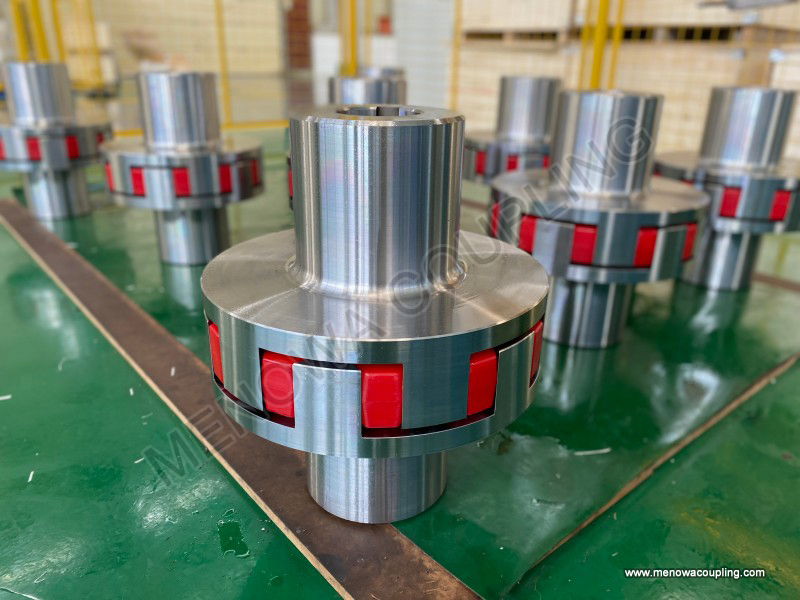
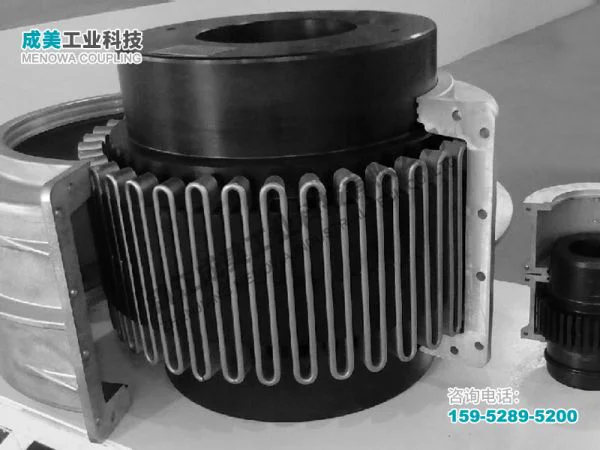
The structural composition of a grid spring coupling is the foundation of its functionality, consisting of three primary components: two shaft hubs, a metallic grid spring, and a split cover assembly. The shaft hubs are precision-machined components designed to attach securely to the driving and driven shafts, typically featuring tapered or keyway connections to ensure a tight fit and prevent slippage during operation. These hubs are engineered with radially slotted grooves along their outer circumference, which are specifically shaped to mesh with the grid spring element. The grid spring itself is the most distinctive component, crafted from a continuous strip of flexible metal that is formed into a serpentine or lattice-like pattern. This design allows the grid to bend and flex under load while maintaining its structural integrity, enabling it to absorb and distribute forces evenly across the coupling. The split cover assembly, which includes two cover halves, gaskets, seals, and fasteners, encloses the grid spring and hubs to protect internal components from contaminants such as dust, debris, and moisture. Additionally, the cover contains lubricating oil or grease that reduces friction between the grid spring and the hub grooves, preventing premature wear and ensuring smooth operation. The split design of the cover also facilitates easy access to the grid spring for inspection, maintenance, or replacement, without the need to disassemble the entire coupling or disconnect the shafts.
One of the most critical characteristics of grid spring couplings is their ability to transmit high levels of torque efficiently while maintaining flexibility. Torque transmission occurs through the interaction between the grid spring and the slotted hubs: as the driving shaft rotates, the hub’s grooves engage with the grid spring, transferring rotational force to the driven hub and ultimately to the driven shaft. The unique design of the grid spring allows for progressive contact between the spring and the hub grooves, which enhances torque transmission efficiency. Under light loads, the grid spring makes contact with the outer edges of the hub grooves, providing a longer span for flexibility; as the load increases, more of the grid spring comes into contact with the grooves, increasing the contact area and enabling the coupling to handle higher torque levels. This progressive contact mechanism ensures that the coupling can adapt to varying load conditions, from light to heavy, without compromising performance. Grid spring couplings are capable of transmitting a wide range of torque values, making them suitable for both low-torque applications such as fans and pumps, and high-torque applications such as crushers, compressors, and mining machinery. The torque capacity is primarily determined by the material of the grid spring, its cross-sectional dimensions, and the design of the hub grooves, with larger and more robust grids capable of handling higher torque loads.
Another key characteristic of grid spring couplings is their ability to compensate for various types of shaft misalignment, which is a common issue in rotating machinery due to installation errors, thermal expansion, or structural deflection. Unlike rigid couplings that can cause excessive stress on shafts, bearings, and other components if misalignment is present, grid spring couplings can accommodate angular, parallel, and axial misalignment through the flexibility of the grid spring. Angular misalignment occurs when the two shafts are not perfectly colinear, resulting in a slight angle between their axes; the grid spring’s flexibility allows it to bend and adjust to this angle, reducing the stress on the shafts and bearings. Parallel misalignment happens when the shafts are offset parallel to each other, and the grid spring can slide within the hub grooves to compensate for this offset. Axial misalignment, which is the movement of one shaft along its axis relative to the other, is also accommodated by the grid spring’s ability to stretch or compress slightly. The amount of misalignment that a grid spring coupling can handle depends on its design, with some models capable of accommodating angular misalignment up to several degrees and parallel misalignment up to a few millimeters. This misalignment compensation capability is crucial for extending the service life of rotating equipment, as it reduces wear and tear on shafts, bearings, and seals, and minimizes the risk of mechanical failure.
Vibration and shock absorption are additional important characteristics of grid spring couplings, which play a vital role in protecting sensitive equipment from damage. Rotating machinery often generates vibrations due to imbalances, uneven load distribution, or external forces, and these vibrations can be transmitted through the coupling to other components, leading to noise, wear, and premature failure. Grid spring couplings mitigate this issue by absorbing and damping vibrations through the flexible grid spring element. The serpentine design of the grid allows it to act as a torsional spring, absorbing vibrational energy and reducing the amplitude of vibrations transmitted to the driven shaft. This damping effect can reduce vibration levels by up to 30%, creating a smoother and quieter operation. Similarly, the grid spring is effective at cushioning shock loads, which occur when machinery starts, stops, or experiences sudden load changes. The grid spring absorbs the impact energy by spreading it out over time, reducing the magnitude of peak loads and preventing damage to the driving and driven equipment. This shock absorption capability is particularly valuable in applications such as mining, construction, and manufacturing, where sudden load changes and impacts are common.
Material selection is a critical factor that influences the performance, durability, and suitability of grid spring couplings for different applications. The grid spring, being the primary load-bearing and flexible component, is typically made from high-tensile alloy steel, which offers an optimal balance of strength, flexibility, and resistance to fatigue. The alloy steel is carefully formed into the desired serpentine shape, then subjected to heat treatment processes such as hardening and tempering to enhance its mechanical properties. Additionally, the grid spring is often shot-peened, a process that compresses the surface molecules and creates a residual compressive stress, which increases the spring’s resistance to fatigue and extends its service life. The shot-peening process ensures that any load applied to the coupling must first overcome the compressive forces on the grid’s surface before tensile stress reaches the material, significantly improving the coupling’s durability. The hubs are usually manufactured from carbon steel, alloy steel, or cast iron, depending on the application requirements; carbon steel is suitable for general-purpose applications, while alloy steel is used for high-torque or high-temperature environments, and cast iron offers good wear resistance for heavy-duty applications. The split cover is typically made from die-cast aluminum for lightweight applications or stamped steel for higher strength and durability, especially in high-speed operations. In corrosive environments, materials such as stainless steel or nickel-plated steel may be used for the hubs and grid spring to prevent rust and degradation.
Operational durability and long service life are key characteristics that make grid spring couplings a reliable choice for industrial applications. The combination of high-quality materials, precision manufacturing, and effective lubrication ensures that these couplings can withstand harsh operating conditions, including high speeds, heavy loads, and extreme temperatures. The shot-peened grid spring resists fatigue and wear, even under continuous cyclic loading, while the lubrication provided by the enclosed cover reduces friction between the grid and hub grooves, preventing metal-to-metal contact and premature wear. The split cover also protects internal components from contaminants, which can cause corrosion and wear, further extending the coupling’s service life. Grid spring couplings are designed to operate reliably for thousands of hours with minimal maintenance, making them a cost-effective solution for long-term industrial use. Additionally, their robust design allows them to handle reversing loads and frequent start-stop cycles without compromising performance, which is essential in applications such as conveyors, pumps, and compressors that require intermittent operation.
Maintenance requirements for grid spring couplings are relatively minimal, which is another advantage in industrial settings where downtime can be costly. The primary maintenance task is regular lubrication of the grid spring and hub grooves to ensure smooth operation and prevent wear. The split cover allows easy access to the internal components, making it simple to inspect the grid spring for signs of wear, fatigue, or damage, and to apply fresh lubricant. Depending on the application and operating conditions, lubrication may be required every few months to a year, with more frequent lubrication needed in high-speed or high-load applications. The grid spring itself is a replaceable component, and replacement can be done quickly and easily without disassembling the entire coupling or disconnecting the shafts, reducing downtime. Regular inspection of the hubs and cover for signs of damage, such as cracks or deformation, is also recommended to ensure the coupling’s continued performance. Overall, the low maintenance requirements of grid spring couplings contribute to their cost-effectiveness and reliability, making them suitable for applications where minimal downtime is critical.
Adaptability to different working environments is another notable characteristic of grid spring couplings, as they can be customized to meet the specific requirements of various industrial applications. Different designs of grid spring couplings are available to accommodate different operating conditions, such as high temperatures, corrosive environments, limited space, or long shaft spans. For high-temperature applications, grid springs made from high-temperature alloys can withstand temperatures exceeding 400°C, while corrosion-resistant versions made from stainless steel or nickel-plated materials are suitable for chemical processing, marine, or saltwater environments. Compact designs are available for applications with limited space, while double-flange or spacer designs are ideal for long shaft spans or pump applications, where the spacer allows for easy servicing without disconnecting the shafts. Grid spring couplings can also be customized with brake disc integrations for applications that require quick braking, or with extended hubs to accommodate larger bore sizes. This adaptability makes grid spring couplings suitable for a wide range of industries, including manufacturing, mining, oil and gas, chemical processing, food and beverage, and construction.
In addition to these core characteristics, grid spring couplings offer several other advantages that enhance their utility in industrial applications. Their versatility is a key benefit, as common hubs and grids can be used within a given size range for both horizontal and vertical split cover models, reducing inventory costs and simplifying replacement. The interchangeability of grid springs with industry standards also makes it easy to replace components from different manufacturers, further enhancing their practicality. Grid spring couplings also operate with minimal noise, thanks to their vibration damping capabilities and smooth interaction between the grid spring and hub grooves, creating a quieter working environment. Furthermore, their ability to handle high speeds makes them suitable for applications such as centrifugal pumps, fans, and turbines, where rotational speeds can be extremely high.
It is important to note that while grid spring couplings offer numerous advantages, their performance is dependent on proper selection and installation. Factors such as torque requirements, misalignment levels, operating temperature, and environmental conditions must be carefully considered when choosing a grid spring coupling to ensure optimal performance and longevity. Improper selection or installation can lead to premature wear, reduced efficiency, and even mechanical failure. For example, using a coupling with insufficient torque capacity can result in grid spring fatigue and breakage, while inadequate lubrication can cause excessive friction and wear on the hub grooves and grid spring.
In conclusion, grid spring couplings are versatile, reliable mechanical components that offer a unique combination of torque transmission efficiency, misalignment compensation, vibration and shock absorption, durability, and low maintenance. Their structural design, featuring precision-machined hubs, a flexible metallic grid spring, and a protective split cover, enables them to adapt to a wide range of operating conditions and industrial applications. The use of high-quality materials and advanced manufacturing processes ensures that these couplings can withstand heavy loads, high speeds, and harsh environments, providing long service life and cost-effective performance. Whether in general-purpose applications such as fans and pumps or heavy-duty applications such as mining and construction, grid spring couplings play a crucial role in ensuring the smooth and reliable operation of rotating machinery, protecting equipment from damage and reducing downtime. Their distinct characteristics make them an indispensable component in modern industrial systems, where efficiency, reliability, and durability are paramount.
Post Date: May 1, 2026
https://www.menowacoupling.com/china-coupling/characteristics-of-grid-spring-coupling.html
Supply
Related Articles
Grid Spring Coupling For Sale
In the complex world of mechanical power transmission, the search for reliable, efficient, and durable coupling solutions is a constant priority for industries across the globe. Grid spring couplings have emerged as a versatile and high-performance option, designed to address the challenges of connecting rotating shafts…Size Chart of Grid Spring Coupling
A size chart of grid spring coupling is an indispensable reference tool in industrial transmission systems, serving as a bridge between the coupling’s design parameters and its practical application. It systematically organizes key dimensional data, enabling engineers, technicians, and procurement personnel to quickly …Grid Spring Coupling Supply
In the realm of industrial power transmission, the role of grid spring couplings is indispensable, serving as a critical link between driving and driven components across a wide range of machinery. As the demand for efficient, reliable, and durable transmission solutions continues to grow across various industries, the …Dimensions of Grid Spring Coupling
The grid spring coupling is a critical component in mechanical transmission systems, widely utilized across various industrial sectors due to its exceptional ability to accommodate misalignments, dampen vibrations, and transmit torque efficiently. While its functional advantages are well-recognized, the dimensions of a …Grid Spring Coupling Price
In the realm of mechanical power transmission, grid spring couplings stand out as a versatile and reliable component, widely used across various industries to connect rotating shafts and ensure efficient torque transfer. While their functionality and performance are critical considerations for engineers and procurement …Specification of Grid Spring Coupling
Grid spring coupling is a crucial flexible connecting component widely used in mechanical transmission systems, designed to transmit torque between two shafts while compensating for relative displacements and absorbing vibrations and shocks. Unlike rigid couplings that require precise alignment between shafts, grid spri…
 WeChat
 WhatsApp