Grid Spring Coupling Fabrication
Grid spring couplings are essential components in mechanical transmission systems, widely used in various industrial fields due to their unique combination of flexibility, torque transmission capacity, and durability. These couplings play a critical role in connecting two rotating shafts, compensating for misalignments, absorbing vibrations, and protecting other mechanical parts from excessive stress. The fabrication of grid spring couplings is a sophisticated process that requires precise control over material selection, machining operations, heat treatment, assembly, and quality inspection. Each step in the fabrication process contributes to the final performance, reliability, and service life of the coupling, making it imperative to adhere to strict technical standards and best practices throughout the production cycle.
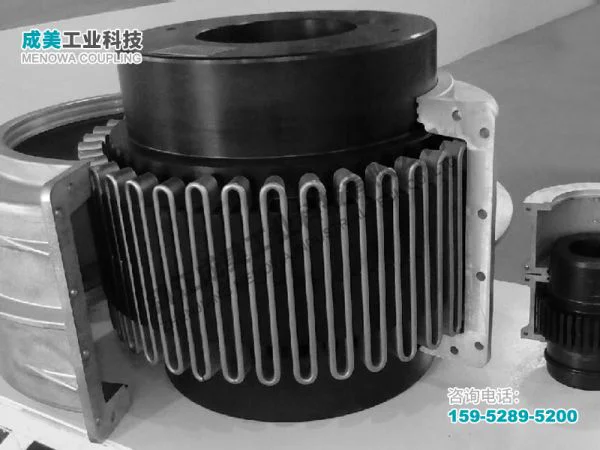
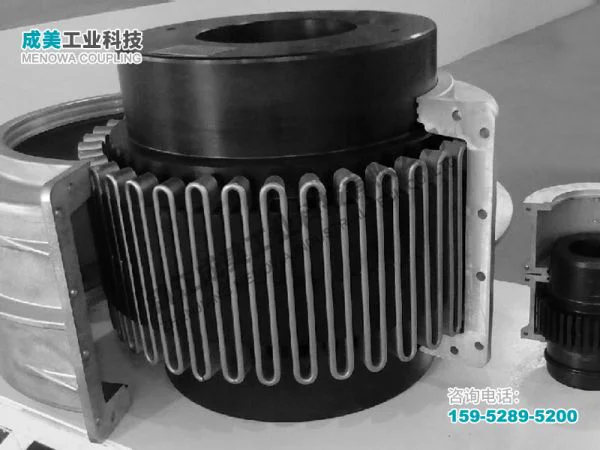
The foundation of a high-quality grid spring coupling lies in the careful selection of materials, as the performance of the coupling is directly influenced by the mechanical properties of the materials used. The main components of a grid spring coupling typically include the two hubs, the grid spring, and the cover. Each component requires materials with specific characteristics to meet the operational demands of different applications. For the hubs, which are responsible for connecting the coupling to the driving and driven shafts, materials with high strength, good wear resistance, and excellent machinability are preferred. Common materials for hubs include medium-carbon steels and alloy steels, which can be heat-treated to enhance their hardness and toughness. These materials are chosen because they can withstand the high torques and dynamic loads encountered during operation, while also being easy to machine into the required shapes, such as keyways and mounting holes.
The grid spring is the core elastic component of the coupling, responsible for absorbing vibrations, compensating for misalignments, and transmitting torque. As such, the material selected for the grid spring must possess excellent elasticity, fatigue resistance, and corrosion resistance. High-carbon spring steels are commonly used for this purpose, as they can be heat-treated to achieve the desired combination of hardness and flexibility. These steels have a high yield strength and can undergo repeated elastic deformation without permanent damage, making them ideal for the cyclic loading conditions that grid springs experience. In some cases, stainless steel may be used for grid springs in applications where corrosion resistance is a primary concern, such as in marine or chemical environments. The cover, which protects the grid spring from dust, debris, and lubricant leakage, is typically made from lightweight materials such as aluminum alloys or sheet steel, which offer good protection while adding minimal weight to the coupling.
Once the materials have been selected, the fabrication process begins with the machining of the hubs. The machining of hubs involves several steps, starting with the cutting of raw material into the appropriate size using processes such as sawing or flame cutting. The next step is turning, where the raw material is mounted on a lathe and shaped into the basic cylindrical form of the hub. During turning, the outer diameter, inner diameter, and face of the hub are machined to precise tolerances to ensure proper fit with the shafts and other components. Keyways are then cut into the inner diameter of the hub using milling or broaching processes. Keyways are critical for transmitting torque between the hub and the shaft, so their dimensions and position must be machined with high accuracy to prevent slippage or stress concentration. Mounting holes for bolts or other fasteners are also drilled and tapped into the hub, with strict control over hole size, spacing, and depth to ensure secure assembly.
The fabrication of the grid spring is a more complex process, requiring careful attention to detail to ensure its elastic properties and durability. The process typically starts with the cutting of the spring material into strips of the required width and thickness. These strips are then formed into the characteristic grid shape using a combination of bending and stamping operations. The grid shape is designed to provide the optimal balance of flexibility and torque transmission, with the number and size of the grid openings varying depending on the application requirements. During the forming process, it is essential to maintain consistent dimensions and avoid any defects such as cracks, bends, or uneven surfaces, as these can significantly reduce the fatigue life of the spring. After forming, the grid spring undergoes a series of heat treatment processes to enhance its mechanical properties.
Heat treatment is a critical step in the fabrication of grid spring couplings, as it modifies the microstructure of the materials to improve their strength, hardness, toughness, and fatigue resistance. For the hubs, the heat treatment process typically involves quenching and tempering. Quenching involves heating the hub to a high temperature (usually between 800 and 900 degrees Celsius) and then rapidly cooling it in a quenching medium such as oil or water. This process hardens the material by transforming its microstructure into martensite, which is a hard and brittle phase. Tempering is then performed by reheating the quenched hub to a lower temperature (between 200 and 400 degrees Celsius) and holding it at that temperature for a specified period before cooling it slowly. Tempering reduces the brittleness of the material while maintaining its hardness, resulting in a hub with high strength and toughness.
For the grid spring, the heat treatment process is more specialized, focusing on achieving the desired elastic properties. The spring is first heated to austenitizing temperature, then quenched to harden it, and finally tempered to a specific hardness that balances elasticity and durability. The tempering temperature for grid springs is typically lower than that for hubs, as excessive tempering can reduce the spring’s elasticity. In addition to quenching and tempering, some grid springs may undergo a stress-relief annealing process after forming to remove any residual stresses that may have been introduced during the forming operations. Residual stresses can lead to premature fatigue failure, so stress relief is an important step in ensuring the long-term reliability of the grid spring.
After the individual components have been machined and heat-treated, the next step is assembly. Assembly of a grid spring coupling involves several steps, starting with the installation of the grid spring into one of the hubs. The grid spring is carefully positioned in the hub’s grooves, ensuring that it fits securely and evenly. The other hub is then aligned with the first hub, and the grid spring is engaged with the grooves in the second hub. It is crucial to ensure proper alignment during assembly to prevent misalignment, which can cause excessive wear, vibration, and premature failure of the coupling. Once the hubs and grid spring are properly aligned, the cover is installed to protect the grid spring. The cover is typically secured using bolts or clips, and a lubricant is applied to the grid spring and the contact surfaces of the hubs to reduce friction and wear.
Lubrication is an essential aspect of grid spring coupling performance, as it reduces friction between the grid spring and the hubs, minimizes wear, and helps to dissipate heat generated during operation. The type of lubricant used depends on the operating conditions of the coupling, such as temperature, speed, and load. Common lubricants include grease and oil, with grease being preferred for most applications due to its ability to stay in place and provide long-lasting lubrication. The lubricant is applied to the grid spring and the grooves in the hubs before assembly, and periodic re-lubrication is required during the service life of the coupling to maintain optimal performance.
Quality control is a贯穿 the entire fabrication process of grid spring couplings, ensuring that each component and the final assembly meet the required specifications and performance standards. Quality control begins with the inspection of raw materials, where samples are tested for chemical composition, mechanical properties, and surface quality to ensure they meet the specified requirements. During machining, dimensional inspections are performed using tools such as calipers, micrometers, and coordinate measuring machines (CMMs) to verify that the components are machined to the correct tolerances. Keyways, mounting holes, and other critical features are checked for size, position, and surface finish to ensure proper fit and function.
After heat treatment, the components are inspected for hardness using methods such as Rockwell or Brinell hardness testing to ensure that the heat treatment process has achieved the desired mechanical properties. The grid spring is also tested for elasticity and fatigue resistance, with samples subjected to cyclic loading tests to simulate real-world operating conditions. These tests help to identify any defects or weaknesses in the spring that could lead to premature failure. During assembly, the alignment of the hubs and grid spring is checked using laser alignment tools or dial indicators to ensure that the coupling is properly aligned and that there is no excessive misalignment.
The final step in quality control is the testing of the assembled coupling. This includes torque transmission tests, where the coupling is subjected to the maximum rated torque to ensure that it can transmit the required torque without failure. Vibration tests are also performed to measure the coupling’s ability to absorb vibrations and compensate for misalignments. Additionally, the coupling may be subjected to endurance tests, where it is operated under normal operating conditions for an extended period to evaluate its long-term reliability and service life. Any coupling that fails to meet the quality standards is rejected and either reworked or scrapped to ensure that only high-quality products are delivered to customers.
In addition to the core fabrication processes, there are several other factors that influence the quality and performance of grid spring couplings. One such factor is the surface treatment of the components. Surface treatments such as galvanizing, painting, or chrome plating can be applied to the hubs and cover to enhance corrosion resistance, especially in harsh environments. These treatments form a protective layer on the surface of the components, preventing rust and corrosion and extending the service life of the coupling.
Another important factor is the design of the coupling. The design of the grid spring, hubs, and cover must be optimized to meet the specific requirements of the application. This includes considerations such as the maximum torque capacity, the amount of misalignment that can be compensated for, the operating speed, and the environmental conditions. Computer-aided design (CAD) software is often used to design grid spring couplings, allowing engineers to simulate the performance of the coupling under different operating conditions and make design adjustments to optimize performance and reliability.
The fabrication of grid spring couplings also requires skilled labor and advanced manufacturing equipment. Machinists, heat treatment specialists, and assembly technicians must have a thorough understanding of the fabrication processes and the properties of the materials used. Advanced equipment such as CNC lathes, milling machines, and heat treatment furnaces are essential for achieving the high precision and consistency required in the fabrication process. Additionally, quality control technicians must be trained in the use of inspection tools and techniques to ensure that each component and assembly meets the required standards.
In recent years, advancements in manufacturing technology have led to improvements in the fabrication of grid spring couplings. For example, the use of CNC machining has increased the precision and efficiency of component manufacturing, allowing for tighter tolerances and more consistent quality. Additive manufacturing, or 3D printing, is also being explored as a potential method for fabricating complex grid spring shapes, although it is currently limited by the materials and mechanical properties required for high-performance couplings. Additionally, advancements in heat treatment technology have led to more precise control over the microstructure of the materials, resulting in improved mechanical properties and fatigue resistance.
The performance of grid spring couplings in service is directly related to the quality of their fabrication. A well-fabricated coupling will provide reliable torque transmission, effective vibration absorption, and accurate misalignment compensation, while requiring minimal maintenance. On the other hand, a poorly fabricated coupling may suffer from premature wear, fatigue failure, or reduced performance, leading to costly downtime and repairs. Therefore, it is essential for manufacturers to implement strict quality control measures and adhere to best practices throughout the fabrication process.
In conclusion, the fabrication of grid spring couplings is a complex and precise process that involves material selection, machining, heat treatment, assembly, and quality control. Each step in the process is critical to the final performance and reliability of the coupling. By selecting the appropriate materials, using advanced manufacturing equipment, implementing strict heat treatment processes, and conducting thorough quality inspections, manufacturers can produce high-quality grid spring couplings that meet the diverse needs of industrial applications. As manufacturing technology continues to advance, the fabrication process will become more efficient and precise, leading to further improvements in the performance and service life of grid spring couplings.
Post Date: May 11, 2026
https://www.menowacoupling.com/china-coupling/grid-spring-coupling-fabrication.html
Supply
Related Articles
Grid Spring Coupling Factory
In the complex ecosystem of industrial machinery, the role of grid spring couplings is often underestimated, yet they are the unsung heroes that ensure the smooth and efficient transmission of power between rotating shafts. These precision components are integral to a wide range of industrial applications, from heavy-du…Parts of Grid Spring Coupling
A grid spring coupling is a critical mechanical component widely used in power transmission systems across various industrial sectors, designed to connect two rotating shafts while accommodating misalignments, absorbing vibrations, and transmitting torque efficiently. Unlike rigid couplings that require precise alignmen…Classification of Grid Spring Coupling
Grid spring couplings are essential components in mechanical transmission systems, designed to connect two shafts and transmit torque while compensating for axial, radial, and angular misalignments, absorbing vibrations, and mitigating shock loads. Their unique grid-shaped spring element serves as the core functional pa…Gap Chart of Grid Spring Coupling
The gap chart of grid spring coupling is an indispensable technical document in the field of mechanical transmission, serving as a core guide for the installation, operation, maintenance, and fault diagnosis of grid spring couplings. Grid spring couplings, as a type of metallic flexible coupling widely used in medium to…Grid Spring Coupling For Sale
In the complex world of mechanical power transmission, the search for reliable, efficient, and durable coupling solutions is a constant priority for industries across the globe. Grid spring couplings have emerged as a versatile and high-performance option, designed to address the challenges of connecting rotating shafts…Size Chart of Grid Spring Coupling
A size chart of grid spring coupling is an indispensable reference tool in industrial transmission systems, serving as a bridge between the coupling’s design parameters and its practical application. It systematically organizes key dimensional data, enabling engineers, technicians, and procurement personnel to quickly …
 WeChat
 WhatsApp