Grid Spring Coupling Exporter
In the field of industrial power transmission, the role of couplings is irreplaceable. They serve as the critical connection between driving devices and driven equipment, ensuring the stable transfer of torque while compensating for alignment errors and reducing operational vibrations. Among the various types of couplings available, the grid spring coupling stands out for its unique combination of flexibility, durability, and load-bearing capacity, making it a preferred choice in numerous industrial applications. As a professional exporter focusing on grid spring couplings, we have accumulated extensive experience in understanding the structural characteristics, working principles, and practical applications of these components, which allows us to provide reliable and high-performance products that meet the diverse needs of global customers. This article aims to elaborate on the key aspects of grid spring couplings, including their structural composition, working mechanism, performance advantages, application scenarios, maintenance methods, and future development trends, providing a comprehensive reference for industry professionals and potential users.
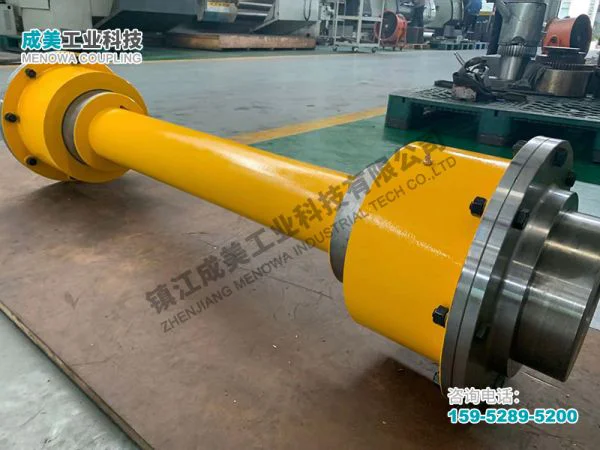
The grid spring coupling is a type of metal elastic coupling, characterized by its simple yet robust structure that integrates flexibility and load-bearing capacity. Its core components typically include two half-couplings, a grid spring, two half-covers, and two sealing rings. The half-couplings are usually made of high-strength carbon steel or alloy steel, which undergo strict heat treatment processes to enhance their hardness, toughness, and wear resistance. The design of the half-couplings features tooth grooves that are specifically shaped to match the grid spring, ensuring a tight and stable connection during operation. The grid spring, as the core elastic element of the coupling, is made of high-quality spring steel such as 60Si2MnA or 50CrVA, which possess excellent elastic properties and fatigue resistance. These materials are subjected to precise processing and heat treatment to ensure that the grid spring can withstand repeated torsional deformation without permanent damage, thereby providing effective shock absorption and vibration reduction. The half-covers, often made of aluminum alloy or steel, serve to protect the internal components from external contaminants such as dust, debris, and moisture, while also preventing the grid spring from being thrown out during high-speed operation. The sealing rings, usually made of rubber or silicone, ensure a tight seal between the half-covers and the half-couplings, preventing lubricating oil leakage and extending the service life of the coupling.
The working principle of the grid spring coupling is based on the elastic deformation of the grid spring to transmit torque and compensate for alignment errors. When the driving shaft rotates, it drives the active half-coupling, which in turn exerts an axial force on the grid spring embedded in its tooth grooves. The grid spring, with its excellent elasticity, transfers this force to the driven half-coupling, thereby driving the driven shaft to rotate and achieving power transmission. During operation, the grid spring can undergo slight torsional and axial deformation, which not only absorbs the impact load generated by the start-up of the equipment or sudden changes in load but also reduces the vibration transmitted between the driving and driven shafts. This vibration reduction effect is particularly important in high-speed and heavy-load applications, as it can effectively protect the bearings, gears, and other components of the equipment, reducing the risk of failure and extending the overall service life of the system. Additionally, the grid spring coupling has a certain ability to compensate for alignment errors between the driving and driven shafts, including radial, angular, and axial deviations. This is because the grid spring can adapt to slight misalignments through its elastic deformation, avoiding the additional torque and stress that would otherwise be generated by misalignment, which could lead to premature wear or damage to the coupling and other related components.
Compared with other types of couplings, the grid spring coupling offers numerous performance advantages that make it suitable for a wide range of industrial applications. One of its most prominent advantages is its excellent shock absorption and vibration reduction capabilities. The grid spring, as an elastic element, can absorb and dissipate the impact energy generated during equipment operation, reducing the amplitude of vibration and minimizing the damage caused by vibration to the equipment. Tests have shown that the average vibration reduction rate of grid spring couplings can reach more than 36%, which is significantly higher than that of rigid couplings and even some other elastic couplings. This makes them particularly suitable for equipment that operates under variable load conditions or is prone to generating large vibrations, such as crushers, reciprocating machinery, and pumps.
Another key advantage of the grid spring coupling is its high load-bearing capacity and long service life. The use of high-strength materials and precise processing techniques ensures that the coupling can withstand large torques and operate stably for a long time. The grid spring, which is the core component, has excellent fatigue resistance and can withstand repeated torsional deformation without losing its elastic properties. In addition, the tooth surfaces of the half-couplings that come into contact with the grid spring are designed to be arc-shaped, which allows the force points between the grid spring and the tooth surfaces to move closer as the transmitted torque increases. This variable stiffness transmission characteristic enables the coupling to withstand larger load fluctuations, making it suitable for medium and high-power transmission systems. The service life of grid spring couplings is generally much longer than that of non-metallic elastic couplings such as elastic sleeve pin couplings and nylon pin couplings, reducing the frequency of replacement and maintenance and lowering the overall operating costs for users.
The grid spring coupling also boasts high transmission efficiency and low noise during operation. The tight fit between the grid spring and the tooth grooves of the half-couplings ensures that there is little or no relative slip during power transmission, resulting in a transmission efficiency of up to 99.47%. This high efficiency is particularly important in energy-intensive industries, as it can help reduce energy consumption and improve the overall efficiency of the equipment. Additionally, the half-covers of the coupling are filled with lubricating grease, which not only ensures good lubrication between the grid spring and the tooth surfaces but also absorbs the noise generated by the meshing of the grid spring and the tooth grooves, resulting in a low-noise operation environment. This makes the grid spring coupling suitable for applications that require a quiet operating environment, such as precision machinery and equipment in the automotive and electronics industries.
Installation and maintenance convenience is another important advantage of the grid spring coupling. The coupling has a simple structure with few parts, making it easy to assemble and disassemble. The trapezoidal cross-section of the grid spring and the trapezoidal tooth grooves of the half-couplings ensure a tight and convenient fit, reducing the difficulty of installation. Moreover, the grid spring coupling can operate normally even when there are slight radial, angular, or axial deviations between the driving and driven shafts, which reduces the requirements for installation accuracy and simplifies the installation process. In terms of maintenance, the coupling requires only regular inspection and lubrication to ensure its normal operation. Regular inspection includes checking the wear condition of the grid spring and the tooth surfaces, the tightness of the half-covers and sealing rings, and the level of lubricating grease. Timely replacement of worn parts and补充 of lubricating grease can effectively extend the service life of the coupling, ensuring its long-term stable operation.
The grid spring coupling is widely used in various industrial fields due to its excellent performance characteristics. It is particularly suitable for connecting coaxial medium and high-power transmission shaft systems, with a working temperature range of -30℃ to +150℃ and a nominal torque transmission range of 45N·m to 800000N·m. In the metallurgical industry, grid spring couplings are used to connect motors, reducers, and rolling mills, withstanding large torques and harsh operating conditions such as high temperature and heavy load. In the mining industry, they are widely used in crushers, conveyors, and hoisting equipment, where they can effectively absorb the impact load generated by the crushing of materials and reduce vibration, protecting the equipment from damage. In the chemical industry, grid spring couplings are used in pumps, compressors, and mixers, where their corrosion resistance and sealing performance ensure stable operation in corrosive environments. Additionally, they are also used in other fields such as construction machinery, power generation, and marine engineering, playing a crucial role in ensuring the stable and efficient operation of various equipment.
Despite its excellent performance, the grid spring coupling still requires proper maintenance to ensure its long-term stable operation. Improper maintenance or neglect of potential problems can lead to premature wear, failure, and even safety accidents. Therefore, it is essential to establish a regular maintenance system for grid spring couplings. The first step in maintenance is regular inspection. During inspection, it is necessary to check the wear condition of the grid spring: if there are signs of fatigue, cracks, or deformation, the grid spring should be replaced in a timely manner to avoid sudden failure during operation. It is also important to check the tooth surfaces of the half-couplings for wear, pitting, or other damage; if the wear is severe, the half-couplings should be repaired or replaced. In addition, the tightness of the half-covers and sealing rings should be checked to ensure that there is no lubricating oil leakage, and the level and quality of the lubricating grease should be inspected regularly. If the lubricating grease is contaminated or deteriorated, it should be replaced immediately to ensure good lubrication between the moving parts.
Lubrication is a key aspect of the maintenance of grid spring couplings. The choice of lubricating grease should be based on the operating conditions of the coupling, such as temperature, load, and speed. Generally, high-temperature resistant and wear-resistant lubricating grease is recommended for couplings operating in high-temperature and heavy-load environments. The lubricating grease should be added in an appropriate amount: too little lubrication will lead to increased friction and wear between the moving parts, while too much lubrication will cause excessive temperature rise and waste. The lubrication interval should be determined according to the operating hours and working conditions of the coupling; generally, the lubricating grease should be replaced every 6 to 12 months, or more frequently if the coupling operates in harsh environments. In addition, during the installation and maintenance process, it is necessary to ensure that the coupling is properly aligned. Although the grid spring coupling has a certain ability to compensate for alignment errors, excessive misalignment will still increase the stress on the grid spring and the half-couplings, leading to premature wear and failure. Therefore, it is necessary to use professional tools to check the alignment of the driving and driven shafts during installation and regular maintenance, and adjust them in a timely manner if any deviation is found.
In recent years, with the continuous development of industrialization and the increasing demand for high-efficiency, energy-saving, and intelligent equipment, the grid spring coupling industry has also ushered in new development opportunities and challenges. On the one hand, the rapid development of industries such as metallurgy, mining, and construction machinery has increased the demand for high-performance grid spring couplings, requiring couplings to have higher load-bearing capacity, better vibration reduction performance, and longer service life. On the other hand, the trend of energy conservation and environmental protection has put forward higher requirements for the energy efficiency and environmental performance of couplings. In response to these demands, manufacturers are constantly optimizing the design and manufacturing processes of grid spring couplings, using new materials and technologies to improve their performance.
One of the main development trends of grid spring couplings is the use of new materials to enhance their performance. For example, the use of high-strength alloy steels and composite materials can further improve the load-bearing capacity and fatigue resistance of the coupling, while reducing its weight. The application of corrosion-resistant materials can expand the scope of application of the coupling, making it suitable for more harsh operating environments such as marine and chemical industries. In addition, the use of advanced manufacturing technologies such as precision casting, CNC machining, and heat treatment can improve the processing accuracy and surface quality of the coupling components, ensuring the stability and reliability of its performance. For example, precision CNC machining can ensure the accuracy of the tooth grooves of the half-couplings and the grid spring, improving the fit between them and reducing friction and wear during operation.
Another development trend is the integration of intelligence into grid spring couplings. With the development of the Internet of Things and intelligent manufacturing, more and more industrial equipment is equipped with intelligent monitoring systems. Grid spring couplings are also being integrated with sensors and monitoring devices to realize real-time monitoring of their operating status, such as torque, vibration, temperature, and wear. This real-time monitoring can help users detect potential problems in a timely manner, perform predictive maintenance, and avoid sudden failures, thereby improving the reliability and availability of the equipment. For example, by installing vibration sensors on the coupling, users can monitor the vibration amplitude in real time; if the vibration amplitude exceeds the normal range, it indicates that there may be problems such as wear or misalignment, and maintenance can be performed in a timely manner.
In addition, the trend of customization is becoming increasingly prominent in the grid spring coupling industry. Different industries and applications have different requirements for couplings, such as torque, speed, temperature, and installation space. Therefore, manufacturers are increasingly providing customized solutions to meet the specific needs of users. For example, for equipment with limited installation space, a compact grid spring coupling can be designed; for equipment operating in high-temperature environments, a high-temperature resistant coupling can be developed. This customization ability not only improves the applicability of the coupling but also enhances the competitiveness of manufacturers in the market.
As a professional exporter of grid spring couplings, we have always adhered to the principle of quality first, focusing on the research and development, production, and export of high-performance grid spring couplings. We have a professional R&D team that keeps abreast of the latest industry trends and technological developments, continuously optimizing the design and manufacturing processes of our products to meet the changing needs of global customers. Our products are manufactured using high-quality materials and advanced production equipment, and undergo strict quality inspection procedures to ensure that each product meets the highest standards of performance and reliability. We also provide comprehensive after-sales services, including technical support, installation guidance, and maintenance advice, to help users use our products more effectively.
In conclusion, the grid spring coupling is a crucial component in industrial power transmission, with its excellent shock absorption, vibration reduction, load-bearing capacity, and easy maintenance making it widely used in various industrial fields. With the continuous development of industrial technology, the grid spring coupling industry is constantly evolving, with new materials, new technologies, and new designs being applied to improve its performance and expand its application scope. As an exporter, we are committed to providing high-quality grid spring couplings and professional services to global customers, contributing to the stable and efficient operation of industrial equipment around the world. Whether in the metallurgical, mining, chemical, or other industries, the grid spring coupling will continue to play an irreplaceable role, providing reliable power transmission solutions for the development of various industries.
Post Date: May 13, 2026
https://www.menowacoupling.com/china-coupling/grid-spring-coupling-exporter.html
Supply
Related Articles
Grid Spring Coupling Production
Grid spring couplings are essential mechanical components widely used in various industrial applications to connect two rotating shafts, transmit torque, and compensate for axial, radial, and angular misalignments between them. Unlike rigid couplings that require precise alignment and offer no flexibility, grid spring c…Types of Grid Spring Coupling
Types of Grid Spring CouplingGrid spring couplings are essential components in mechanical power transmission systems, designed to connect two rotating shafts while accommodating misalignments, absorbing vibrations, and transmitting torque efficiently. Unlike rigid couplings that require precise alignment and offer no fl…Elastic Coupling Supply
In the realm of industrial power transmission, elastic couplings serve as a critical bridge between rotating shafts, enabling the smooth transfer of torque while mitigating the negative effects of misalignment, vibration, and shock loads. The supply of elastic couplings is a dynamic and essential component of modern man…Structure of Grid Spring Coupling
The grid spring coupling is a crucial component in industrial power transmission systems, designed to connect two rotating shafts while accommodating misalignments, absorbing vibrations, and protecting machinery from shock loads. Its unique structure combines the rigidity needed for efficient torque transmission with th…Grid Spring Coupling Vendor In China
In the global mechanical transmission industry, grid spring couplings play an indispensable role as key components that connect rotating shafts, transmit torque, and compensate for relative displacements between shafts. As one of the world’s largest manufacturing hubs, China has nurtured a large number of professional …Uses of Grid Spring Coupling
In the realm of mechanical power transmission, the grid spring coupling stands as a versatile and reliable component that plays a critical role in connecting rotating shafts across a wide range of industrial applications. Unlike rigid couplings that demand precise alignment and offer no flexibility, or flexible coupling…
 WeChat
 WhatsApp