Classification of Grid Spring Coupling
Grid spring couplings are essential components in mechanical transmission systems, designed to connect two shafts and transmit torque while compensating for axial, radial, and angular misalignments, absorbing vibrations, and mitigating shock loads. Their unique grid-shaped spring element serves as the core functional part, determining the coupling’s performance, application scope, and service life. The classification of grid spring couplings is not arbitrary but is based on specific criteria that reflect their structural characteristics, material properties, functional requirements, and application scenarios. Understanding these classification criteria is crucial for engineers, technicians, and procurement professionals to select the most suitable coupling for a given mechanical system, ensuring stable operation, extended service life, and optimal performance. This article aims to comprehensively elaborate on the classification of grid spring couplings, exploring the various categories, their distinct features, and the underlying principles that govern their classification, without involving any brand names, certification-related terms, or specific price information.
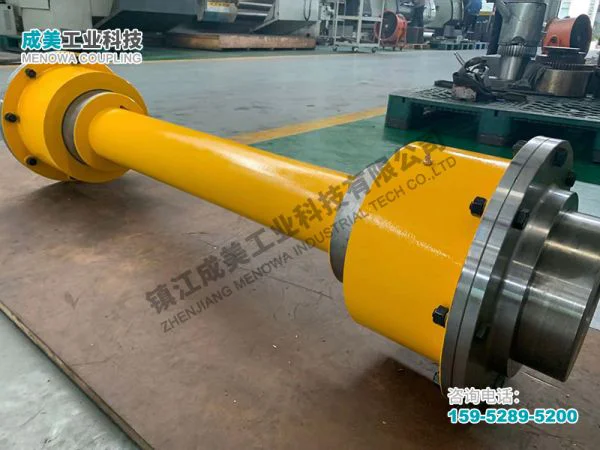
The primary classification of grid spring couplings can be categorized based on several key criteria, including the structure of the grid spring, the material of the coupling components, the type of misalignment compensation, the torque capacity, and the application environment. Each classification criterion provides a different perspective on the coupling’s design and functionality, and together they form a comprehensive framework for understanding the diversity of grid spring couplings available in industrial applications. It is important to note that these classification categories are not mutually exclusive; a single grid spring coupling may belong to multiple categories simultaneously, depending on the criteria used. For example, a high-torque grid spring coupling made of alloy steel may also be classified as a heavy-duty coupling suitable for harsh industrial environments.
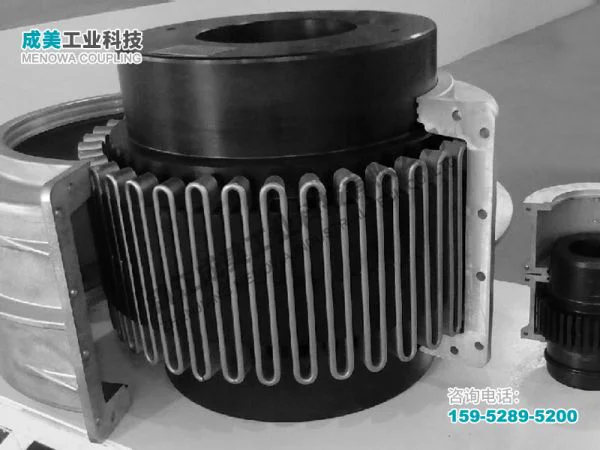
One of the most fundamental classification criteria for grid spring couplings is the structure of the grid spring, which is the heart of the coupling. The grid spring’s structure directly influences the coupling’s flexibility, torque transmission capacity, vibration absorption performance, and misalignment compensation capability. Based on the structural design of the grid spring, grid spring couplings can be divided into two main categories: single-grid spring couplings and multi-grid spring couplings. Single-grid spring couplings feature a single, integrated grid-shaped spring element that connects the two half-couplings. This structure is relatively simple, with fewer components, making it easy to manufacture and assemble. The single grid spring is typically formed by stamping, forging, or wire forming processes, and its shape is usually a continuous grid pattern with uniform gaps and thickness. Single-grid spring couplings are suitable for applications with moderate torque requirements and small to medium misalignments, such as in fans, pumps, and small-scale conveyors. The simplicity of their structure also results in lower maintenance requirements, as there are fewer parts that can wear or fail over time.
In contrast, multi-grid spring couplings consist of two or more grid spring elements arranged in parallel or series between the two half-couplings. The multi-grid structure enhances the coupling’s torque transmission capacity and misalignment compensation range, as the multiple grid springs work together to distribute the torque and absorb vibrations. In parallel arrangement, the grid springs are placed side by side, increasing the total contact area and thus the torque capacity. This design is particularly suitable for heavy-duty applications where large torque needs to be transmitted, such as in crushers, metallurgical equipment, and large-scale industrial pumps. In series arrangement, the grid springs are stacked axially, which improves the coupling’s flexibility and ability to compensate for axial misalignment. This type of multi-grid coupling is often used in systems where there is significant axial movement between the two shafts, such as in reciprocating compressors and hydraulic machinery. The multi-grid structure also provides a degree of redundancy; if one grid spring fails, the remaining springs can still transmit a portion of the torque, preventing sudden system shutdowns and reducing the risk of equipment damage.
Another important classification criterion is the material used in the manufacturing of grid spring couplings, as material properties directly affect the coupling’s strength, durability, corrosion resistance, and temperature resistance. The main components of a grid spring coupling include the grid spring, the half-couplings, the housing (if present), and the fasteners. Each of these components may be made of different materials, but the grid spring and half-couplings are the most critical in determining the coupling’s performance. Based on the material of the grid spring, grid spring couplings can be classified into carbon steel grid spring couplings, alloy steel grid spring couplings, and non-ferrous metal grid spring couplings.
Carbon steel grid spring couplings are the most common type, as carbon steel is cost-effective, easy to process, and has sufficient strength for most moderate-load applications. The grid springs in these couplings are typically made of low-carbon steel or medium-carbon steel, which is subjected to heat treatment processes such as quenching and tempering to improve its hardness, toughness, and fatigue resistance. The half-couplings are usually made of cast iron or carbon steel, which provides good rigidity and wear resistance. Carbon steel grid spring couplings are suitable for applications in general industrial environments, where there is no exposure to corrosive substances or extreme temperatures. Examples include ordinary fans, water pumps, and small-scale transmission systems in manufacturing plants.
Alloy steel grid spring couplings are designed for high-performance applications that require higher torque capacity, better fatigue resistance, and improved durability. The grid springs are made of alloy steel, which contains additional elements such as chromium, nickel, manganese, or molybdenum to enhance its mechanical properties. Alloy steel grid springs can withstand higher temperatures, greater stress, and more frequent load fluctuations compared to carbon steel counterparts. The half-couplings are also often made of alloy steel or high-strength cast steel to match the performance of the grid spring. These couplings are widely used in heavy-duty industrial applications, such as in mining equipment, metallurgical machinery, power generation units, and marine propulsion systems. The alloy steel material also provides better corrosion resistance than carbon steel, making them suitable for use in slightly corrosive environments, such as coastal areas or chemical plants with mild chemical exposure.
Non-ferrous metal grid spring couplings are less common but are essential for specific applications where weight reduction, corrosion resistance, or non-magnetic properties are required. The grid springs and half-couplings are made of non-ferrous metals such as aluminum alloy, copper alloy, or titanium alloy. Aluminum alloy grid spring couplings are lightweight, making them suitable for applications where weight is a critical factor, such as in aerospace equipment, automotive transmission systems, and small precision machinery. Copper alloy grid spring couplings have excellent corrosion resistance and thermal conductivity, making them suitable for use in marine environments or systems that operate at high temperatures. Titanium alloy grid spring couplings are extremely strong and corrosion-resistant, but they are more expensive and are typically used in high-end applications such as aerospace, military equipment, and specialized industrial machinery where performance is paramount.
In addition to the grid spring material, the material of the half-couplings can also be used as a secondary classification criterion. For example, some grid spring couplings have half-couplings made of cast iron, while others have half-couplings made of steel or non-ferrous metals. Cast iron half-couplings are cost-effective and have good damping properties, making them suitable for applications with high vibration levels. Steel half-couplings are stronger and more durable, suitable for heavy-duty applications. Non-ferrous metal half-couplings are used for weight reduction and corrosion resistance, as mentioned earlier.
Grid spring couplings can also be classified based on their misalignment compensation capability, which is a key functional requirement in many mechanical systems. Misalignment between two shafts can occur due to installation errors, thermal expansion, structural deformation, or wear over time. Grid spring couplings are designed to compensate for three types of misalignment: axial misalignment (movement along the axis), radial misalignment (offset perpendicular to the axis), and angular misalignment (tilt between the two shafts). Based on the type and range of misalignment compensation, grid spring couplings can be divided into general-purpose misalignment compensation couplings and high-precision misalignment compensation couplings.
General-purpose misalignment compensation couplings are designed to handle small to medium levels of axial, radial, and angular misalignment. These couplings are suitable for most general industrial applications, where the misalignment is not excessive and the performance requirements are not overly strict. The grid spring in these couplings has a moderate level of flexibility, allowing it to deform slightly to compensate for misalignment while still transmitting torque efficiently. The misalignment compensation range typically ranges from a few millimeters for axial and radial misalignment to a few degrees for angular misalignment. These couplings are widely used in fans, pumps, compressors, and conveyor systems, where the installation precision is moderate and the operating conditions are relatively stable.
High-precision misalignment compensation couplings are designed for applications that require precise torque transmission and accurate misalignment compensation, such as in precision machinery, CNC machine tools, and automated production lines. These couplings have a more flexible grid spring design, which allows for larger misalignment compensation ranges while maintaining high transmission accuracy. The grid spring is often made of high-quality alloy steel or non-ferrous metals, which have excellent fatigue resistance and dimensional stability. The half-couplings are also precision-machined to ensure minimal runout and high concentricity. High-precision grid spring couplings can compensate for axial misalignment up to several centimeters, radial misalignment up to several millimeters, and angular misalignment up to several degrees, depending on the design. They also have lower backlash, which is critical for precision applications where even small amounts of backlash can affect the accuracy of the mechanical system.
Another important classification criterion is the torque capacity of the grid spring coupling. Torque capacity refers to the maximum torque that the coupling can transmit without failure, and it is determined by the size, material, and structure of the grid spring and half-couplings. Based on torque capacity, grid spring couplings can be divided into low-torque, medium-torque, and high-torque couplings.
Low-torque grid spring couplings are designed for applications with small torque requirements, typically less than 1000 N·m. These couplings are small in size, lightweight, and cost-effective, making them suitable for small-scale mechanical systems such as small fans, pumps, and household appliances. The grid spring is usually made of thin carbon steel or aluminum alloy, and the half-couplings are made of cast iron or lightweight aluminum alloy. Low-torque couplings are often used in applications where space is limited and the operating load is light.
Medium-torque grid spring couplings are designed for applications with moderate torque requirements, ranging from 1000 N·m to 10,000 N·m. These couplings are widely used in general industrial applications, such as in conveyor systems, compressors, and medium-sized pumps. The grid spring is made of medium-carbon steel or low-alloy steel, which provides sufficient strength and fatigue resistance. The half-couplings are made of cast steel or alloy steel, ensuring that they can withstand the moderate torque and load fluctuations. Medium-torque couplings balance performance and cost, making them the most commonly used type of grid spring coupling in industrial settings.
High-torque grid spring couplings are designed for heavy-duty applications with torque requirements exceeding 10,000 N·m. These couplings are large in size, with a robust structure and high-strength materials. The grid spring is made of high-alloy steel, which is subjected to advanced heat treatment processes to maximize its strength and fatigue resistance. The half-couplings are made of high-strength cast steel or forged steel, which can withstand the high torque and shock loads associated with heavy-duty applications. High-torque grid spring couplings are used in mining equipment, metallurgical machinery, power generation units, and large-scale industrial pumps, where reliable torque transmission is critical for system operation.
Grid spring couplings can also be classified based on their application environment, as different environments impose different requirements on the coupling’s material, corrosion resistance, and sealing performance. Common application environments include general industrial environments, corrosive environments, high-temperature environments, low-temperature environments, and dusty or dirty environments.
Couplings designed for general industrial environments are the most common and are suitable for use in clean, dry environments with moderate temperatures (typically between -20°C and 80°C). These couplings are made of carbon steel or alloy steel, with a basic sealing structure to prevent dust and debris from entering the coupling. They are used in most manufacturing plants, warehouses, and commercial facilities.
Corrosion-resistant grid spring couplings are designed for use in environments where the coupling is exposed to corrosive substances, such as saltwater, chemicals, or acidic/alkaline solutions. These couplings are made of corrosion-resistant materials such as stainless steel, copper alloy, or titanium alloy. The grid spring and half-couplings are treated with anti-corrosion coatings or surface treatments to further enhance their resistance to corrosion. The sealing structure is also improved to prevent corrosive substances from entering the coupling and damaging the internal components. Corrosion-resistant grid spring couplings are used in marine environments, chemical plants, wastewater treatment facilities, and coastal industrial areas.
High-temperature grid spring couplings are designed for applications where the operating temperature exceeds 80°C, such as in power generation units, metallurgical equipment, and industrial furnaces. These couplings are made of high-temperature-resistant materials such as high-alloy steel or nickel-based alloys, which can withstand high temperatures without losing their mechanical properties. The grid spring is designed to have good thermal stability, and the half-couplings are often insulated or cooled to prevent overheating. High-temperature couplings also have a special sealing structure to prevent heat from escaping and damaging the surrounding components.
Low-temperature grid spring couplings are designed for applications where the operating temperature is below -20°C, such as in cold storage facilities, outdoor equipment in cold regions, and cryogenic systems. These couplings are made of low-temperature-resistant materials such as low-temperature carbon steel or stainless steel, which can maintain their toughness and strength at low temperatures. The grid spring is designed to avoid brittleness at low temperatures, and the half-couplings are treated to prevent frost damage. Low-temperature couplings also have a sealing structure to prevent moisture from entering and freezing, which could damage the coupling.
Dust-proof and dirt-proof grid spring couplings are designed for use in dusty or dirty environments, such as in mining, construction, and agricultural machinery. These couplings have a sealed housing that completely encloses the grid spring and half-couplings, preventing dust, dirt, and debris from entering and causing wear or damage. The sealing structure is typically made of rubber or plastic gaskets, which provide a tight seal while allowing for the necessary misalignment compensation. Dust-proof and dirt-proof couplings are essential in environments where the presence of dust and debris could significantly reduce the service life of the coupling.
In addition to the above classification criteria, grid spring couplings can also be classified based on their installation method, such as flange-mounted, keyway-mounted, or set-screw-mounted couplings. Flange-mounted couplings are connected to the shafts using flanges and bolts, providing a secure and rigid connection. Keyway-mounted couplings use a key to connect the coupling to the shaft, ensuring that torque is transmitted efficiently. Set-screw-mounted couplings are secured to the shaft using set screws, which are easy to install and remove but are not suitable for high-torque applications. Each installation method has its own advantages and disadvantages, and the choice depends on the specific application requirements.
It is important to note that the classification of grid spring couplings is not a fixed or rigid system; new designs and materials are constantly being developed, leading to new classification categories. For example, the development of composite materials has led to the emergence of composite grid spring couplings, which offer a combination of lightweight, high strength, and corrosion resistance. These couplings are suitable for advanced applications such as aerospace and high-performance machinery. Additionally, the integration of smart technologies, such as sensors for monitoring torque, temperature, and misalignment, has led to the development of smart grid spring couplings, which can provide real-time data on the coupling’s performance and help predict maintenance needs.
In conclusion, the classification of grid spring couplings is a comprehensive framework that helps in understanding the diverse range of couplings available and their suitability for different applications. By classifying grid spring couplings based on their grid spring structure, material, misalignment compensation capability, torque capacity, application environment, and installation method, engineers and technicians can make informed decisions when selecting a coupling for a specific mechanical system. Each classification category has its own distinct features and advantages, and the choice of coupling depends on the specific requirements of the application, including torque, misalignment, operating environment, and performance expectations. Understanding the classification of grid spring couplings is essential for ensuring the reliable and efficient operation of mechanical transmission systems, reducing maintenance costs, and extending the service life of equipment. As industrial technology continues to advance, the classification of grid spring couplings will continue to evolve, reflecting the latest developments in materials, design, and application requirements.
Post Date: May 11, 2026
https://www.menowacoupling.com/china-coupling/classification-of-grid-spring-coupling.html
Supply
Related Articles
Grid Spring Coupling For Sale
In the complex world of mechanical power transmission, the search for reliable, efficient, and durable coupling solutions is a constant priority for industries across the globe. Grid spring couplings have emerged as a versatile and high-performance option, designed to address the challenges of connecting rotating shafts…Size Chart of Grid Spring Coupling
A size chart of grid spring coupling is an indispensable reference tool in industrial transmission systems, serving as a bridge between the coupling’s design parameters and its practical application. It systematically organizes key dimensional data, enabling engineers, technicians, and procurement personnel to quickly …Grid Spring Coupling Supply
In the realm of industrial power transmission, the role of grid spring couplings is indispensable, serving as a critical link between driving and driven components across a wide range of machinery. As the demand for efficient, reliable, and durable transmission solutions continues to grow across various industries, the …Dimensions of Grid Spring Coupling
The grid spring coupling is a critical component in mechanical transmission systems, widely utilized across various industrial sectors due to its exceptional ability to accommodate misalignments, dampen vibrations, and transmit torque efficiently. While its functional advantages are well-recognized, the dimensions of a …Grid Spring Coupling Price
In the realm of mechanical power transmission, grid spring couplings stand out as a versatile and reliable component, widely used across various industries to connect rotating shafts and ensure efficient torque transfer. While their functionality and performance are critical considerations for engineers and procurement …Specification of Grid Spring Coupling
Grid spring coupling is a crucial flexible connecting component widely used in mechanical transmission systems, designed to transmit torque between two shafts while compensating for relative displacements and absorbing vibrations and shocks. Unlike rigid couplings that require precise alignment between shafts, grid spri…
 WeChat
 WhatsApp