What is Curved Tooth Coupling
A curved tooth coupling is a mechanical device used to connect two rotating shafts so that torque and rotation can be transmitted from a driving machine to a driven machine while accommodating small amounts of misalignment between them. It belongs to the family of flexible couplings, and it is distinguished from simpler coupling designs by the shape of its teeth. In a curved tooth coupling, the teeth on the engaging surfaces are crowned, or curved along their length, rather than being straight as in an ordinary gear or spline connection. This seemingly small geometric refinement is what gives the coupling its exceptional ability to transmit heavy torque while tolerating angular, parallel, and axial displacement between the connected shafts without damaging either component.
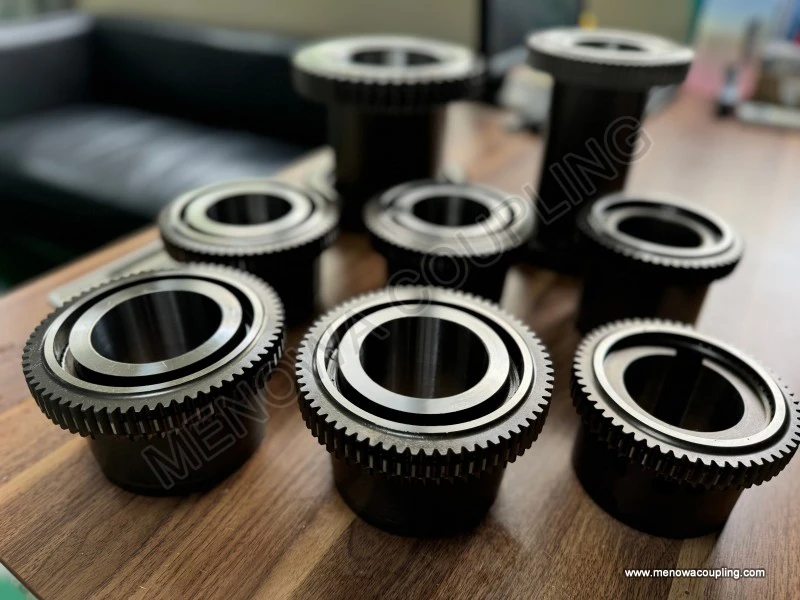
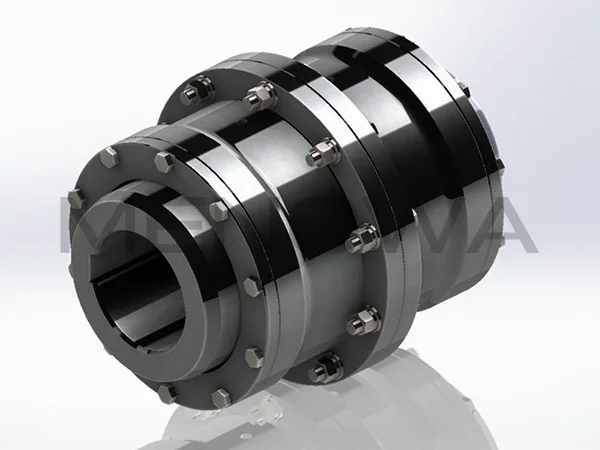
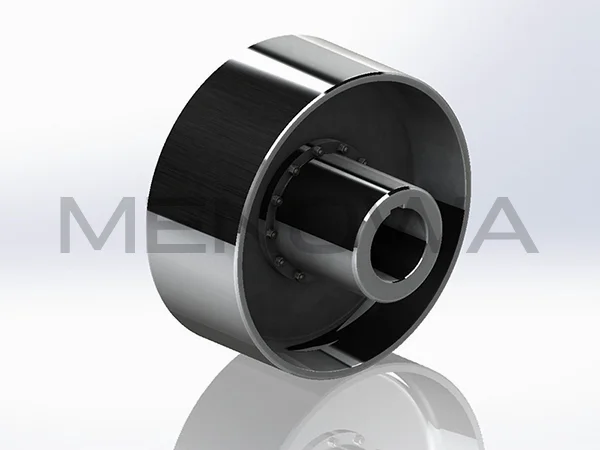
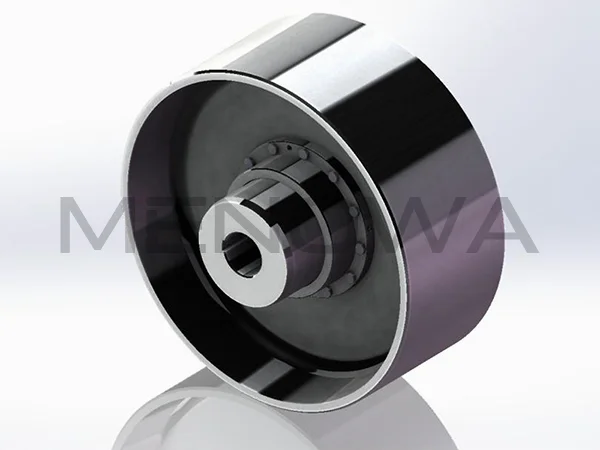
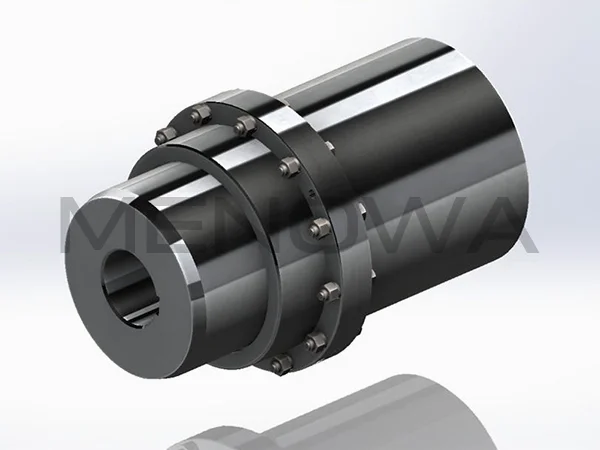
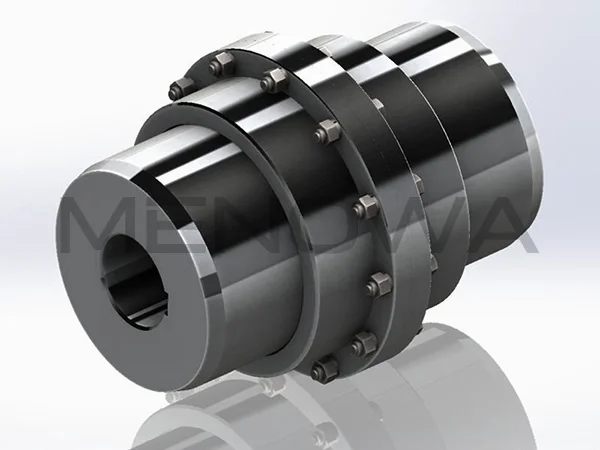
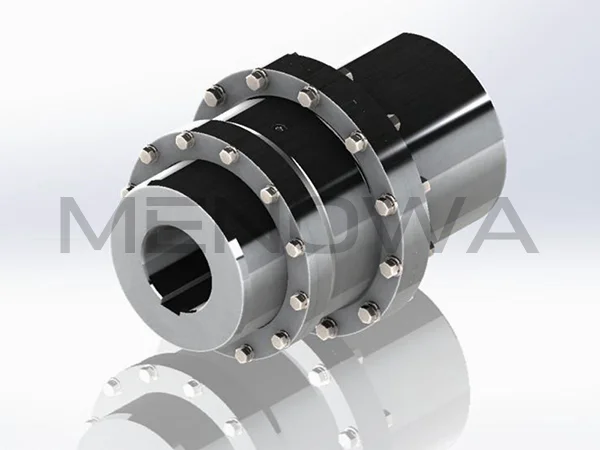
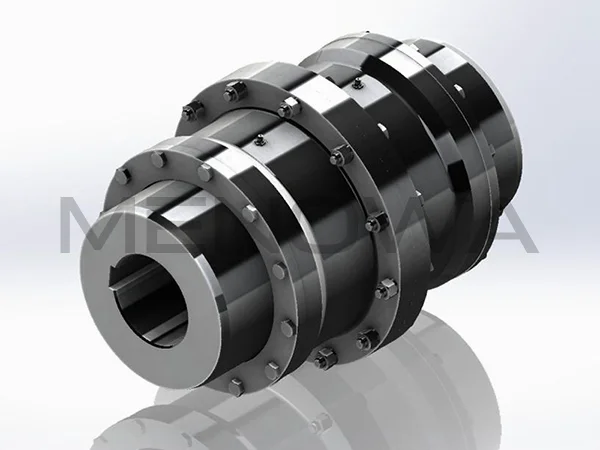
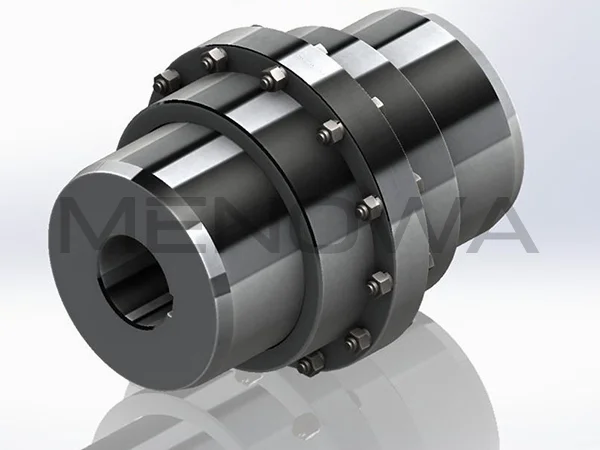
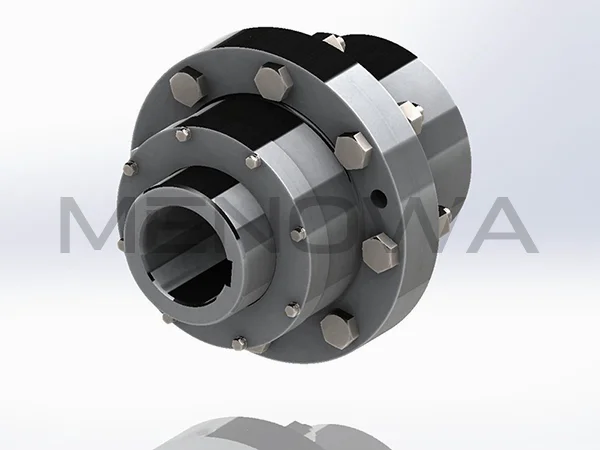
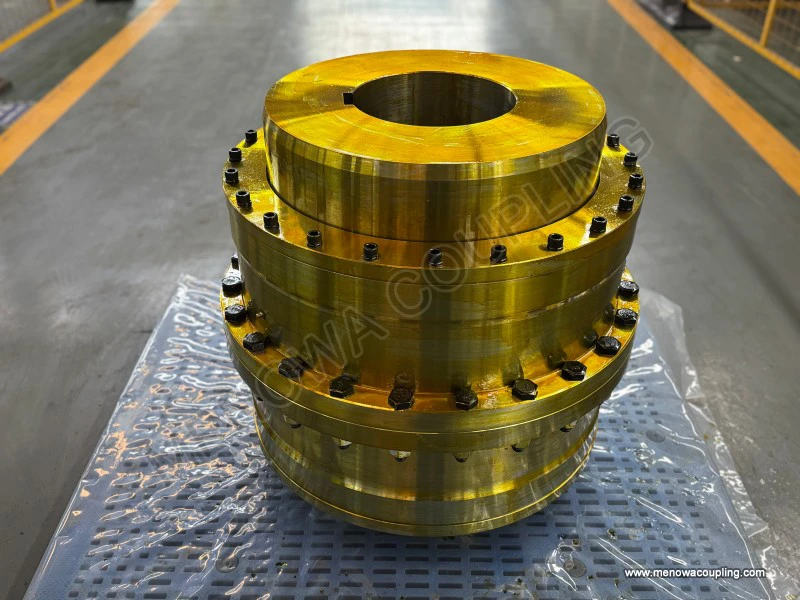
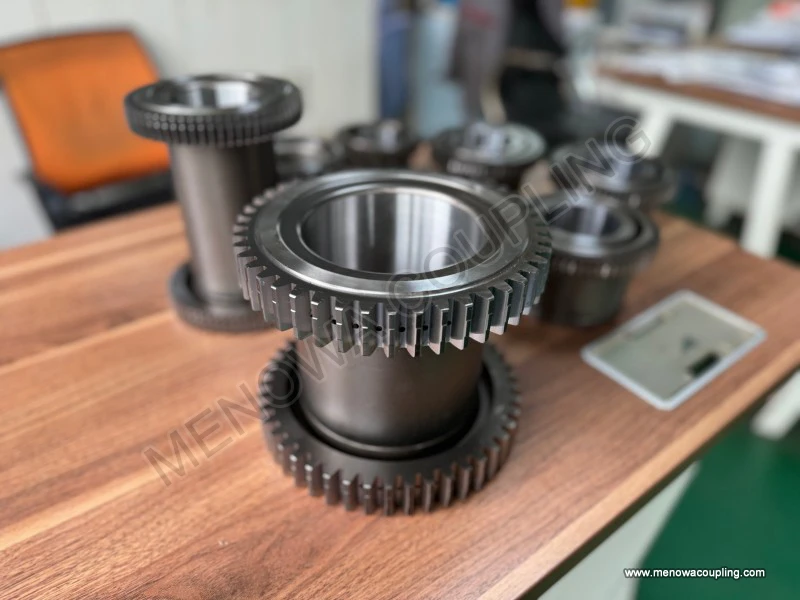
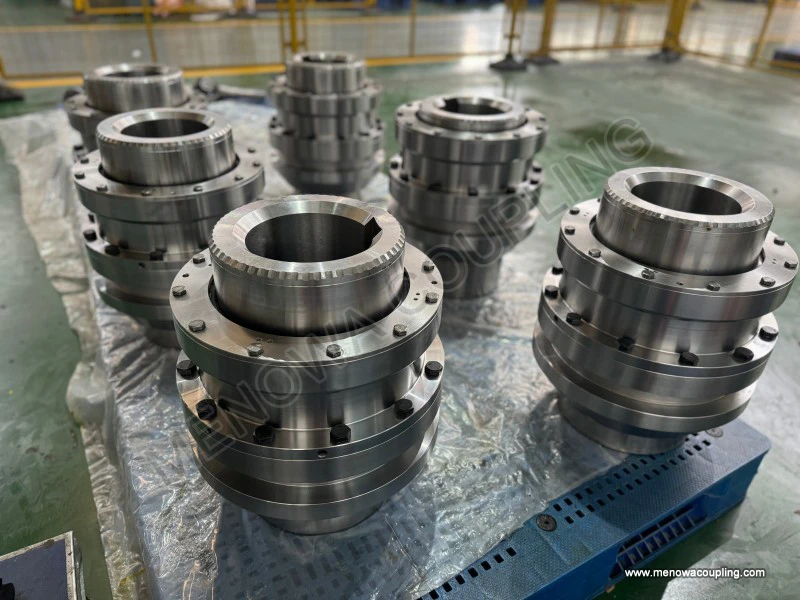
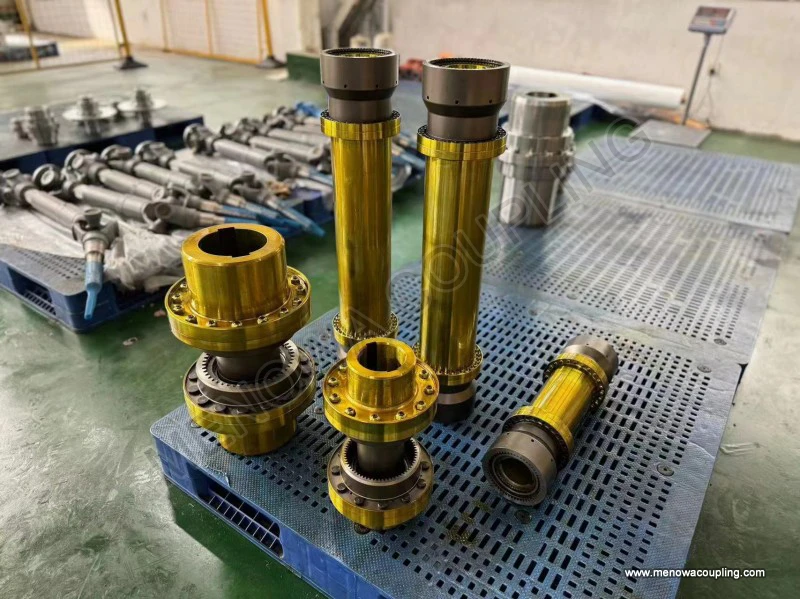
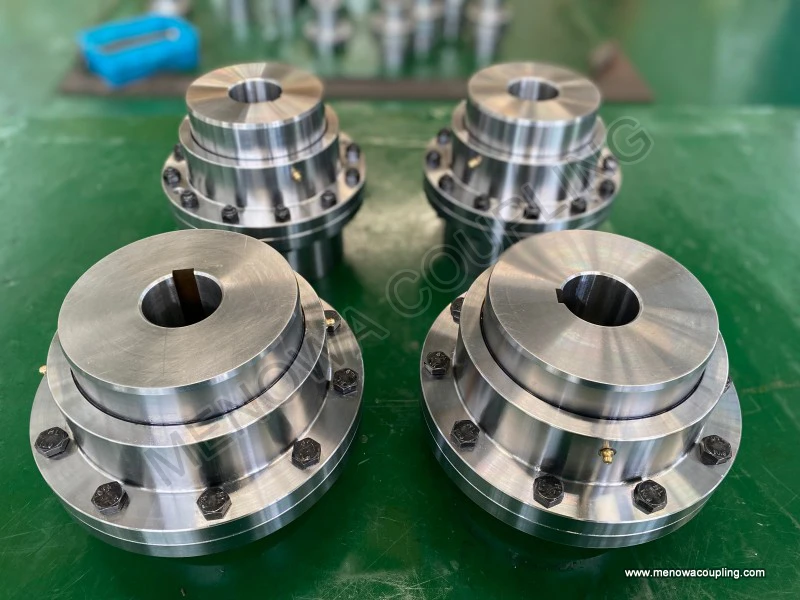
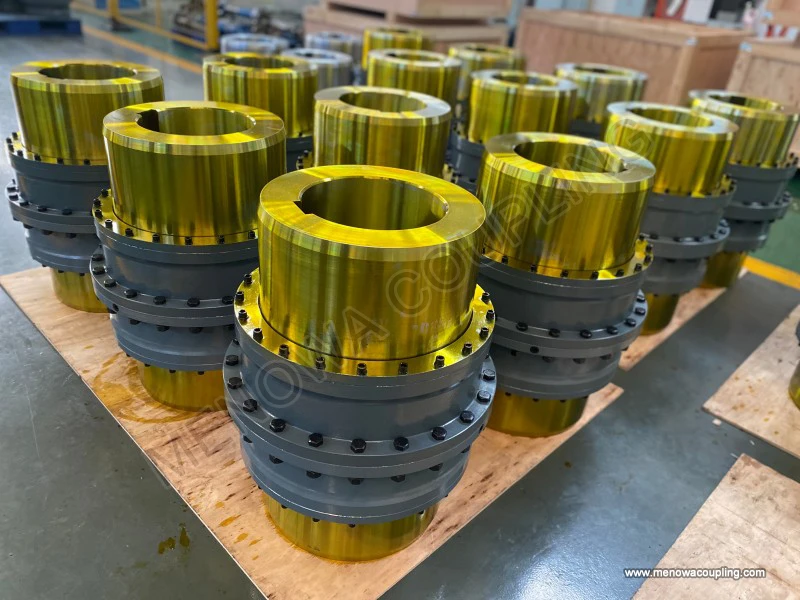
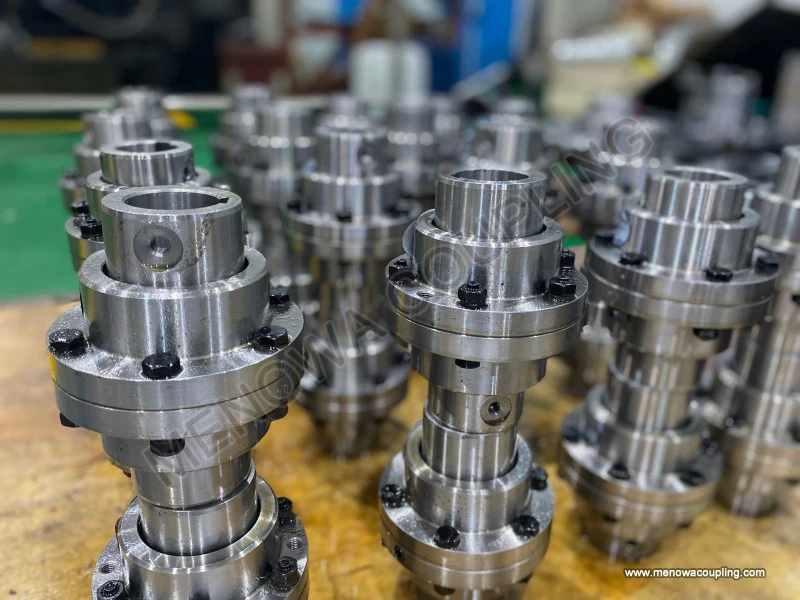
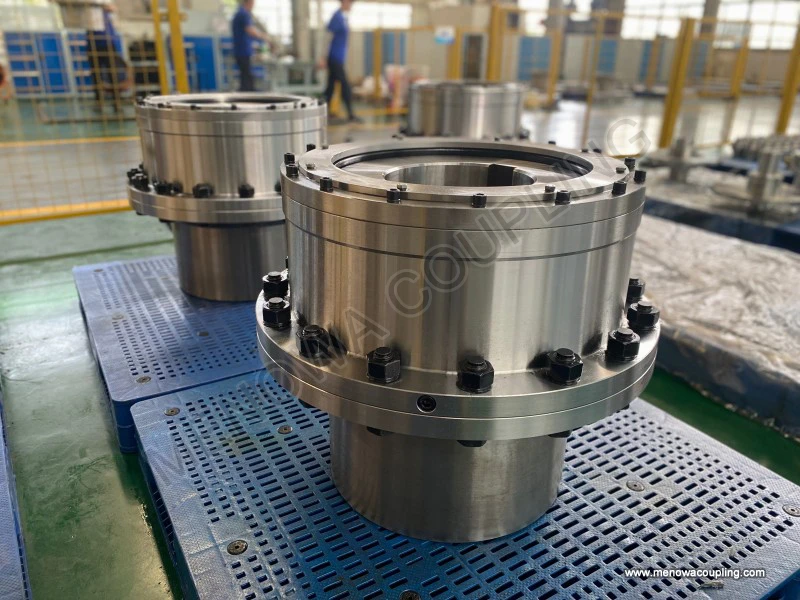
To understand what a curved tooth coupling is, it is helpful to consider its construction. A typical curved tooth coupling consists of two external hubs, each bored to fit over the end of a shaft, and a sleeve or housing that connects the two hubs. The hubs carry external gear teeth, while the inner surface of the sleeve carries matching internal gear teeth. When the coupling is assembled, the teeth of each hub mesh with the teeth of the sleeve. The key feature is that the external teeth are curved along their length in a barrel-like or crowned profile. This crowned shape allows the teeth to roll and slide against one another within the sleeve, which means the two hubs can be angularly offset to a limited degree while the sleeve still maintains continuous tooth engagement. It is this crowned geometry that separates a curved tooth coupling from a rigid coupling or from a conventional gear coupling with straight teeth.
The functional purpose of the curved tooth coupling is to transmit power reliably between shafts that cannot be kept in perfect alignment during service. In real industrial installations, perfect alignment is rarely achievable over the long term. Foundations settle, machinery expands and contracts with temperature changes, and heavy loads cause deflection of supporting structures. A rigid coupling would transfer these misalignments directly to the shafts and bearings, generating excessive stresses, vibration, and premature failure. A curved tooth coupling, by contrast, absorbs the misalignment through the crowned tooth contact, protecting the connected equipment and sustaining smooth operation. The coupling therefore serves three simultaneous functions: transmitting torque, accommodating misalignment, and dampening the transmission of harmful forces between machines.
The amount of misalignment a curved tooth coupling can accommodate is one of its defining characteristics. Angular misalignment refers to the situation where the two shaft centerlines are at a slight angle to one another, and curved tooth couplings typically permit angular misalignment of one to several degrees, depending on the size and geometry of the teeth. The crowned profile increases the effective contact area and distributes the load more evenly across the teeth, which is the reason such misalignment can be sustained without premature wear. The coupling also accommodates parallel offset, where the shafts are displaced sideways but remain parallel, and axial displacement, where one shaft moves along its axis relative to the other. The combined ability to manage these forms of displacement makes the curved tooth coupling a versatile solution for heavy rotating machinery.
The international market for curved tooth couplings has developed in response to the needs of industries that operate large, powerful, and continuously running equipment. These couplings are most valuable where torque demands are high, shaft speeds are moderate, and operating conditions are harsh or unpredictable. Consequently, the principal markets are found in sectors such as iron and steel production, cement manufacturing, mining and mineral processing, pulp and paper, marine propulsion, power generation, and the oil and gas industry. In all of these sectors, the connecting of large motors, engines, turbines, and gearboxes to heavy driven equipment such as mills, crushers, kilns, conveyors, and pumps demands a coupling that can handle severe load and still tolerate the inevitable misalignment that arises in service.
In the steel industry, curved tooth couplings connect the main drives of rolling mills to their motors, where torque is delivered in short, violent pulses and where the settling of heavy foundations constantly alters shaft alignment. The crowned teeth distribute these loads evenly, reducing the concentration of stress that would otherwise cause tooth breakage in less robust designs. In cement plants, the couplings serve kiln drives, raw mill drives, clinker crushers, and large fans, operating in dusty, hot, and vibrating environments where reliability is paramount. Mining operations use them on conveyor drives, grinding mills, and slurry pumps, where shock loading and frequent stops and starts subject the transmission to extreme stress.
The paper and pulp industry relies on curved tooth couplings for calendar stacks, refiners, and large drying cylinders, applications that combine high torque with the difficulty of maintaining precise alignment over years of continuous operation. The marine sector employs them in propulsion shafting and auxiliary drives, where hull flexing and thermal expansion create continuous relative movement between the engine and the shaft. Power generation plants use the coupling on turbine-driven generators, boiler feed pumps, and cooling tower fans, where smooth, uninterrupted rotation is essential to plant availability. In the oil and gas industry, the coupling appears on pipeline pumps, compressors, and refining equipment, where operational safety and reliability govern every design decision.
The selection of a curved tooth coupling for a given application is governed by a clear engineering procedure, and an understanding of this procedure helps international buyers specify the correct component. The first and most important calculation is the determination of the torque that the coupling must transmit. The nominal torque T, expressed in newton-metres, is related to the power and speed of the system by the formula T = 9550 × P ÷ n, where P is the transmitted power in kilowatts and n is the operating speed in revolutions per minute. This formula derives the steady-state torque that the coupling will carry under normal running conditions.
Because actual operating conditions are rarely as benign as ideal steady-state conditions, the nominal torque must be multiplied by a service factor K to obtain the design torque Td. The service factor accounts for the nature of the prime mover, the characteristics of the driven equipment, the severity and frequency of load fluctuations, and the presence of shocks, reversals, or frequent starting and stopping. For a smooth, constant load with a steady driver, the service factor may be close to one. For reversing machinery, heavily shock-loaded equipment, or drives that cycle frequently, the service factor may range from 1.5 to 2.5 or higher. The design torque Td, obtained by multiplying the nominal torque by the service factor, is the value against which the rated torque capacity of the selected coupling must be compared. The coupling chosen must have a rated capacity at least equal to, and preferably somewhat greater than, the design torque.
Speed is the second major selection criterion. Every curved tooth coupling has a maximum permissible rotational speed, which is determined by its dimensions, mass, and balance. Operating above this limit invites centrifugal stress, vibration, and instability, so the selection must verify that the maximum speed of the coupling comfortably exceeds the operating speed of the machinery. High-speed applications require couplings with smaller outer diameters and lower rotational inertia, and they may also demand dynamic balancing to a higher standard. The selection process therefore checks speed compatibility alongside torque capacity.
The dimensions of the connecting shafts impose additional constraints. The hub bores of the coupling must accept the shaft diameters of both the driving and driven machines, and the selected size must provide adequate bore capacity without exceeding the maximum bore permitted for that coupling size. The fit between the hub bore and the shaft is critical to the coupling's performance; an excessively loose fit can lead to fretting, shaft fatigue, and eventual failure, while a correct interference or transition fit, typically combined with keys or other positive locking arrangements, ensures reliable torque transmission. The selection must therefore confirm that the shaft diameters fall within the bore range of the chosen coupling.
Misalignment capacity is a defining consideration in selecting a curved tooth coupling, and often the very reason this type is chosen. The angular misalignment capacity, measured in degrees, indicates how much the shafts may be angularly offset while the coupling continues to transmit torque. The required misalignment must be estimated from the thermal expansion of the connected machines, the expected settlement of foundations, and the installation tolerances, and this estimate must fall comfortably within the coupling's rated capability. It is important to recognize the interaction between misalignment and torque capacity: operating at the maximum misalignment reduces the effective torque capacity of the coupling, so designers should select a size with adequate margin to cover both requirements simultaneously.
Material selection and lubrication are also part of the specification process. The crowned teeth transmit load through rolling and sliding contact, and adequate lubrication is essential to prevent wear, scuffing, and fatigue of the tooth surfaces. Grease lubrication is standard for most industrial applications, and the lubricant must be chosen to suit the operating temperature and the surrounding environment. For high-speed or high-temperature service, alternative lubrication methods may be necessary. The materials of the hubs and teeth, typically hardened alloy steels, must also be selected to withstand the environmental conditions, including moisture, corrosive atmospheres, or abrasive dust, so that the coupling achieves its intended service life.
The physical envelope of the installation must also be considered. The coupling must fit within the space available between the two machines, and the designer must confirm that the selected size's outer diameter, overall length, and clearance requirements are compatible with the equipment layout. Where space is limited, the compact axial design of the curved tooth coupling is an advantage, because it delivers high torque capacity in a shorter length than many alternative high-torque couplings. The selection process thus balances torque, speed, bore, misalignment, material, and envelope requirements to arrive at a coupling that performs reliably in its intended duty.
Beyond the technical parameters, an understanding of what a curved tooth coupling is also includes an appreciation of where it performs best and where it is less suitable. It excels in high-torque, moderate-speed, and misalignment-tolerant applications, making it the natural choice for heavy rotating machinery such as mills, crushers, kilns, conveyors, and large pumps. It is less appropriate for applications demanding very high torsional stiffness, precise angular transmission accuracy, or extremely high rotational speeds near the technological limits of coupling design. For those specialized cases, engineers may select different coupling families. But for the overwhelming majority of heavy industrial drives in the international market, the curved tooth coupling provides an exceptional combination of strength, durability, and tolerance to the realities of operating conditions.
The international market for curved tooth couplings has grown alongside the expansion of global infrastructure, resource extraction, and industrial capacity. As plants in developing regions install larger and more demanding rotating equipment, the need for couplings that deliver high reliability under severe conditions has grown correspondingly. Buyers sourcing these couplings across borders evaluate not only the rated parameters but also the consistency of manufacturing quality, the availability of spare parts, and the suitability of the component for the specific climatic and operational environment. A coupling that performs well in a temperate paper mill may require different material and lubrication choices for a tropical mining operation, and such considerations should be part of any international specification.
Proper installation and maintenance complete the picture of what a curved tooth coupling is and how it should be used. The coupling is designed for a long service life, but that life depends on correct installation, verification of alignment, and disciplined lubrication. Many operators perform periodic visual inspections and lubricant replenishment, while more advanced plants use vibration monitoring to detect the onset of coupling wear before it leads to failure. Understanding the coupling's operating characteristics, particularly its misalignment accommodation and the associated heat generation, enables maintenance teams to set meaningful condition-monitoring thresholds and to schedule overhauls at appropriate intervals.
The selection of the correct coupling size is ultimately an economic decision as much as a technical one. Undersizing leads to premature wear, unplanned downtime, and damage to connected machinery, while grossly oversizing adds unnecessary cost, weight, and inertia. The disciplined application of the torque calculation, the service factor, the speed check, the bore verification, and the misalignment assessment yields a coupling that operates within its rated envelope for its intended life, delivering the lowest total cost of ownership over the equipment's service period.
In summary, a curved tooth coupling is a crowned-tooth flexible coupling that connects rotating shafts, transmits torque, and absorbs misalignment, and it occupies a central position in the international landscape of heavy power transmission. Its combination of high torque capacity, compactness, and substantial misalignment tolerance makes it the preferred choice across steel, cement, mining, paper, marine, power, and oil and gas applications. Effective selection depends on a clear understanding of operating conditions, rigorous application of torque and speed calculations, attention to shaft and envelope constraints, and honest assessment of misalignment requirements. When properly selected, installed, and maintained, the curved tooth coupling provides many years of reliable service, protecting valuable rotating machinery and sustaining the productivity of industrial operations around the world.
Post Date: Oct 13, 2026
https://www.menowacoupling.com/china-coupling/what-is-curved-tooth-coupling.html
Products
Tags
Supply
Related Articles
Parts of Curved Tooth Coupling
Curved tooth couplings stand as one of the most reliable and widely adopted mechanical transmission components in the global industrial machinery sector, renowned for their superior torque transmission capacity, flexible misalignment compensation, and durable structural performance. As global industrialization continues…Classification of Curved Tooth Coupling
Classification and Application Analysis of Curved Tooth Coupling in Global Industrial MarketsIn the global industrial transmission system, curved tooth couplings have emerged as one of the most critical flexible transmission components, widely adopted in heavy-duty machinery, precision industrial equipment, and large-sc…Gear Type Coupling Wholesale
Gear type couplings stand as one of the most reliable and versatile mechanical transmission components in modern industrial machinery, serving a core role in connecting rotating shafts and transmitting torque across diverse heavy-duty and high-precision operating scenarios. As industrial manufacturing continues to scale…Uses of Gear Type Coupling
Gear type couplings stand as one of the most robust and versatile mechanical transmission components in modern industrial machinery, serving as a critical connecting element between rotating shafts in countless mechanical systems. Engineered with a unique structure of meshing internal and external gear pairs, these coup…Dimensions of Gear Type Coupling
Gear type couplings stand as fundamental flexible transmission components widely applied in industrial mechanical systems, primarily tasked with transmitting rotational torque between adjacent drive and driven shafts while accommodating minor shaft misalignments generated by mechanical operation, assembly errors, and st…Size Chart of Curved Tooth Coupling
The global industrial transmission component market has maintained steady expansion alongside the continuous upgrading of industrial manufacturing, intelligent equipment iteration, and the vigorous development of heavy industry sectors worldwide. As a core high-efficiency power transmission component, curved tooth coupl…
 WeChat
 WhatsApp