Types of Elastic Coupling
Elastic couplings are essential mechanical components designed to connect two rotating shafts in machinery, enabling the efficient transmission of torque while accommodating minor misalignments, absorbing shocks, and dampening vibrations. Unlike rigid couplings, which require precise alignment and offer no flexibility, elastic couplings incorporate elastic elements that allow for controlled deformation, protecting the connected shafts, bearings, and other mechanical parts from excessive stress and wear. These couplings are widely used across various industries, including manufacturing, automotive, aerospace, robotics, and marine engineering, where smooth power transmission and component protection are critical. The design and performance of elastic couplings vary significantly based on the type of elastic element used, the materials employed, and the specific application requirements, leading to a diverse range of types each tailored to address unique operational challenges.
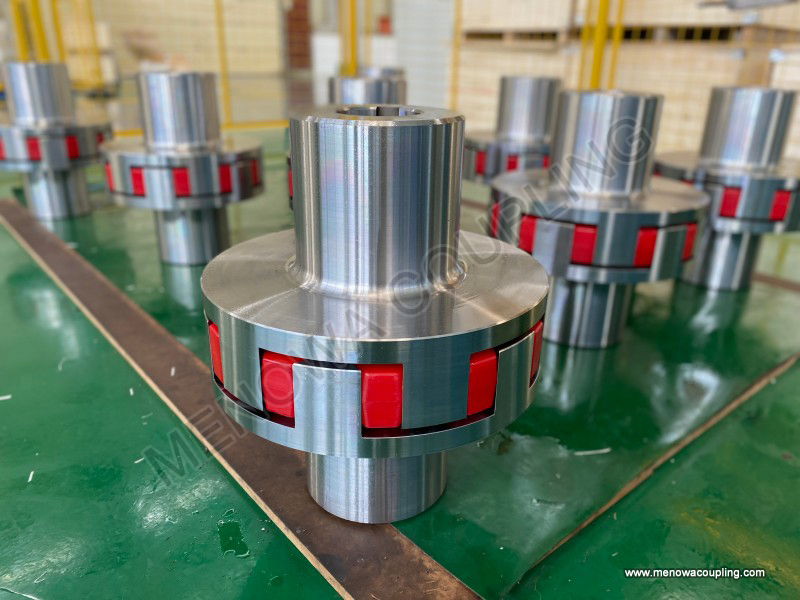
One of the most common and versatile types of elastic couplings is the jaw coupling, which derives its name from the distinctive jaw-like projections on its two metal hubs. These hubs are typically made from durable materials such as steel, aluminum, or cast iron, chosen for their strength and ability to withstand high torque loads. Between the two hubs sits an elastomeric insert, often referred to as a spider, which is made from materials like polyurethane, natural rubber, or neoprene. The spider fits into the recesses between the jaws of the two hubs, creating a flexible connection that transmits torque while absorbing shocks and vibrations. Jaw couplings are valued for their simplicity, cost-effectiveness, and ease of installation, making them suitable for a wide range of applications, from small electric motors to industrial pumps and conveyors. They can accommodate small amounts of angular, radial, and axial misalignment, with the exact range depending on the size of the coupling and the material of the elastomeric insert. Polyurethane inserts, for example, offer higher torque capacity and better resistance to oil and abrasion compared to rubber inserts, making them ideal for harsh industrial environments, while rubber inserts provide superior vibration damping for applications where noise reduction is a priority.
Another widely used type is the tire coupling, which features a flexible, tire-shaped elastomeric element that connects two metal hubs. The elastomeric tire is typically made from rubber or a rubber-cord composite, which provides exceptional flexibility and shock absorption capabilities. The tire is attached to the hubs using bolts or clamps, creating a connection that can accommodate significant amounts of misalignment—far more than jaw couplings—including angular, radial, and axial displacements. Tire couplings are particularly effective at dampening high-frequency vibrations and absorbing sudden shock loads, making them suitable for applications with frequent starts and stops, such as in crushers, mills, and heavy-duty conveyors. Their design also allows for easy maintenance, as the elastomeric tire can be replaced without disassembling the entire coupling or moving the connected shafts. Additionally, the tire’s flexibility helps to isolate vibrations between the driving and driven shafts, protecting sensitive components from damage. However, tire couplings are not ideal for high-speed applications, as the elastomeric tire can experience centrifugal distortion at very high rotational speeds, leading to reduced performance and potential failure.
Diaphragm couplings represent a high-performance type of elastic coupling that uses thin, flexible metallic diaphragms as the elastic element. These diaphragms are typically made from stainless steel, inconel, or other high-strength alloys, and are designed to transmit torque while compensating for misalignments through controlled bending. Unlike couplings with elastomeric elements, diaphragm couplings do not require lubrication, making them maintenance-free and suitable for applications where contamination from lubricants is a concern, such as in food processing, pharmaceutical manufacturing, and aerospace systems. Diaphragm couplings are known for their high torsional stiffness, which ensures precise torque transmission with minimal backlash, making them ideal for precision machinery like CNC machines, robotics, and servo systems. They can accommodate small to moderate amounts of angular and axial misalignment, but their radial misalignment capacity is limited compared to tire or jaw couplings. The design of diaphragm couplings can vary, with some featuring a single diaphragm and others using multiple diaphragms stacked together to enhance flexibility and torque capacity. Multiple-diaphragm designs also help to distribute stress evenly, increasing the coupling’s service life and reliability.
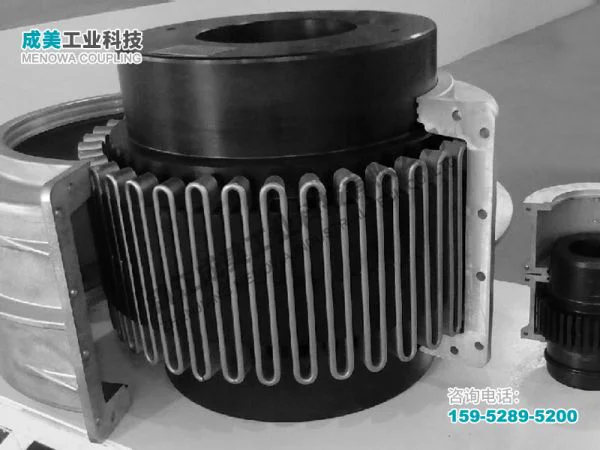
Grid couplings are a robust type of elastic coupling that uses a metallic grid as the flexible element, sandwiched between two hubs with grooved surfaces. The grid is typically made from spring steel, which offers high tensile strength and fatigue resistance, allowing it to transmit high torque loads while absorbing shocks and vibrations. The grid fits into the grooves of the hubs, creating a flexible connection that can accommodate moderate amounts of angular and radial misalignment. Grid couplings are valued for their durability and ability to withstand harsh operating conditions, including high temperatures, heavy loads, and exposure to dust and debris, making them suitable for applications in mining, construction, and heavy machinery. They also feature a fail-safe design, meaning that if the grid fails, the hubs will still make contact and continue to transmit torque, preventing sudden equipment shutdowns and minimizing downtime. However, grid couplings require regular lubrication to reduce friction between the grid and the hubs, which adds to their maintenance requirements compared to lubrication-free options like diaphragm couplings.
Bellows couplings are a precision type of elastic coupling that uses a metallic bellows as the elastic element. The bellows is typically made from thin-walled stainless steel or titanium, formed into a corrugated tube that can bend and stretch to accommodate misalignments. Bellows couplings are known for their exceptional precision, with minimal backlash and high torsional stiffness, making them ideal for applications that require accurate torque transmission, such as in robotics, semiconductor manufacturing, and medical equipment. They can accommodate small amounts of angular, radial, and axial misalignment, and their compact design makes them suitable for use in tight spaces. Unlike elastomeric couplings, bellows couplings are not susceptible to degradation from oil, chemicals, or high temperatures, making them suitable for harsh environments where elastomeric elements would fail. However, bellows couplings are more fragile than other types, as the thin-walled bellows can be damaged by excessive misalignment or shock loads, requiring careful installation and alignment to ensure optimal performance and service life.
Oldham couplings are a unique type of elastic coupling designed specifically to accommodate large amounts of axial misalignment while maintaining constant velocity transmission. They consist of three components: two hubs with flat, grooved surfaces and a central disk that has projections on both sides, which fit into the grooves of the hubs. The central disk is typically made from a rigid material like steel or aluminum, while the hubs are made from similar materials, with the grooves machined to ensure a precise fit with the disk. Oldham couplings work by allowing the central disk to slide within the grooves of the hubs, accommodating axial misalignment while transmitting torque through the contact between the disk and the hubs. They can also accommodate small amounts of angular and radial misalignment, making them suitable for applications where axial movement is common, such as in linear actuators, pumps, and conveyors. Oldham couplings are often used in applications where precision is important, as they provide constant velocity transmission without backlash. However, they have lower torque capacity compared to other types of elastic couplings, making them more suitable for light to medium load applications.
Elastomeric pin couplings are a simple and cost-effective type of elastic coupling that uses elastic pins to connect two hubs. The hubs are typically made from cast iron or steel, with holes drilled around their circumference to accommodate the elastic pins. The pins are made from materials like rubber, polyurethane, or nylon, and are inserted through the holes in both hubs, creating a flexible connection that transmits torque while absorbing shocks and vibrations. Elastomeric pin couplings can accommodate small amounts of angular, radial, and axial misalignment, and their simple design makes them easy to install and maintain. They are commonly used in light to medium load applications, such as small electric motors, fans, and pumps. However, the elastic pins are susceptible to wear over time, especially in high-torque or high-speed applications, requiring regular replacement to ensure optimal performance. Additionally, elastomeric pin couplings have lower torque capacity compared to grid or diaphragm couplings, making them less suitable for heavy-duty applications.
Magnetic couplings represent a specialized type of elastic coupling that uses magnetic force to transmit torque between two shafts, eliminating the need for physical contact between the driving and driven components. They consist of two magnetic assemblies: one attached to the driving shaft (the inner magnet) and one attached to the driven shaft (the outer magnet), separated by a non-magnetic barrier, such as a stainless steel housing. The magnetic force between the two assemblies transmits torque, while the non-magnetic barrier provides a seal, making magnetic couplings ideal for applications where leakage prevention is critical, such as in chemical processing, food and beverage manufacturing, and pharmaceutical production. Magnetic couplings also offer inherent overload protection, as the magnetic force will slip if the torque exceeds a certain limit, preventing damage to the connected equipment. They can accommodate small amounts of misalignment and provide vibration isolation, as there is no physical contact between the shafts. However, magnetic couplings have lower torque capacity compared to mechanical elastic couplings, and their performance can be affected by temperature, as high temperatures can reduce the strength of the magnetic field. They are also more expensive than traditional elastic couplings, making them suitable for specialized applications where their unique benefits justify the higher cost.
The selection of the appropriate elastic coupling type depends on a variety of factors, including the torque requirements, the amount and type of misalignment, the operating speed, the environmental conditions, and the maintenance requirements. For example, in precision applications like robotics and CNC machines, diaphragm or bellows couplings are preferred for their high precision and low backlash. In heavy-duty industrial applications with high torque and significant misalignment, grid or tire couplings are more suitable due to their durability and flexibility. For applications requiring leakage prevention, magnetic couplings are the ideal choice, while jaw couplings are a versatile option for general-purpose applications. Understanding the characteristics and capabilities of each type of elastic coupling is essential to ensuring optimal performance, reducing equipment downtime, and extending the service life of the connected machinery.
In addition to the primary types discussed, there are also hybrid elastic couplings that combine features of different types to address specific application needs. For example, some couplings combine the flexibility of a jaw coupling with the precision of a diaphragm coupling, offering a balance between vibration damping and torque transmission accuracy. These hybrid designs are often used in applications that require both flexibility and precision, such as in advanced manufacturing equipment and automated systems. Another variation is the use of composite materials for the elastic elements, which offer improved performance characteristics, such as higher strength, better resistance to chemicals and temperature, and reduced weight. Composite materials like carbon fiber-reinforced polymers are increasingly being used in high-performance elastic couplings, particularly in aerospace and automotive applications where weight reduction and durability are critical.
The performance of elastic couplings is also influenced by the materials used in their construction. Metallic components, such as hubs and diaphragms, are typically made from steel, aluminum, or alloys, chosen for their strength, durability, and resistance to fatigue. Elastomeric elements, such as spiders, tires, and pins, are made from materials like polyurethane, rubber, neoprene, or nylon, each offering different properties. Polyurethane, for example, provides excellent abrasion resistance and high torque capacity, while rubber offers superior vibration damping. The choice of material for the elastic element is critical, as it directly affects the coupling’s ability to absorb shocks, dampen vibrations, and accommodate misalignment. Environmental factors, such as temperature, humidity, and exposure to chemicals or oil, also play a role in material selection, as some materials may degrade under certain conditions.
Maintenance is another important consideration when selecting an elastic coupling. Lubrication-free couplings, such as diaphragm, bellows, and magnetic couplings, require minimal maintenance, making them ideal for applications where access is limited or where lubricant contamination is a concern. Couplings that require lubrication, such as grid couplings, need regular maintenance to ensure that the lubricant is clean and at the correct level, which can add to the operational costs. Additionally, elastomeric elements, such as those in jaw and elastomeric pin couplings, may need to be replaced periodically due to wear and tear, while metallic elements, such as diaphragms and bellows, have a longer service life but may be more expensive to replace if damaged.
In conclusion, elastic couplings are vital components in modern machinery, providing flexible, reliable torque transmission while protecting equipment from misalignment, shocks, and vibrations. The diverse range of types, each with its unique design and performance characteristics, ensures that there is an elastic coupling suitable for almost any application, from light-duty electric motors to heavy-duty industrial machinery and precision robotics. By understanding the features, benefits, and limitations of each type, engineers and equipment operators can select the most appropriate coupling to optimize performance, reduce downtime, and extend the service life of their machinery. As technology advances, new materials and designs continue to improve the performance and versatility of elastic couplings, making them even more essential in the ever-evolving field of mechanical engineering.
Post Date: May 11, 2026
https://www.menowacoupling.com/china-coupling/types-of-elastic-coupling.html
Supply
Related Articles
Grid Spring Coupling Production
Grid spring couplings are essential mechanical components widely used in various industrial applications to connect two rotating shafts, transmit torque, and compensate for axial, radial, and angular misalignments between them. Unlike rigid couplings that require precise alignment and offer no flexibility, grid spring c…Types of Grid Spring Coupling
Types of Grid Spring CouplingGrid spring couplings are essential components in mechanical power transmission systems, designed to connect two rotating shafts while accommodating misalignments, absorbing vibrations, and transmitting torque efficiently. Unlike rigid couplings that require precise alignment and offer no fl…Elastic Coupling Supply
In the realm of industrial power transmission, elastic couplings serve as a critical bridge between rotating shafts, enabling the smooth transfer of torque while mitigating the negative effects of misalignment, vibration, and shock loads. The supply of elastic couplings is a dynamic and essential component of modern man…Structure of Grid Spring Coupling
The grid spring coupling is a crucial component in industrial power transmission systems, designed to connect two rotating shafts while accommodating misalignments, absorbing vibrations, and protecting machinery from shock loads. Its unique structure combines the rigidity needed for efficient torque transmission with th…Grid Spring Coupling Vendor In China
In the global mechanical transmission industry, grid spring couplings play an indispensable role as key components that connect rotating shafts, transmit torque, and compensate for relative displacements between shafts. As one of the world’s largest manufacturing hubs, China has nurtured a large number of professional …Uses of Grid Spring Coupling
In the realm of mechanical power transmission, the grid spring coupling stands as a versatile and reliable component that plays a critical role in connecting rotating shafts across a wide range of industrial applications. Unlike rigid couplings that demand precise alignment and offer no flexibility, or flexible coupling…
 WeChat
 WhatsApp