Grid Spring Coupling Production
Grid spring couplings are essential mechanical components widely used in various industrial applications to connect two rotating shafts, transmit torque, and compensate for axial, radial, and angular misalignments between them. Unlike rigid couplings that require precise alignment and offer no flexibility, grid spring couplings utilize a flexible grid spring element to absorb vibrations, dampen shocks, and accommodate minor misalignments, thereby protecting the connected equipment from premature wear and damage. The production of grid spring couplings is a sophisticated process that involves careful material selection, precise manufacturing techniques, strict quality control, and thorough testing to ensure optimal performance, durability, and reliability in diverse operating conditions. This article explores the entire production process of grid spring couplings, from material selection and component manufacturing to assembly, quality inspection, and application considerations, providing a comprehensive overview of how these critical components are designed and produced to meet the demands of modern industrial machinery.
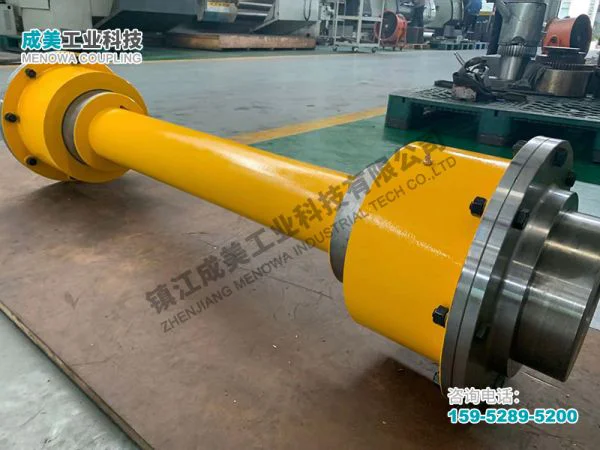
The foundation of a high-quality grid spring coupling lies in the selection of appropriate materials, as each component must possess specific mechanical properties to withstand the stresses, loads, and environmental conditions it will encounter during operation. The main components of a grid spring coupling include the two hubs (input and output), the grid spring, and the housing (or cover) that encloses and protects the internal components. Each of these components requires materials with distinct characteristics to ensure the overall performance of the coupling. For the hubs, which are responsible for connecting the coupling to the drive and driven shafts and transmitting torque, materials with high strength, hardness, and wear resistance are essential. Common materials used for hubs include carbon steel, alloy steel, and in some cases, aluminum alloys for lighter weight applications. Carbon steel, such as A3 or 45# steel, is widely used for general-purpose couplings due to its good mechanical properties and cost-effectiveness, while alloy steel, such as 40Cr or 42CrMo, is preferred for high-torque applications where greater strength and durability are required. Aluminum alloys are used in applications where weight reduction is a priority, such as in aerospace or light machinery, as they offer a good balance of strength and lightness.
The grid spring is the core flexible element of the coupling, responsible for absorbing vibrations, dampening shocks, and compensating for misalignments. As such, the material used for the grid spring must possess excellent elasticity, fatigue resistance, and toughness to withstand repeated cycles of stress without permanent deformation or failure. The most commonly used materials for grid springs are high-quality spring steels, including 65Mn, 60Si2MnA, and 50CrVA. These spring steels have high tensile strength, good elastic limit, and excellent fatigue resistance, making them ideal for withstanding the dynamic loads and cyclic stresses that grid springs experience during operation. The selection of the spring material is also influenced by the operating temperature and environment; for example, in high-temperature applications, heat-resistant spring steels may be used to prevent loss of elasticity, while in corrosive environments, stainless steel or corrosion-resistant alloys may be selected to ensure long-term durability. Additionally, the grid spring’s material must be compatible with the lubricant used in the coupling, as improper material-lubricant combinations can lead to premature wear or corrosion.
The housing, which encloses the grid spring and hubs, serves to protect the internal components from dust, debris, moisture, and other environmental contaminants, while also preventing the grid spring from being thrown out due to centrifugal force during operation. The housing material is typically selected based on the operating environment and the required level of protection. Common materials for housings include cast iron, steel, and aluminum alloys. Cast iron is durable and cost-effective, making it suitable for general industrial applications, while steel housings offer greater strength and are used in high-torque or heavy-duty applications. Aluminum alloy housings are lightweight and corrosion-resistant, making them ideal for applications where weight is a concern or where the coupling is exposed to mild corrosive environments. In some cases, the housing may be coated with a protective layer, such as paint or zinc plating, to enhance corrosion resistance and extend its service life.
Once the materials have been selected, the production process moves to the manufacturing of individual components, each of which requires precise machining and processing to ensure proper fit and function. The manufacturing of the hubs typically involves several steps, including forging, turning, milling, and drilling. Forging is used to shape the raw material into a rough blank, which is then subjected to heat treatment to improve its mechanical properties. Heat treatment processes for hubs may include quenching and tempering, which increase the hardness and strength of the material while reducing brittleness. After heat treatment, the blank is machined using turning equipment to achieve the desired outer diameter, inner diameter, and length, ensuring that the hub fits perfectly onto the drive and driven shafts. Milling is then used to create the tooth profiles or grooves on the hub that will engage with the grid spring, and drilling is used to create holes for fasteners, such as bolts or keys, that secure the hub to the shaft. The machining process must be precise, with tight tolerances, to ensure that the hub’s dimensions are accurate and that the tooth profiles are consistent, as any deviation can affect the coupling’s performance and durability.
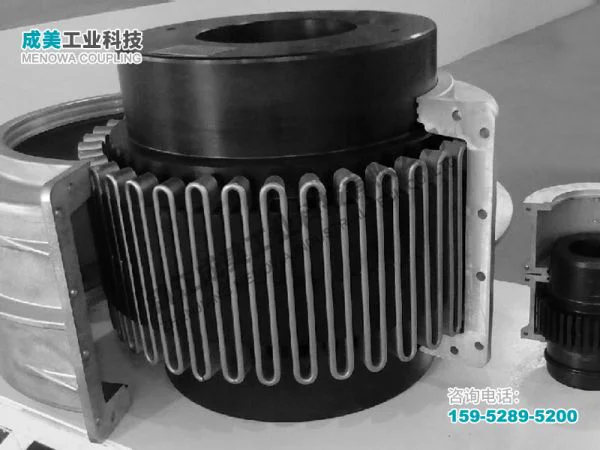
The manufacturing of the grid spring is a critical step in the production process, as its shape, dimensions, and mechanical properties directly impact the coupling’s flexibility, vibration absorption, and load-carrying capacity. The grid spring is typically formed from a flat strip of spring steel, which is cut to the required length and then shaped into a serpentine (or grid) pattern using specialized forming equipment. The forming process may involve bending, stamping, or rolling, depending on the desired shape and size of the spring. After forming, the grid spring undergoes heat treatment to enhance its elasticity and fatigue resistance. The heat treatment process for grid springs usually includes quenching, which hardens the material, followed by tempering, which reduces brittleness and improves toughness. The temperature and duration of the heat treatment are carefully controlled to ensure that the spring achieves the desired mechanical properties; over-tempering can reduce the spring’s elasticity, while under-tempering can make it too brittle and prone to breakage. After heat treatment, the grid spring is subjected to a surface treatment, such as shot peening, which removes surface defects, improves surface hardness, and enhances fatigue resistance by creating a compressive stress layer on the surface of the spring.
The housing is manufactured using a variety of processes, depending on the material and design. For cast iron or aluminum alloy housings, casting is the most common method. The casting process involves melting the material and pouring it into a mold that has the shape of the housing. After casting, the housing is cooled and then machined to remove any excess material, smooth the surfaces, and create the necessary holes or mounting points. For steel housings, welding or stamping may be used instead of casting, depending on the complexity of the design. Welded steel housings are formed by welding together multiple steel plates, while stamped housings are created by pressing a flat steel sheet into the desired shape using a stamping press. Regardless of the manufacturing method, the housing must be designed to fit securely around the hubs and grid spring, with proper clearances to allow for movement and misalignment, while also providing adequate protection against environmental contaminants.
Once all individual components have been manufactured and inspected, the next step is assembly. The assembly process of a grid spring coupling involves several steps, starting with the installation of the grid spring onto the hubs. The grid spring is carefully positioned into the tooth grooves of the two hubs, ensuring that it fits securely and evenly. The hubs are then aligned to ensure that the grid spring is not under tension or compression when the coupling is in a neutral position. After the grid spring is installed, the housing is placed over the assembly and secured using fasteners, such as bolts or screws. It is important to ensure that the housing is properly sealed to prevent the entry of dust, debris, or moisture, which can cause premature wear or corrosion of the internal components. In some cases, a lubricant is added to the coupling during assembly to reduce friction between the grid spring and the hubs, improve performance, and extend the service life of the coupling. The type and amount of lubricant are selected based on the operating conditions, such as temperature, speed, and load, to ensure optimal lubrication.
Quality control is an integral part of the entire production process, ensuring that each grid spring coupling meets the required specifications and performance standards. Quality control begins with the inspection of raw materials, where samples of the selected materials are tested to verify their chemical composition, mechanical properties, and other relevant characteristics. This ensures that the materials used are of high quality and suitable for their intended use. During the manufacturing process, each component is inspected at various stages to check for dimensional accuracy, surface quality, and any defects, such as cracks, burrs, or uneven surfaces. For example, the hubs are inspected using calipers, micrometers, and other precision measuring tools to ensure that their dimensions are within the specified tolerances, and the grid spring is inspected for proper shape, size, and elasticity. After assembly, the entire coupling is subjected to a series of tests to verify its performance, including torque transmission tests, misalignment compensation tests, vibration absorption tests, and durability tests.
Torque transmission tests are conducted to ensure that the coupling can transmit the specified amount of torque without slipping or failure. During these tests, the coupling is connected to a test rig that applies a controlled torque, and the performance is monitored to ensure that the torque is transmitted efficiently and that the coupling does not experience any damage. Misalignment compensation tests are used to verify the coupling’s ability to accommodate axial, radial, and angular misalignments between the two shafts. The coupling is installed with a controlled amount of misalignment, and its performance is monitored to ensure that it can still transmit torque effectively and that the misalignment does not cause excessive wear or vibration. Vibration absorption tests are conducted to measure the coupling’s ability to absorb vibrations from the drive shaft, which helps to protect the connected equipment. These tests involve measuring the vibration levels before and after the coupling is installed, and comparing the results to ensure that the coupling is effectively dampening vibrations. Durability tests are designed to simulate the long-term operation of the coupling under normal operating conditions, to ensure that it can withstand repeated cycles of stress without failure. These tests may involve running the coupling for an extended period of time at a specified speed and load, and then inspecting it for any signs of wear, fatigue, or damage.
In addition to these tests, the coupling is also inspected for外观 defects, such as scratches, dents, or corrosion, which could affect its performance or service life. Any coupling that fails to meet the quality standards is rejected and either reworked or discarded, ensuring that only high-quality couplings are delivered to customers. Quality control also involves maintaining detailed records of each production batch, including material specifications, manufacturing processes, inspection results, and test data, which allows for traceability and continuous improvement of the production process.
The production of grid spring couplings also involves considerations for the specific applications in which they will be used, as different industries and operating conditions require couplings with different characteristics. For example, in heavy-duty applications, such as mining, construction, or steel production, couplings must be designed to withstand high torques, heavy loads, and harsh environmental conditions, such as dust, moisture, and extreme temperatures. In these cases, the coupling components are typically made from high-strength alloy steels, with reinforced housings and heavy-duty grid springs to ensure durability. In contrast, in precision applications, such as aerospace, medical equipment, or CNC machinery, couplings must be lightweight, have low inertia, and provide precise torque transmission with minimal vibration. For these applications, aluminum alloy hubs and lightweight grid springs may be used, and the manufacturing process may involve more precise machining to ensure tight tolerances.
Another important consideration in the production of grid spring couplings is environmental sustainability. Manufacturers are increasingly adopting eco-friendly practices, such as using recycled materials, reducing energy consumption during production, and minimizing waste. For example, scrap metal from the machining process can be recycled and reused, reducing the need for new raw materials. Additionally, energy-efficient manufacturing equipment and processes can help to reduce carbon emissions and lower the environmental impact of production. Lubricants used in the couplings are also being replaced with eco-friendly alternatives that are biodegradable and less harmful to the environment, without compromising performance.
The continuous advancement of technology has also had a significant impact on the production of grid spring couplings. The use of computer-aided design (CAD) software allows manufacturers to design couplings with greater precision and efficiency, optimizing the shape and dimensions of components to improve performance and reduce material waste. Computer numerical control (CNC) machining equipment has replaced traditional manual machining, providing greater accuracy, consistency, and productivity, while also reducing the risk of human error. Additionally, advanced testing equipment, such as laser measuring tools and vibration analysis systems, allows for more accurate and comprehensive testing of the couplings, ensuring that they meet the highest performance standards.
In conclusion, the production of grid spring couplings is a complex and precise process that requires careful material selection, advanced manufacturing techniques, strict quality control, and a deep understanding of the applications in which the couplings will be used. From the selection of high-quality materials to the precise machining of components, the assembly of the coupling, and the thorough testing of its performance, every step of the production process is critical to ensuring that the final product is durable, reliable, and capable of meeting the demands of modern industrial machinery. As technology continues to advance, manufacturers are constantly improving their production processes, adopting new materials and techniques to enhance the performance and sustainability of grid spring couplings, ensuring that they remain an essential component in a wide range of industrial applications for years to come. The attention to detail and commitment to quality in the production process not only ensures the performance of the couplings but also helps to protect the connected equipment, reduce maintenance costs, and improve overall operational efficiency for businesses across various industries.
Post Date: May 13, 2026
https://www.menowacoupling.com/china-coupling/grid-spring-coupling-production.html
Supply
Related Articles
Grid Spring Coupling Vendor In China
In the global mechanical transmission industry, grid spring couplings play an indispensable role as key components that connect rotating shafts, transmit torque, and compensate for relative displacements between shafts. As one of the world’s largest manufacturing hubs, China has nurtured a large number of professional …Uses of Grid Spring Coupling
In the realm of mechanical power transmission, the grid spring coupling stands as a versatile and reliable component that plays a critical role in connecting rotating shafts across a wide range of industrial applications. Unlike rigid couplings that demand precise alignment and offer no flexibility, or flexible coupling…Types of Elastic Coupling
Elastic couplings are essential mechanical components designed to connect two rotating shafts in machinery, enabling the efficient transmission of torque while accommodating minor misalignments, absorbing shocks, and dampening vibrations. Unlike rigid couplings, which require precise alignment and offer no flexibility, …Grid Spring Coupling Wholesale
In the complex ecosystem of industrial machinery, the role of coupling components cannot be overstated. They serve as the critical link between driving and driven shafts, ensuring the smooth transmission of power while accommodating misalignments, absorbing vibrations, and protecting expensive equipment from damage. Amo…What is Grid Spring Coupling
In the complex world of mechanical power transmission, the need to connect two rotating shafts efficiently, reliably, and with minimal wear has led to the development of various coupling devices. Among these, the grid spring coupling stands out as a versatile and robust solution, widely used in industrial applications w…Characteristics of Grid Spring Coupling
A grid spring coupling is a specialized mechanical component designed to transmit torque between two rotating shafts while accommodating various forms of misalignment and mitigating the effects of vibration and shock loads. Unlike rigid couplings that require precise alignment and offer no flexibility, grid spring coupl…
 WeChat
 WhatsApp