Barrel Coupling For Drums
In the complex and demanding landscape of industrial power transmission systems, the reliable connection between drive components and load-bearing operating parts stands as a foundational factor in maintaining stable mechanical operation across heavy-duty working scenarios. Among the critical connecting components specially developed for winding and hoisting drum operating mechanisms, barrel coupling for drums occupies an irreplaceable core position, serving as the key transitional component that links the power output end of reduction equipment with the rotating drum body responsible for winding ropes, cables, and other load-bearing media. Unlike ordinary general-purpose shaft couplings designed for light-load and stable-speed transmission environments, this type of professional coupling is tailor-made to adapt to the unique operating characteristics of drum equipment, including frequent start-stop cycles, alternating dynamic loads, continuous rotating operation, and inevitable minor shaft misalignment generated by long-term mechanical operation and structural deformation. Its overall design logic focuses on balancing efficient torque transmission, flexible displacement compensation, structural wear resistance, and long-term operational stability, creating a stable power transmission bridge that enables drum equipment to complete winding, unwinding, load lifting, and position adjustment actions smoothly in various harsh industrial working conditions. In all industrial production and engineering operation scenarios relying on drum rotating mechanisms, the reasonable matching and normal operation of barrel coupling for drums directly affect the overall operating efficiency of the equipment, the stability of the working process, and the service life of adjacent mechanical components such as reducers, bearings, and drum shafts, making it an indispensable basic mechanical component in heavy industrial transmission systems.
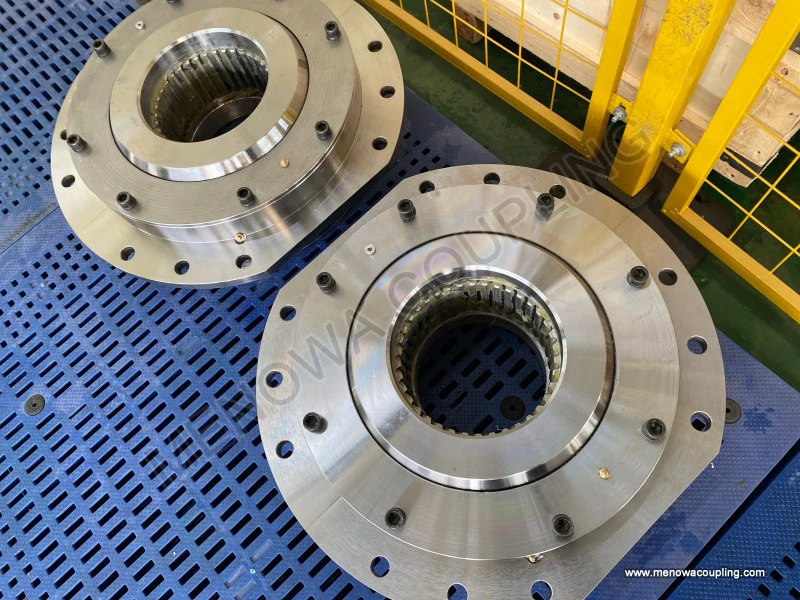
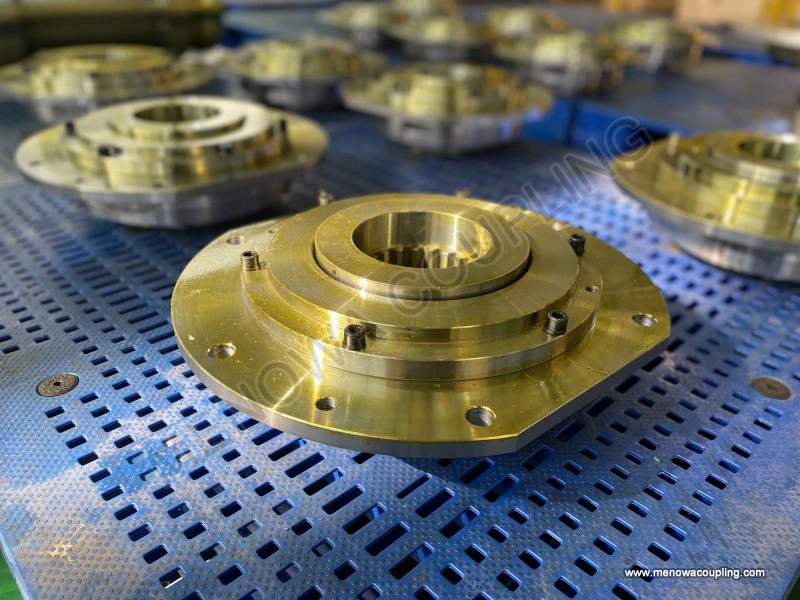
To fully understand the practical value and working significance of barrel coupling for drums, it is essential to first clarify the basic structural composition and inherent working mechanism that support its stable performance in drum matching applications. The overall structure of this coupling adopts a compact and robust integrated design mode, without overly complex auxiliary structures, and its core components mainly include precision-machined hub bodies, hardened barrel-shaped rolling parts, matching connecting sleeves, and fixed connecting flanges. Each structural part is designed with targeted functional positioning, and all parts cooperate closely to jointly complete the torque transmission and displacement compensation work in the drum drive system. The hub body is the core installation and bearing base of the coupling, usually processed with high-strength steel materials through forging and fine machining processes, with high structural rigidity and compressive resistance, and it is stably installed and fixed on the output shaft of the reduction equipment to follow the drive shaft to generate synchronous rotating power. The matching connecting sleeve is connected and fixed with the end structure of the drum body, undertaking the task of transmitting the rotating torque output by the hub to the entire drum structure, driving the drum to rotate and complete the preset winding and unwinding operations. The most distinctive core functional part is the hardened barrel-shaped rolling parts arranged evenly between the hub and the connecting sleeve, which are the key components that distinguish barrel coupling for drums from other traditional gear couplings and rigid couplings. These barrel-shaped rolling parts are placed in precision-machined curved matching holes on the hub and connecting sleeve, forming a stable contact and meshing structure relying on their own cylindrical and curved surface characteristics.
The working principle of barrel coupling for drums is based on the efficient transfer of compressive force and contact friction between the barrel-shaped rolling parts and the matching hole walls, abandoning the simple gear meshing transmission mode of traditional couplings and avoiding the local stress concentration and easy wear problems caused by point contact or line contact transmission. When the driving motor and reducer start to operate and output rotating power, the hub connected to the reducer shaft starts to rotate synchronously, and the rotating thrust generated by the hub acts on the evenly arranged barrel-shaped rolling parts through the inner wall of the matching holes. The barrel-shaped rolling parts then transmit the thrust to the inner wall of the connecting sleeve holes through stable surface contact, driving the connecting sleeve and the fixedly connected drum body to rotate synchronously, thus realizing the seamless transmission of torque from the power input end to the drum load end. During the entire torque transmission process, the barrel-shaped rolling parts can perform slight rolling and fine position adjustment inside the matching holes according to the actual operating state of the equipment. This flexible movement characteristic allows the coupling to naturally absorb and compensate for minor axial displacement, radial deviation, and small-angle angular misalignment between the reducer output shaft and the drum shaft that inevitably occur during long-term equipment operation. These misalignments are usually caused by equipment installation errors, long-term operational structural deformation, mechanical component wear, and alternating load impact, and if not effectively compensated, they will generate additional mechanical stress on the drive shaft, bearings, and reducer internal parts, accelerating component fatigue damage and shortening the overall service life of the equipment.
One of the prominent advantages of barrel coupling for drums in practical industrial applications lies in its excellent load-bearing performance and uniform stress distribution effect brought by its unique structural design. Compared with ordinary pin-type couplings and gear couplings, the surface contact transmission mode formed by the barrel-shaped rolling parts and the matching hole walls can disperse the transmitted torque and impact load over a larger contact area, effectively reducing the pressure per unit contact area. This structural characteristic enables the coupling to withstand continuous heavy loads and instantaneous impact loads generated by frequent start-stop and load lifting and lowering of drum equipment, avoiding local excessive stress and sudden structural damage that often occur in other types of couplings under heavy alternating load conditions. In actual hoisting and winding work, drum equipment often needs to bear sudden load changes during the process of lifting heavy materials, stopping at fixed positions, and adjusting winding speed, and the instantaneous torque impact generated in these working links will be effectively buffered and dispersed by the barrel coupling structure. The hardened treatment of the barrel-shaped rolling parts and the precision machining of the matching hole surfaces also ensure that the coupling maintains stable contact performance and low wear degree under long-term continuous operation, avoiding the transmission efficiency reduction and connection looseness caused by rapid wear of key transmission parts. Even in working environments with certain dust, humidity, and mechanical vibration, the overall closed and compact structural design of the coupling can reduce the erosion and interference of external environmental factors on the internal matching parts, maintaining the stability of the torque transmission state for a long time.
The application scenarios of barrel coupling for drums cover a wide range of heavy industrial fields that rely on drum rotating mechanisms for production and operation, with the most extensive application in various hoisting and material handling equipment. Various types of cranes used in factory workshops, port terminals, mining yards, and construction sites all rely on drum winding mechanisms to complete the lifting and handling of heavy materials, and the barrel coupling matched with the drum becomes the core guarantee for the stable operation of the crane drive system. In these crane equipment, the drum needs to frequently rotate forward and reverse, start and stop repeatedly, and bear large tensile loads brought by heavy steel wire ropes and lifted materials, and the barrel coupling can well adapt to this frequent alternating working state, ensuring that the power transmission is not interrupted and the connection structure is stable and reliable. In addition to hoisting machinery, this type of coupling is also widely used in winding equipment in metallurgical production, mine transportation, chemical industry, and material processing industries. For example, the winding drums used for steel coil winding and unwinding in metallurgical production lines, the rope winding drums used for mine hoisting and underground material transportation, and the winding drums used for cable and hose arrangement in chemical production all need to be equipped with professional barrel couplings to complete power transmission. In these different application scenarios, although the operating parameters and load types of the drums are different, the basic working requirements for torque transmission stability and displacement compensation of the couplings are consistent, and the universal structural design of barrel coupling for drums can meet the differentiated use needs of various working conditions through reasonable size matching and material selection.
The installation and daily maintenance work of barrel coupling for drums is simple and convenient, which is another important reason why it is widely promoted and applied in industrial production. The overall structural assembly logic of the coupling is clear and intuitive, with few matching parts and simple installation steps, and professional installation tools and complex assembly processes are not required in the actual installation and docking process. During the equipment assembly stage, workers only need to complete the fixed installation of the hub on the reducer output shaft and the connecting sleeve on the drum end shaft respectively, then place the barrel-shaped rolling parts in the preset matching holes, and complete the overall fastening and positioning through the connecting flange structure. After the installation is completed, only simple alignment detection is needed to ensure that the basic matching position of the coupling meets the operating requirements, and the equipment can be put into normal operation. In terms of daily operation and maintenance, the coupling does not need frequent complex maintenance and regular parts replacement like some precision transmission components. The daily maintenance work only includes regular surface cleaning to remove dust and sundries accumulated on the surface of the coupling and the matching gaps, regular inspection of the fastening state of the connecting flange bolts to avoid looseness caused by long-term vibration, and regular observation of the wear degree of the barrel-shaped rolling parts and the matching hole surfaces. As long as the basic daily inspection and simple maintenance work are done well, the coupling can maintain a good working state for a long time, without affecting the normal production progress due to frequent maintenance and shutdown maintenance. This simple maintenance characteristic not only reduces the daily maintenance workload and labor input of enterprise equipment management, but also improves the overall operation continuity and production efficiency of industrial production lines.
In the long-term operation process of drum drive systems, the reasonable application of barrel coupling for drums also plays a positive role in protecting other important mechanical components of the entire equipment and reducing the overall operating cost of the equipment. As a flexible and rigid integrated transmission connecting component, it can effectively isolate and buffer the vibration and impact generated during the starting and stopping of the drum and the load conversion process, preventing the vibration and impact force from being directly transmitted to the internal gear structure of the reducer and the precision bearing components. Long-term uncontrolled impact and vibration are the main causes of premature wear, fatigue deformation and damage of reducers and bearings, and the barrel coupling can absorb most of the harmful impact force and vibration through its own structural compensation and buffering effect, reducing the fatigue loss of precision components. This protective effect can effectively extend the service life of key expensive mechanical parts such as reducers and bearings, reduce the frequency of equipment failure shutdown and parts replacement, and thus reduce the long-term equipment maintenance cost and production loss caused by shutdown. At the same time, the stable torque transmission performance of the coupling ensures that the power output by the motor and reducer can be efficiently transmitted to the drum without unnecessary power loss, improving the overall power utilization efficiency of the equipment and realizing the effect of energy saving and consumption reduction in the long-term production operation.
With the continuous upgrading and development of modern industrial production technology, the working requirements for drum equipment in various industrial fields are constantly improving, and the operating conditions are becoming more and more complex and diverse, which also puts forward higher comprehensive performance requirements for the supporting barrel coupling for drums. In the future industrial development process, the design and production of barrel couplings will continue to evolve in the direction of more precise structural matching, stronger wear resistance, better environmental adaptability and longer service life, continuously optimizing the internal structural details and material processing technology of the products to adapt to more extreme heavy-load, high-frequency and harsh-environment working scenarios. No matter how the industrial equipment technology is upgraded and changed, the core functional positioning of barrel coupling for drums as the key transmission connecting component of drum equipment will not change. It will still rely on its reliable structural performance, excellent displacement compensation ability, convenient installation and maintenance characteristics, and good component protection effect to provide stable and reliable basic support for the safe and efficient operation of various drum industrial equipment. In the entire industrial power transmission system, every seemingly ordinary basic mechanical component bears an important responsibility for equipment operation, and barrel coupling for drums, as an important connecting link between power drive and load operation, will always maintain its irreplaceable practical value in the field of heavy industrial production and engineering operation.
Post Date: Apr 25, 2026
https://www.menowacoupling.com/china-coupling/barrel-coupling-for-drums.html
Supply
Related Articles
Barrel Coupling Wholesale
Barrel couplings stand as indispensable mechanical transmission components in modern heavy industrial and general mechanical operation systems, serving as the key connecting medium between rotating shafts in diverse mechanical equipment sets. Their core working principle relies on precision-machined barrel-shaped rollin…Drum Coupling Wholesale
In the vast and intricate landscape of modern industrial mechanical transmission systems, every small component plays an irreplaceable role in maintaining the smooth operation of entire production lines and mechanical equipment. Among these core mechanical parts, drum couplings stand out as a vital connecting component …
 WeChat
 WhatsApp