Menowa is a cardan shafts supplier from china, wholesale and direct sales cross cardan shaft couplings, universal shafts, universal couplings, telescopic shafts at a reasonable price.
-
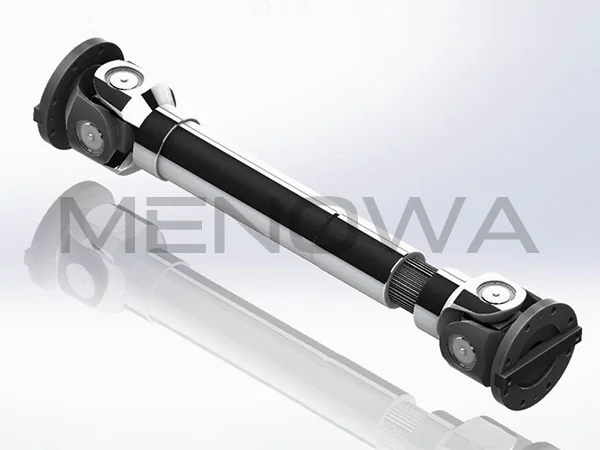 SWC-BH Cardan Shaft
 -
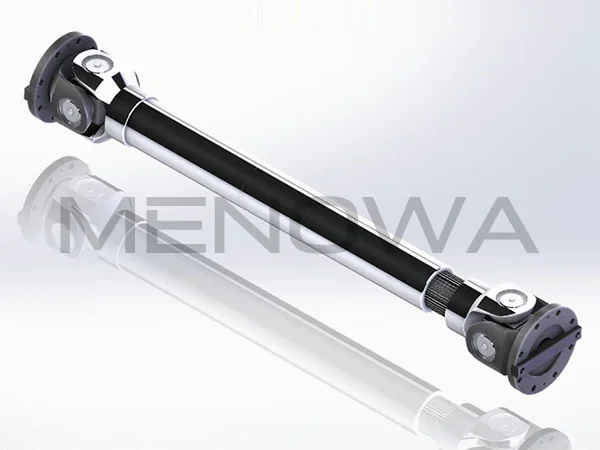 SWC-CH Cardan Shaft
 -
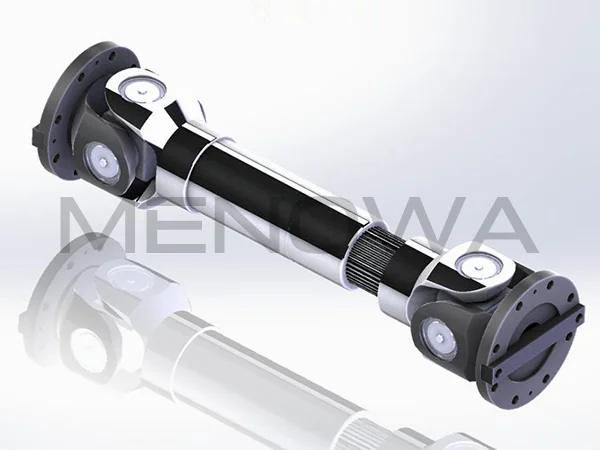 SWC-DH Cardan Shaft
 -
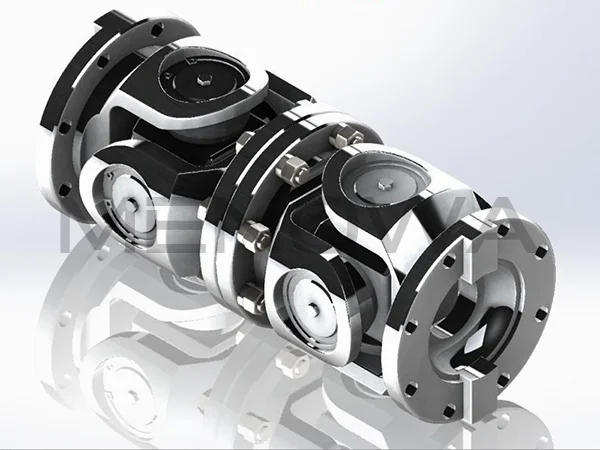 SWC-WD Cardan Shaft
 -
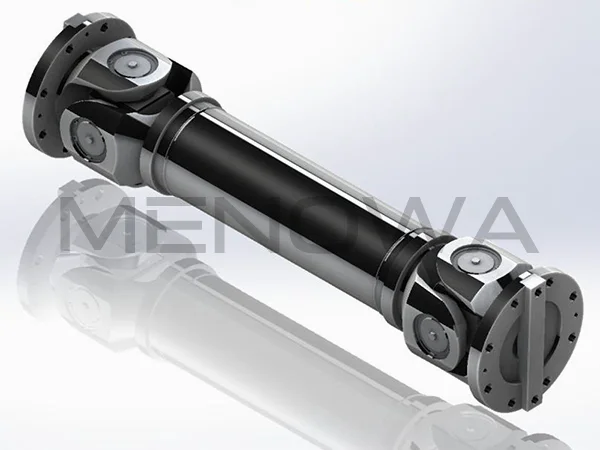 SWC-WH Cardan Shaft
 -
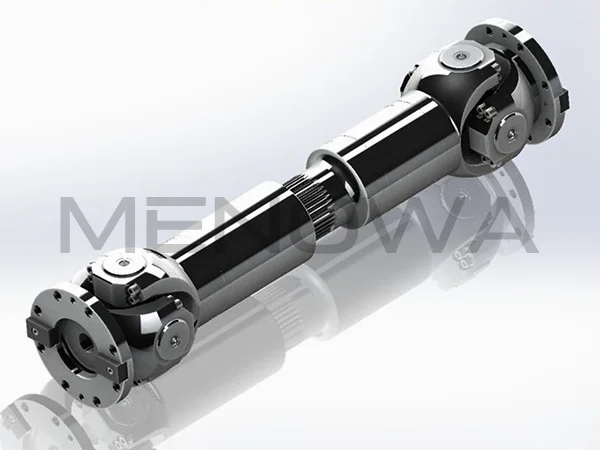 SWP-A Cardan Shaft
 -
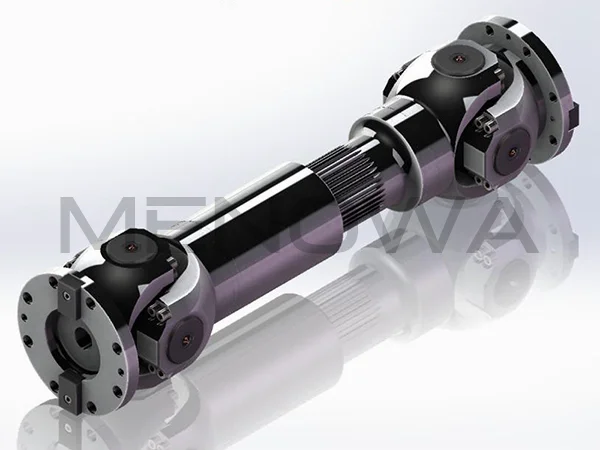 SWP-B Cardan Shaft
 -
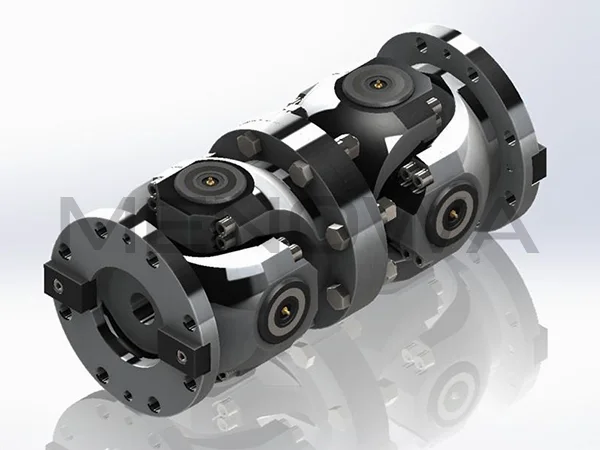 SWP-C Cardan Shaft
 -
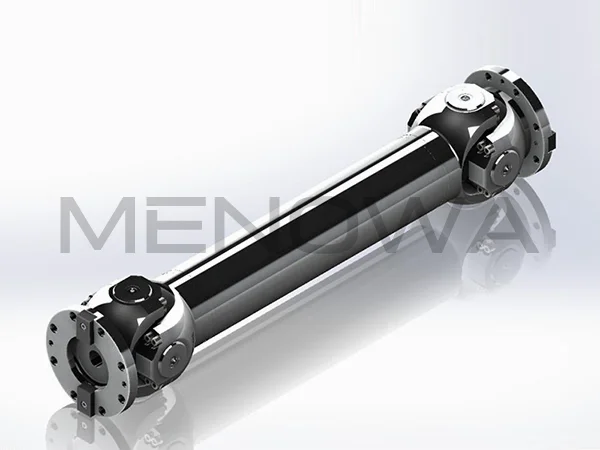 SWP-D Cardan Shaft
Menowa universal coupling uses the characteristics of its mechanism, so that the two axes are not the same axis, the existence of the axis Angle can achieve continuous rotation of the connected two axes, and reliably transmit torque and movement. The biggest feature of the universal coupling is that its structure has a large angular compensation capacity, compact structure and high transmission efficiency. Different structural types of universal coupling two axis Angle is not the same, generally between 5°-45°.Menowa Universal coupling, as a key mechanical transmission component, plays an important role in mechanical equipment and systems. It can effectively transmit torque and rotational motion, and maintain transmission efficiency in the case of misalignment of axes or certain errors.
As a key component in mechanical transmission systems, universal couplings play an irreplaceable role in modern industrial equipment. It can effectively solve the problem of power transmission in situations where the axis is not centered, there is an angle or relative displacement, and is widely used in metallurgy, heavy machinery, petrochemicals, engineering machinery, and rail transit.
Cardan shaft is a mechanical device used to transmit relative motion between axes. Its core function is to compensate for the angular deviation between two axes, so that two axes that are not on the same axis or have an axis angle can achieve continuous rotation and reliably transmit torque and motion. The biggest feature of this type of coupling is its large angular compensation ability, compact structure, and high transmission efficiency.
The compensation range for the angle between the two axes of universal couplings with different structural types varies, generally between 5 ° and 45 °. This design enables it to adapt to various installation errors and alignment deviations caused by work deformations, greatly improving the adaptability and reliability of the mechanical system.
Universal joints have extremely high transmission efficiency, reaching 98-99.8%, and have significant energy-saving effects in high-power transmission applications. High efficiency comes from its precise mechanical structure and optimized force transmission path, reducing energy loss during the transmission process.
In high-speed and heavy-duty power transmission, certain types of universal couplings also have the functions of buffering, damping, and improving the dynamic performance of the shaft system. They can absorb and reduce the fluctuation of diesel engine output torque, reduce the impact on gear surfaces during torque fluctuations, and extend the service life of equipment.
Universal shaft couplings are usually composed of two halves, which are respectively connected to the driving shaft and the driven shaft. Most power machines are connected to the working machine through couplings, and the two shafts cannot be separated during machine operation. Only when the machine is stopped and the connection is disconnected, can the two shafts be separated. This characteristic makes it an indispensable component in many mechanical systems.
Universal couplings come in various structural forms, each with its unique advantages and application scenarios. Understanding these types helps engineers choose the most suitable coupling based on specific working conditions.
Cross cardan shaft is the most commonly used mechanical device for transmitting torque and rotational motion in industrial equipment, widely used in metallurgy, heavy machinery, petrochemicals, engineering machinery, and rail transportation. Its core function is to achieve equal angular velocity continuous rotation in the presence of an angle (5 ° -45 °) between two axes or non coaxial working conditions, and provide angular compensation capability of 25 ° or more and axial displacement adaptability.
SWP type adopts a split fork design, suitable for heavy-duty equipment with a rotation diameter of 1200mm; The SWC type adopts an integral fork head structure, which can cover a rotation diameter of 1600mm and a torque transmission distance of over 30 meters. It is commonly used in steel rolling machinery and heavy transportation equipment. This type of coupling has a high load-bearing capacity and can transmit greater torque compared to other types of couplings with the same rotational diameter, which is particularly important for mechanical equipment with limited rotational diameter.
The cross cardan shaft has a large angle compensation ability, a compact and reasonable structure, high transmission efficiency, smooth transportation, low noise, and easy installation, disassembly, and maintenance. Its transmission efficiency reaches 98-99.8%, and the energy-saving effect is significant when used for high-power transmission.
The performance and lifespan of universal couplings largely depend on their material selection and manufacturing process. Different components use different materials and processing methods according to the stress situation and working environment, ensuring that the coupling can work reliably under various working conditions.
The main materials for universal joint couplings include 45 steel, 45 forged steel, 40 chromium alloy steel, and cast iron. 45 steel has become one of the most commonly used materials for manufacturing Cardan Shafts due to its excellent comprehensive mechanical properties and moderate cost. For components that can withstand heavy loads or require higher strength, alloy steel such as 40 chromium is used, and its hardness and wear resistance are further improved through heat treatment processes.
Free forging plays an important role in the manufacturing of universal couplings. Compared with cast blanks, free forging eliminates defects such as shrinkage, porosity, and porosity, giving the blank higher mechanical properties. The tools and equipment used for free forging are simple, versatile, and cost-effective, making them particularly suitable for the manufacturing of heavy machinery and important parts. Free forging is divided into manual free forging and machine free forging, among which machine free forging has high production efficiency and stable quality, becoming the mainstream choice in modern manufacturing industry.
Heat treatment is a crucial step in ensuring the performance of cardan shafts. Taking the cross axis as an example, it needs to undergo carburizing and quenching treatment to obtain high hardness (HRC58-62) on the surface to resist wear, while maintaining the toughness of the core to withstand impact loads. The bearing seat and fork head components are usually subjected to quenching and tempering treatment (quenching+high-temperature tempering) to obtain good comprehensive mechanical properties. During the heat treatment process, it is necessary to strictly control the heating temperature, insulation time, and cooling rate to avoid defects such as deformation and cracks.
Bearings are vulnerable components of cross axis universal couplings, and their performance directly affects the lifespan of the entire coupling. Modern universal couplings often use tapered roller bearings or needle roller bearings, which can withstand both radial and axial forces simultaneously and have high load capacity and service life. The design of the bearing seat is also crucial, and the main difference between several large cross shaft universal couplings lies in the variation of the bearing seat and cross fork head, forming different structural forms.
For cardan shaft couplings used in high-speed applications, dynamic balancing is an indispensable process step. Unbalanced couplings can generate vibration and noise, accelerate bearing wear, and even cause safety accidents. By adding or removing materials at different positions, the quality distribution of the coupling is evenly distributed to ensure smooth operation. The balance accuracy is usually represented by G level, and couplings with different speeds have different balance requirements.
In the complex ecosystem of mechanical engineering, the efficient transfer of power from a driving source to a driven component stands as a fundamental requirement across countless industries. From heavy machinery operating in construction sites to precision equipment in manufacturing facilities, the reliability and performance of transmission systems directly impact overall operational efficiency, safety, and longevity of the machinery. Among the diverse range of components that constitute these transmission systems, Cross Cardan Shafts, Universal Couplings, Telescopic Shafts, Universal Joint Couplings, Universal Shaft Couplings, and Cardan Shaft Couplings hold pivotal roles. These components are designed to address the challenges of transmitting torque and rotational motion between shafts that may not be perfectly aligned, accommodating misalignments, variations in distance, and dynamic operational conditions while maintaining structural integrity and power transfer efficiency.
To understand the significance of these components, it is essential to first delve into the core challenges of mechanical power transmission. In ideal scenarios, shafts would be perfectly coaxial, meaning their central axes align precisely, allowing for direct torque transfer without additional stress or energy loss. However, real-world applications rarely meet this ideal condition. Machinery components undergo thermal expansion and contraction during operation, structural vibrations, and manufacturing tolerances that introduce misalignments. Additionally, many industrial systems require shafts to be positioned at angles relative to each other or to adjust their distance during operation, further complicating power transmission. This is where Cross Cardan Shafts and various types of Universal Couplings come into play, as they are engineered to accommodate angular, parallel, and combined misalignments while efficiently transferring torque.
Cross Cardan Shafts, also known as Cardan shafts or propeller shafts in some contexts, are a type of mechanical component designed for transmitting torque between two shafts that are not in the same straight line. The design of a Cross Cardan Shaft typically consists of two Universal Joint Couplings connected by a shaft tube. The cross-shaped component, often referred to as the cross or spider, is the central element of the Universal Joint Coupling, enabling the transfer of motion between shafts at an angle. This cross is fitted with bearings at each of its four ends, which allow for smooth rotation and flexibility when the shafts are misaligned. The shaft tube, which connects the two Universal Joint Couplings, is usually constructed from high-strength materials such as alloy steel or carbon steel to withstand the torque and bending forces encountered during operation.
The functionality of Cross Cardan Shafts is rooted in the principle of the universal joint, which dates back to ancient times but was refined for industrial use in the 19th century. The basic universal joint, or Hooke's joint as it is sometimes called, consists of two yokes attached to the ends of the shafts being connected, with a cross linking the two yokes. When one shaft rotates, the cross transfers this rotation to the other yoke, even when the shafts are at an angle. However, a single universal joint has a limitation: it causes a variation in the angular velocity of the driven shaft, even if the driving shaft rotates at a constant speed. This velocity fluctuation, known as angular acceleration, can lead to vibrations, noise, and increased wear on components. To mitigate this issue, Cross Cardan Shafts use two Universal Joint Couplings paired together, positioned such that the angles of misalignment at each joint are equal. This configuration cancels out the angular velocity variation, ensuring that the driven shaft rotates at the same constant speed as the driving shaft, resulting in smooth and efficient power transmission.
Universal Couplings, as a broader category, encompass a range of components designed to connect two shafts and transmit torque while accommodating misalignment. Beyond the Cross Cardan Shaft’s Universal Joint Couplings, other types of Universal Couplings include constant velocity (CV) joints, Oldham couplings, and flexible couplings. Each type is suited to specific applications based on the degree of misalignment, torque requirements, operating speed, and environmental conditions. For instance, CV joints are commonly used in automotive applications where constant velocity is critical, such as in drive shafts for front-wheel-drive vehicles. Oldham couplings, on the other hand, are ideal for accommodating parallel misalignment between shafts that are close together, using a sliding disc to transfer torque while allowing for lateral movement. However, Universal Joint Couplings, particularly those integrated into Cross Cardan Shafts, remain the preferred choice for applications requiring high torque transmission and the ability to handle significant angular misalignment, such as in heavy machinery and industrial equipment.
Telescopic Shafts are a specialized variation of transmission shafts that incorporate a telescoping mechanism, allowing the length of the shaft to adjust dynamically during operation. This adjustability is crucial in applications where the distance between the driving and driven shafts changes, such as in vehicles with suspension systems that move relative to the chassis, or in machinery that undergoes thermal expansion. A typical Telescopic Shaft consists of an inner shaft and an outer shaft, with splines or a keyway connection that allows the inner shaft to slide within the outer shaft while maintaining torque transmission. The splines ensure that rotational motion is transferred efficiently between the two shafts, even as the length adjusts. In many cases, Telescopic Shafts are integrated with Cross Cardan Shafts, combining the angular misalignment capabilities of the Cardan design with the length adjustability of the telescopic mechanism. This combination is particularly common in automotive drive shafts, where the shaft must accommodate both the angle between the transmission and the differential and the vertical movement of the differential as the suspension compresses and extends.
The integration of Telescopic Shafts with Universal Shaft Couplings and Cross Cardan Shafts creates a versatile transmission solution that can handle multiple forms of misalignment and dimensional variation. For example, in construction equipment such as excavators and loaders, the transmission system must connect the engine to various hydraulic pumps and drive wheels, which are often positioned at different angles and distances. A Telescopic Cross Cardan Shaft with Universal Joint Couplings can adjust to the dynamic movements of the equipment’s components, ensuring consistent torque transfer even as the machine operates over uneven terrain. The telescoping feature also simplifies installation and maintenance, as it allows for slight adjustments in length during assembly, reducing the precision requirements for shaft positioning.
Universal Shaft Couplings and Cardan Shaft Couplings are terms often used interchangeably with Universal Joint Couplings, but they can also refer to integrated assemblies that combine the coupling elements with a shaft. While a Universal Joint Coupling is typically the connecting element between two shafts, a Universal Shaft Coupling may include a short shaft section, making it a self-contained component for joining shafts at a distance. Similarly, Cardan Shaft Couplings often refer to the combination of a Cross Cardan Shaft with its associated Universal Joint Couplings, forming a complete transmission unit. These integrated components are designed to simplify system design and installation, as they come pre-assembled and tested, reducing the need for custom fabrication and alignment during installation.
The material selection for Cross Cardan Shafts, Universal Couplings, and related components is critical to their performance and durability. The primary materials used are high-strength steels, including alloy steels and carbon steels, which offer excellent torque-bearing capacity and resistance to fatigue. Alloy steels, in particular, are favored for applications requiring high strength-to-weight ratios, as they can withstand heavy loads without excessive weight, which is important for reducing inertia and improving energy efficiency. The cross components of Universal Joint Couplings are often heat-treated to enhance hardness and wear resistance, as they are subjected to repeated rotational forces and contact with the yokes. Bearings used in the cross assembly are typically precision-engineered ball bearings or needle bearings, which provide low friction and high load capacity, ensuring smooth operation even under heavy torque.
In addition to steel, some specialized applications may use alternative materials such as aluminum or composite materials for the shaft tube. Aluminum is lighter than steel, making it suitable for applications where weight reduction is a priority, such as in aerospace or high-speed machinery. Composite materials, such as carbon fiber-reinforced polymers, offer even higher strength-to-weight ratios and resistance to corrosion, but they are more costly and are typically reserved for high-performance or specialized applications. The choice of material depends on a range of factors, including torque requirements, operating speed, environmental conditions (such as exposure to moisture, chemicals, or extreme temperatures), and weight constraints.
The performance characteristics of Cross Cardan Shafts and Universal Couplings are influenced by several key factors, including the maximum angular misalignment they can accommodate, torque capacity, operating speed, and fatigue life. Angular misalignment capacity refers to the maximum angle between the two shafts that the component can handle without excessive wear or loss of efficiency. Most standard Cross Cardan Shafts can accommodate angular misalignments of up to 30 degrees, although some heavy-duty designs can handle larger angles for specialized applications. Torque capacity is determined by the material strength, cross-section of the shaft tube, and design of the Universal Joint Couplings. It is essential to select a component with a torque capacity that exceeds the maximum torque generated by the driving source to prevent failure.
Operating speed is another critical factor, as high rotational speeds can lead to vibrations, centrifugal forces, and increased wear. The design of the shaft tube, including its diameter and wall thickness, must be optimized to withstand centrifugal forces at the maximum operating speed. Additionally, the balance of the Cross Cardan Shaft is essential for high-speed applications. Imbalances can cause severe vibrations, which not only reduce the efficiency of the transmission system but also lead to premature failure of bearings, couplings, and other components. To ensure balance, Cross Cardan Shafts are often dynamically balanced during manufacturing, using specialized equipment to detect and correct any mass imbalances.
Fatigue life is a measure of how many cycles of loading a component can withstand before failing due to fatigue. Cross Cardan Shafts and Universal Couplings are subjected to repeated torque and bending forces during operation, which can lead to fatigue cracks over time. The fatigue life is influenced by material quality, heat treatment, design geometry, and operating conditions. Proper maintenance, including lubrication and regular inspections, can extend the fatigue life of these components by reducing wear and preventing the accumulation of stress concentrations.
Applications of Cross Cardan Shafts, Universal Couplings, Telescopic Shafts, and related components span a wide range of industries, each with unique requirements and operating conditions. One of the largest application areas is the automotive industry, where these components are used in drive shafts for rear-wheel-drive, four-wheel-drive, and all-wheel-drive vehicles. In automotive drive shafts, Cross Cardan Shafts with Telescopic Shaft sections are used to connect the transmission to the differential, accommodating the angle between the two components and the vertical movement of the differential due to suspension travel. Universal Joint Couplings in these shafts ensure smooth power transfer, even when the vehicle is turning or traveling over uneven surfaces.
The construction industry is another major user of these components, with applications in excavators, loaders, cranes, and bulldozers. In excavators, for example, Cross Cardan Shafts are used to transmit power from the engine to the hydraulic system’s pumps and to the tracks or wheels. These shafts must withstand high torque, significant angular misalignment, and harsh environmental conditions, including dust, dirt, and moisture. The durability and reliability of these components are critical in construction, as equipment downtime can result in significant financial losses.
Manufacturing and industrial machinery also rely heavily on Cross Cardan Shafts and Universal Couplings. In conveyor systems, for instance, Universal Shaft Couplings are used to connect the motor to the conveyor belt’s drive roller, accommodating any misalignment between the motor and the roller. Telescopic Shafts may be used in adjustable conveyor systems, where the distance between the motor and the roller can be changed. In machine tools, such as lathes and milling machines, precision Universal Couplings are used to transmit rotational motion from the motor to the spindle, ensuring accurate and consistent performance. These couplings must accommodate minimal misalignment while maintaining high precision, as even small deviations can affect the quality of the machined parts.
The agricultural industry uses these components in tractors, harvesters, and other farm equipment. Tractors, for example, use Cross Cardan Shafts to power implements such as plows, harrows, and mowers, which are often attached at an angle to the tractor. The Universal Joint Couplings in these shafts allow the implement to move relative to the tractor while maintaining power transfer. Telescopic Shafts are also used in agricultural equipment to accommodate the dynamic movement of implements during operation, such as when a harvester moves over uneven fields.
Other industries that utilize these components include aerospace, marine, and mining. In the aerospace industry, lightweight Cross Cardan Shafts and Universal Couplings are used in aircraft engines and auxiliary power units, where weight and reliability are critical. Marine applications include ship propulsion systems, where Universal Shaft Couplings connect the engine to the propeller shaft, accommodating misalignments caused by the ship’s hull flexing in the water. In the mining industry, heavy-duty Cross Cardan Shafts are used in mining trucks, crushers, and conveyor systems, where they must withstand extreme torque and harsh environmental conditions, including dust, moisture, and temperature fluctuations.
Proper installation and maintenance of Cross Cardan Shafts, Universal Couplings, and Telescopic Shafts are essential to ensure their optimal performance and longevity. During installation, it is important to ensure that the shafts are aligned as closely as possible to minimize the angular misalignment imposed on the couplings. While these components are designed to accommodate misalignment, excessive misalignment can lead to increased wear, vibrations, and reduced efficiency. The use of alignment tools, such as laser alignment systems, can help achieve precise alignment, extending the life of the components.
Lubrication is another critical aspect of maintenance. The bearings in Universal Joint Couplings and the splines in Telescopic Shafts require regular lubrication to reduce friction and wear. The type of lubricant used depends on the operating conditions, including temperature, load, and environmental factors. For example, high-temperature applications may require synthetic lubricants with high thermal stability, while applications exposed to moisture may require waterproof lubricants. Regular lubrication intervals should be followed, and the lubricant should be checked periodically for contamination and replaced as needed.
Regular inspections are also necessary to detect signs of wear, damage, or fatigue. Common signs of wear include excessive play in the Universal Joint Couplings, unusual noises during operation (such as clicking or squeaking), vibrations, and oil leaks. The cross bearings should be inspected for wear and replaced if they show signs of damage, such as pitting or corrosion. The splines in Telescopic Shafts should be checked for wear or deformation, as worn splines can reduce torque transmission efficiency and lead to failure. Additionally, the shaft tube should be inspected for cracks, dents, or other damage, which can weaken the component and increase the risk of failure under load.
In cases where components are damaged or worn beyond repair, replacement is necessary. When replacing Cross Cardan Shafts or Universal Couplings, it is important to select components that match the original specifications, including torque capacity, angular misalignment capacity, and length. Using mismatched components can lead to premature failure and potentially damage other parts of the transmission system. Additionally, the replacement components should be installed and aligned correctly, following the manufacturer’s guidelines.
The design and technology of Cross Cardan Shafts, Universal Couplings, and related components continue to evolve, driven by the demand for higher efficiency, greater durability, and improved performance in industrial applications. One area of innovation is the use of advanced materials and manufacturing processes. For example, the use of additive manufacturing (3D printing) allows for the production of complex Universal Joint Coupling designs that are lighter and stronger than traditionally manufactured components. Additive manufacturing also enables the production of custom components tailored to specific applications, reducing lead times and costs.
Another area of development is the integration of sensors and monitoring systems into these components. Smart Cross Cardan Shafts and Universal Couplings equipped with sensors can monitor parameters such as torque, temperature, vibration, and wear, providing real-time data to operators. This predictive maintenance capability allows for early detection of potential issues, reducing downtime and maintenance costs. For example, a sensor embedded in a Universal Joint Coupling can detect increased vibration levels, indicating worn bearings, and alert operators before the component fails.
Advancements in lubrication technology are also contributing to improved performance and longevity. Self-lubricating bearings and seals are being developed for Universal Joint Couplings, reducing the need for regular manual lubrication and minimizing the risk of lubricant contamination. These self-lubricating components are particularly beneficial in applications where access for maintenance is limited, such as in enclosed machinery or remote industrial sites.
The trend toward electrification in industries such as automotive and manufacturing is also influencing the design of Cross Cardan Shafts and Universal Couplings. Electric vehicles (EVs) have different torque and speed characteristics than internal combustion engine vehicles, requiring transmission components that are optimized for these conditions. For example, EV drive shafts may need to handle higher torque at lower speeds, and the lightweight design is even more critical to maximize battery range. As a result, manufacturers are developing lightweight, high-torque Cross Cardan Shafts and Universal Couplings specifically for EV applications, using advanced materials and optimized designs.
Environmental sustainability is another key driver of innovation in the industry. Manufacturers are focusing on reducing the environmental impact of their components by using recycled materials, improving energy efficiency, and designing components for easier recycling at the end of their life cycle. For example, some Cross Cardan Shaft manufacturers are using recycled steel for the shaft tube, reducing the carbon footprint of the component. Additionally, the development of more efficient transmission components helps reduce energy consumption in machinery, contributing to overall sustainability goals.
Despite the advancements in technology, there are still challenges facing the design and application of Cross Cardan Shafts, Universal Couplings, and Telescopic Shafts. One of the main challenges is accommodating increasingly high torque and speed requirements in modern machinery. As industrial equipment becomes more powerful and efficient, transmission components must be designed to handle higher loads without increasing in size or weight. This requires the use of advanced materials and innovative design techniques to optimize strength and weight.
Another challenge is ensuring reliability in extreme operating conditions. Many industrial applications expose these components to harsh environments, including extreme temperatures, moisture, chemicals, and abrasive particles. Designing components that can withstand these conditions while maintaining performance and longevity requires careful material selection, protective coatings, and sealed designs to prevent contamination.
Cost is also a consideration, particularly for small and medium-sized enterprises. Advanced materials and technologies, such as additive manufacturing and smart sensors, can increase the cost of components. Manufacturers must balance the benefits of these technologies with the cost, ensuring that the components remain affordable for a wide range of applications. Additionally, the need for specialized maintenance and repair for advanced components can add to the total cost of ownership, requiring manufacturers to develop user-friendly designs and maintenance procedures.
In conclusion, Cross Cardan Shafts, Universal Couplings, Telescopic Shafts, Universal Joint Couplings, Universal Shaft Couplings, and Cardan Shaft Couplings are indispensable components in mechanical power transmission systems across a wide range of industries. Their ability to accommodate misalignments, adjust to dimensional variations, and transmit torque efficiently makes them critical to the performance and reliability of machinery. From automotive drive shafts to heavy-duty construction equipment, these components play a vital role in ensuring smooth and efficient operation.
The continued evolution of these components, driven by advancements in materials, manufacturing processes, and technology, is enabling them to meet the growing demands of modern industry. Innovations such as smart monitoring systems, self-lubricating designs, and lightweight materials are improving performance, durability, and sustainability. However, challenges remain in accommodating higher loads, ensuring reliability in extreme conditions, and balancing cost with advanced features.
As industries continue to evolve and demand more efficient, reliable, and sustainable machinery, the importance of Cross Cardan Shafts and Universal Couplings will only increase. Manufacturers and engineers will continue to refine and innovate these components, ensuring that they remain at the forefront of mechanical power transmission technology for years to come. Proper selection, installation, and maintenance of these components will remain essential to maximizing their performance and longevity, contributing to the overall efficiency and success of industrial operations worldwide.
The versatility of these components is further highlighted by their ability to adapt to diverse applications, from precision manufacturing to heavy industrial use. Whether it is a Telescopic Shaft adjusting to the dynamic movement of a vehicle’s suspension or a Cross Cardan Shaft transmitting torque between angled shafts in a construction machine, these components are designed to solve the unique challenges of each application. Their widespread use and continuous innovation underscore their significance in the field of mechanical engineering, making them a cornerstone of modern industrial systems.
Furthermore, the integration of these components into larger transmission systems requires a holistic approach to design, considering factors such as alignment, lubrication, and load distribution. Engineers must carefully select the appropriate type of coupling or shaft based on the specific requirements of the application, ensuring that the component works seamlessly with other parts of the system. This integrated approach not only improves the performance of the transmission system but also reduces the risk of failure and extends the overall life of the machinery.
In summary, Cross Cardan Shafts, Universal Couplings, and related components are more than just mechanical parts—they are essential enablers of efficient power transmission, supporting the operation of countless industries around the world. As technology advances and industry demands evolve, these components will continue to adapt and improve, playing a critical role in shaping the future of mechanical engineering and industrial productivity.
 WeChat
 WhatsApp