Menowa is a drum couplings supplier from china, wholesale and direct sales drum couplings, barrel couplings at a reasonable price.
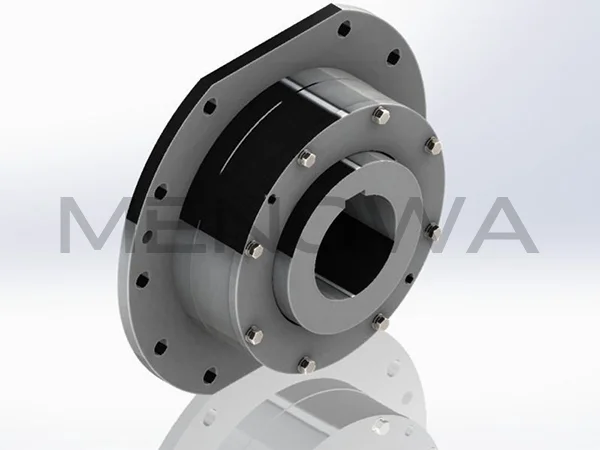
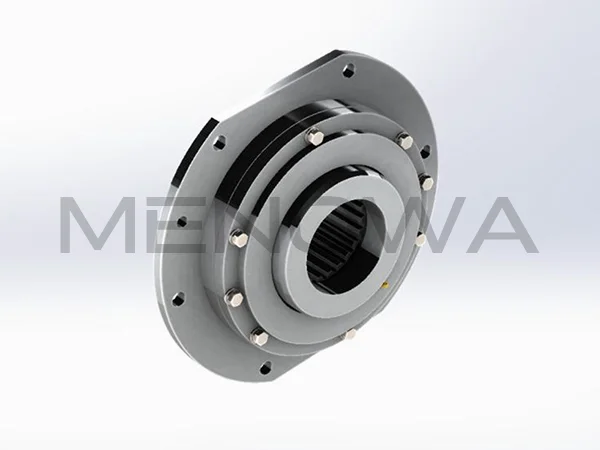
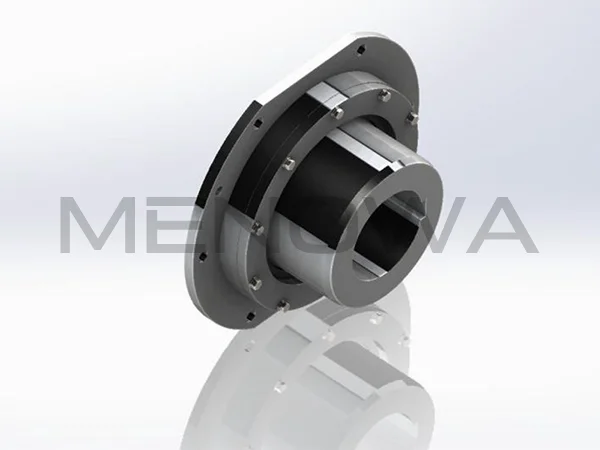
Drum coupling is a new type of flexible coupling, mainly used for connecting the output shaft of the reducer of the lifting mechanism in lifting equipment with the wire rope drum, and is also suitable for other similar mechanical equipment that not only transmits torque but also bears radial loads. However, it should be noted that it cannot be used as a transmission that needs to withstand axial loads.
The drum coupling consists of multiple components, including an outer gear shaft sleeve with drum shaped teeth, an outer sleeve with connecting flanges and inner gear rings, a bearing ring with an outer spherical surface, an end cap, a sealing ring, etc. In addition, it is equipped with positioning wear indicators, lubricating oil holes, and ventilation holes to ensure the normal operation and easy maintenance of the coupling.
The working principle of the drum coupling is to use the elastic elements arranged in the circumferential direction in its structure to connect the main and auxiliary hubs of the coupling halves. The spiral of the elastic element is fixed to the coupling through a metal clamp, allowing the elastic body to deform freely in the space between the main and secondary hub of the coupling. This deformation can counteract elastic displacement and be achieved through the free deformation of the axial, radial, and axial inclination angles of the coupling elastic body.
Performance characteristics of barrel coupling
01. Strong load-bearing capacity: The drum coupling can withstand large radial loads and transmit large torques, and has a large overload capacity.
02. Good positioning performance: Its structure is compact, sturdy, and has good positioning performance, making installation and adjustment easy.
03. Easy maintenance: Equipped with a positioning wear indicator, it is convenient to check the wear condition of the coupling and perform maintenance in a timely manner.
04. Wide working temperature range: Its working temperature range is -25~80 ℃, suitable for various environments.
Installation and maintenance of barrel coupling
01. Preparation before installation: Before installation, the mating surfaces of the connections should be checked, cleaned of grease, deburred, and wiped clean of oil stains.
02. Installation steps: During installation, specific steps need to be followed, including heating the external gear sleeve, packaging it on the output shaft of the reducer, combining the outer sleeve and inner cover with the sealing ring, coating the anti rust cover and entering the drum, etc.
03. Axial positioning: When installing the coupling, it is necessary to ensure correct axial positioning, otherwise the elastic horizontal displacement generated by the drum during operation may damage the axial limit of the coupling and cause connection failure.
04. Regular maintenance: The relative position between the positioning wear pointer and the positioning wear mark of the coupling, the condition of the connecting bolts, etc. should be checked regularly, and lubricating grease should be added to ensure their normal operation.
In summary, drum couplings play an important role in lifting equipment and other similar mechanical devices due to their unique structure and superior performance.
In the complex network of mechanical transmission systems, couplings serve as critical components that bridge rotating shafts, enabling the smooth transfer of torque while accommodating inevitable misalignments and mitigating operational stresses. Among the diverse range of coupling types available, drum coupling and barrel coupling stand out for their adaptability to heavy-duty operations and ability to handle moderate to significant shaft deviations. These two couplings share similarities in their core function of torque transmission but differ substantially in structural design, working principles, and optimal application scenarios.
To begin with, it is essential to establish a foundational understanding of what distinguishes drum coupling from barrel coupling. Both belong to the category of flexible couplings, meaning they possess the capacity to compensate for axial, radial, and angular misalignments between connected shafts—a feature that rigid couplings lack. Misalignments in rotating shafts can arise from multiple factors, including installation errors, thermal expansion during operation, structural deformation under load, and normal wear over time. Without adequate compensation, such misalignments generate excessive bending moments, vibrations, and premature wear on shafts, bearings, and other transmission components, ultimately leading to system failure. Drum coupling and barrel coupling address this challenge through distinct structural designs, each tailored to specific operational demands and environmental conditions. Their ability to balance torque transmission efficiency with misalignment compensation makes them indispensable in heavy machinery, industrial equipment, and power transmission systems.
Drum coupling, often referred to as drum gear coupling in industrial contexts, derives its name from the drum-shaped profile of its gear teeth. The fundamental structure of a drum coupling typically consists of two external gear sleeves with curved (drum-shaped) teeth and two internal gear hubs that mesh with the external sleeves. The external gear sleeves are connected to the driving and driven shafts, while the internal gear hubs are joined together or integrated into a casing that houses the meshing gears. The drum-shaped tooth profile is the defining feature of this coupling type, as it enables the absorption of misalignments. Unlike straight-tooth couplings, which have limited tolerance for shaft deviations, the curved teeth of drum coupling allow for relative movement between the external sleeves and internal hubs. This curvature ensures that the meshing contact between teeth remains consistent even when the shafts are misaligned, maintaining stable torque transmission while reducing stress concentrations at the tooth interfaces.
The working principle of drum coupling revolves around the meshing of drum-shaped external teeth with internal teeth, combined with the flexibility afforded by the curved tooth profile. When torque is applied to the driving shaft, it is transferred through the external gear sleeve to the internal gear hub via the meshing teeth. The drum-shaped teeth allow for angular misalignment by enabling the external sleeve to pivot slightly relative to the internal hub, while the axial length of the teeth accommodates limited axial displacement. Radial misalignment is compensated through the slight movement of the gear teeth within the meshing interface, as the curved profile provides a larger contact area compared to straight teeth, distributing loads more evenly. Additionally, the meshing gears are typically enclosed within a casing filled with lubricant, which reduces friction, minimizes wear, and dissipates heat generated during operation. This lubrication system is crucial for extending the service life of the coupling, as the gear teeth are subjected to high contact pressures and cyclic loads.
The material selection for drum coupling components is guided by the need to withstand high torque, resist wear, and maintain structural integrity under harsh operating conditions. Common materials for the gear sleeves and hubs include medium-carbon steels and alloy steels, which undergo heat treatment processes such as quenching and tempering to enhance their mechanical properties. Heat treatment improves the hardness and wear resistance of the gear teeth while maintaining sufficient toughness to withstand impact loads. In applications where corrosion resistance is required, such as marine or chemical environments, stainless steel or corrosion-resistant alloys may be used, though these materials often come with trade-offs in terms of torque capacity. The casing of drum coupling is typically made from cast iron or steel, providing robust protection for the internal gears against external contaminants and physical damage.
Drum coupling finds widespread application in industries that demand high torque transmission and moderate misalignment compensation. One of the primary application areas is the metallurgical industry, where it is used in rolling mills, crushers, and smelting equipment. Rolling mills, for instance, require couplings that can handle the high torque generated by motors while accommodating the slight misalignments caused by the heavy loads exerted on the rolls. Drum coupling’s ability to transmit large torques without compromising on flexibility makes it well-suited for this task. Another key application is in heavy machinery such as cranes and hoists, where it connects the gearbox output shaft to the cable drum. In these systems, the coupling must not only transmit torque but also compensate for the angular misalignments that occur as the crane boom moves or the load shifts.
The mining industry also relies heavily on drum coupling for equipment such as conveyor belts, excavators, and ore crushers. These applications involve harsh operating conditions, including high vibration, dust, and variable loads, and drum coupling’s robust construction and lubricated gear system ensure reliable performance under such circumstances. Additionally, drum coupling is used in power generation facilities, particularly in hydropower and thermal power plants, where it connects turbines to generators. In these systems, the coupling must accommodate thermal expansion of the shafts during operation, as temperature fluctuations can cause significant axial and radial displacements. The flexibility of drum coupling helps to mitigate the stresses associated with thermal expansion, protecting the turbine and generator components from damage.
Turning to barrel coupling, this type of coupling is characterized by its use of cylindrical barrel-shaped elements as the primary torque-transmitting components. The structure of a barrel coupling typically includes a sleeve, a hub, and a series of hardened steel barrels inserted into complementary holes formed by the sleeve and hub. The holes in the sleeve and hub are machined to a semicircular or cylindrical profile, allowing the barrels to fit snugly while maintaining the ability to rotate slightly. The hub is attached to one shaft, and the sleeve to the other, with the barrels acting as intermediaries to transfer torque between the two components. Unlike drum coupling, which relies on gear meshing, barrel coupling transmits torque through the contact between the barrels and the walls of the holes, leveraging the compressive strength of the hardened steel barrels.
The working principle of barrel coupling is based on the transfer of torque through frictional contact and compressive forces between the barrels and the hole surfaces. When the driving shaft rotates, it imparts motion to the hub, which in turn pushes the barrels against the sleeve. The barrels roll within the holes as the shafts rotate, transferring torque from the hub to the sleeve (and thus to the driven shaft) through the contact forces. This rolling motion allows for the compensation of misalignments: angular misalignment is accommodated by the slight tilting of the barrels within the holes, while radial misalignment is compensated by the lateral movement of the barrels. Axial displacement is handled by the axial length of the holes, which provides space for the barrels to move along the shaft axis. The rolling action of the barrels also results in lower friction compared to sliding contact, reducing wear and energy loss during operation.
Material selection for barrel coupling is focused on durability and resistance to wear, given the compressive and frictional forces exerted on the barrels. The barrels are typically made from high-strength hardened steel, which undergoes processes such as carburizing or nitriding to enhance surface hardness and wear resistance. This ensures that the barrels can withstand the high contact pressures generated during torque transmission without deforming or wearing prematurely. The sleeve and hub are often manufactured from medium-carbon steel or alloy steel, similar to drum coupling components, and may be heat-treated to improve their mechanical strength. In applications where corrosion is a concern, the components can be coated with anti-corrosion materials or made from stainless steel, though this may require adjustments to maintain torque capacity.
Barrel coupling is particularly well-suited for applications that involve high radial loads, angular misalignments, and the need for reliable torque transmission in heavy-duty equipment. One of the most common applications is in cranes and hoisting systems, where it connects the gearbox to the cable drum. In these systems, the coupling must withstand the radial loads imposed by the cable tension while compensating for the angular misalignments that occur as the drum rotates and the load is lifted or lowered. Barrel coupling’s ability to handle both radial loads and misalignments makes it an ideal choice for this application, as it prevents excessive bending moments from being transmitted to the gearbox and drum shafts.
The steel industry also utilizes barrel coupling in equipment such as winches, conveyors, and stackers/reclaimers. These machines operate under heavy loads and often experience significant misalignments due to structural deformation and dynamic forces. Barrel coupling’s robust construction and ability to absorb misalignments ensure stable operation, reducing the risk of downtime and maintenance costs. Additionally, barrel coupling is used in mining equipment, such as ore hoists and belt conveyors, where it provides reliable torque transmission in dusty, high-vibration environments. The simple design of barrel coupling, with fewer moving parts compared to drum coupling, also makes it easier to maintain in such harsh conditions.
While drum coupling and barrel coupling share the goal of transmitting torque and compensating for misalignments, there are notable differences in their performance characteristics that make them suitable for different applications. One key difference is in their torque transmission capacity. Drum coupling, with its gear meshing design, typically offers higher torque capacity compared to barrel coupling of the same size. The meshing gears provide a larger contact area, allowing for the transfer of greater torques without excessive wear. This makes drum coupling the preferred choice for applications that require extremely high torque, such as large rolling mills and power generation turbines.
In terms of misalignment compensation, barrel coupling generally offers better tolerance for angular misalignments compared to drum coupling. The rolling action of the barrels allows for larger angular deviations without generating excessive stress, making it suitable for equipment where misalignments are more pronounced, such as cranes with flexible booms. Drum coupling, on the other hand, is more effective at compensating for axial displacements due to the longer axial length of its gear teeth. This makes it ideal for applications where thermal expansion causes significant axial movement, such as power plant turbines.
Another difference lies in the level of vibration damping. Barrel coupling, with its rolling contact between barrels and holes, tends to absorb more vibration compared to drum coupling. The rolling motion reduces friction and minimizes the transmission of vibrations from the driving shaft to the driven shaft, making it suitable for equipment where vibration reduction is critical, such as precision conveyors and winches. Drum coupling, with its gear meshing, may transmit more vibration, though this can be mitigated by proper lubrication and the use of vibration-damping materials in the casing.
Maintenance requirements also differ between the two coupling types. Drum coupling requires regular lubrication to ensure smooth gear meshing and reduce wear. The lubricant must be checked and replaced periodically, and the casing must be inspected for leaks to prevent contamination. Additionally, the gear teeth need to be inspected for wear, pitting, or chipping, as damaged teeth can compromise torque transmission and lead to coupling failure. Barrel coupling, with its simpler design and rolling contact, requires less frequent lubrication, though the barrels and holes should be inspected for wear and damage. The absence of complex gear meshing also reduces the risk of catastrophic failure, as worn barrels are more likely to exhibit gradual performance degradation rather than sudden breakdown.
Installation is a critical factor that affects the performance and service life of both drum coupling and barrel coupling. Proper alignment of the connected shafts is essential, even though these couplings can compensate for misalignments. Excessive misalignment beyond the coupling’s rated capacity will lead to premature wear, increased vibration, and reduced efficiency. For drum coupling, the gear sleeves and hubs must be aligned to ensure proper meshing of the teeth, as misalignment can cause uneven tooth wear and stress concentrations. The use of precision alignment tools, such as laser alignment devices, is recommended to achieve the required alignment accuracy.
During the installation of barrel coupling, the barrels must be correctly inserted into the holes of the sleeve and hub to ensure uniform load distribution. Improper installation of the barrels can result in uneven torque transmission, leading to premature wear of individual barrels and reduced coupling performance. Additionally, the fasteners used to attach the coupling to the shafts must be tightened to the specified torque to prevent slippage and ensure a secure connection. Loose fasteners can cause vibration, misalignment, and even disconnection of the coupling during operation.
Environmental factors also play a significant role in the selection and performance of drum coupling and barrel coupling. In high-temperature environments, such as those found in metallurgical plants and power generation facilities, the coupling materials must be able to withstand thermal stress and maintain their mechanical properties. Lubricants used in drum coupling must have a high temperature resistance to prevent degradation, which can lead to increased friction and wear. In corrosive environments, such as marine or chemical applications, corrosion-resistant materials or coatings are necessary to protect the coupling components from rust and degradation.
Dust and debris can also affect coupling performance. In dusty environments, such as mining and construction sites, the coupling casing must be sealed effectively to prevent contaminants from entering and causing wear on the internal components. Drum coupling is particularly vulnerable to dust contamination, as foreign particles can damage the gear teeth and reduce lubrication effectiveness. Barrel coupling, with its simpler structure, is somewhat more resistant to dust, but proper sealing is still recommended to extend its service life.
Failure analysis and troubleshooting are essential for maintaining the reliability of drum coupling and barrel coupling. Common failure modes for drum coupling include gear tooth wear, pitting, chipping, and casing leaks. Tooth wear is often caused by insufficient lubrication, excessive misalignment, or overload. Pitting and chipping of the teeth can result from high contact pressures, impact loads, or material fatigue. Casing leaks can lead to lubricant loss, which accelerates gear wear and increases the risk of failure. Regular inspection of the coupling, including visual checks of the gear teeth and lubricant level, can help detect these issues early and prevent catastrophic failure.
For barrel coupling, common failure modes include wear of the barrels and holes, bending of the barrels, and loosening of fasteners. Wear of the barrels and holes is caused by the compressive and frictional forces during operation, and can be accelerated by excessive misalignment or lack of lubrication. Bending of the barrels typically occurs due to overload or impact loads, which exceed the material’s yield strength. Loose fasteners can cause vibration and misalignment, leading to uneven wear and reduced performance. Troubleshooting these issues involves inspecting the barrels for wear and deformation, checking the tightness of fasteners, and ensuring proper alignment and lubrication.
The future development of drum coupling and barrel coupling is likely to focus on improving efficiency, reducing weight, and enhancing durability through advanced materials and design innovations. The use of composite materials, such as carbon fiber-reinforced polymers, may offer opportunities to reduce the weight of coupling components while maintaining or improving mechanical strength. This is particularly relevant for applications where weight reduction is critical, such as aerospace and automotive industries, though these couplings are currently more commonly used in heavy-duty applications.
Advancements in lubrication technology are also expected to improve the performance and service life of drum coupling. The development of long-lasting, high-temperature lubricants can reduce maintenance requirements and extend the intervals between lubricant changes. Additionally, self-lubricating materials may be integrated into coupling components, eliminating the need for external lubrication and reducing the risk of lubricant loss or contamination.
Another area of innovation is the integration of condition monitoring systems into drum coupling and barrel coupling. Sensors embedded in the coupling can detect vibration, temperature, and wear, providing real-time data on the coupling’s performance. This allows for predictive maintenance, where maintenance activities are scheduled based on actual condition rather than fixed intervals, reducing downtime and maintenance costs. Condition monitoring systems can also help detect early signs of failure, preventing unexpected breakdowns and improving the overall reliability of the transmission system.
In conclusion, drum coupling and barrel coupling are essential components in mechanical transmission systems, each offering unique advantages suited to specific applications. Drum coupling excels in high-torque transmission and axial displacement compensation, making it ideal for heavy-duty equipment in metallurgical, power generation, and mining industries. Barrel coupling, with its superior angular misalignment tolerance and vibration damping capabilities, is well-suited for cranes, hoists, and other equipment where radial loads and dynamic misalignments are prevalent. Proper selection, installation, and maintenance of these couplings are critical to ensuring the reliability, efficiency, and longevity of mechanical systems.
As industrial technology continues to advance, the demand for more efficient, durable, and low-maintenance couplings will grow. Innovations in materials, design, and condition monitoring are poised to enhance the performance of drum coupling and barrel coupling, expanding their applications and improving their integration into modern mechanical systems. By understanding the principles, applications, and maintenance requirements of these couplings, engineers and maintenance professionals can make informed decisions that optimize the performance of their transmission systems, reduce downtime, and lower operational costs. Whether in heavy machinery, power generation, or industrial processing, drum coupling and barrel coupling will remain vital components, driving the reliable operation of critical equipment across diverse industries.
The versatility and adaptability of drum coupling and barrel coupling stem from their thoughtful design, which balances torque transmission efficiency with misalignment compensation. While they share the core function of connecting rotating shafts, their distinct structural and operational characteristics make them complementary rather than competitive. In many industrial settings, the choice between the two depends on a careful assessment of torque requirements, misalignment types, environmental conditions, and maintenance capabilities. By leveraging the strengths of each coupling type, engineers can design transmission systems that meet the specific demands of their applications, ensuring optimal performance and reliability for years to come.
Furthermore, the importance of proper maintenance cannot be overstated. Regular inspections, lubrication, and alignment checks are essential to prevent premature wear and failure, regardless of the coupling type. Investing in maintenance not only extends the service life of the coupling but also protects the entire transmission system, reducing the risk of costly repairs and downtime. As industries continue to prioritize efficiency and reliability, the role of drum coupling and barrel coupling in ensuring smooth, uninterrupted operation will only become more significant.
In summary, drum coupling and barrel coupling are indispensable components in modern mechanical transmission systems, each tailored to address specific operational challenges. Their ability to transmit torque while accommodating misalignments makes them critical for the reliable operation of heavy-duty equipment across a wide range of industries. Through ongoing innovation and proper maintenance, these couplings will continue to evolve, meeting the changing needs of industrial applications and contributing to the advancement of mechanical engineering technology.
 WeChat
 WhatsApp