Menowa is a falk flexible couplings supplier from china, wholesale and direct sales falk flexible couplings, serpentine spring couplings at a reasonable price.
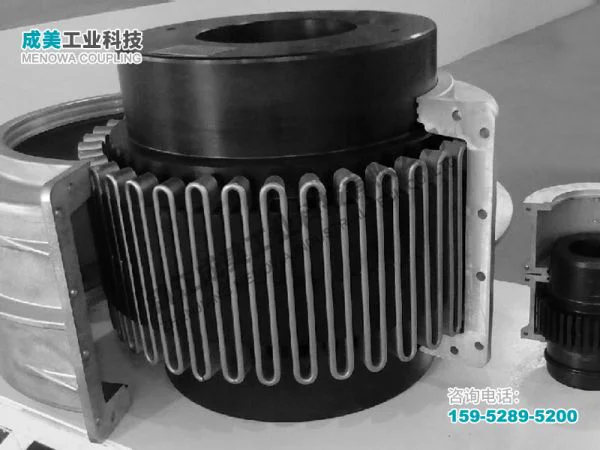
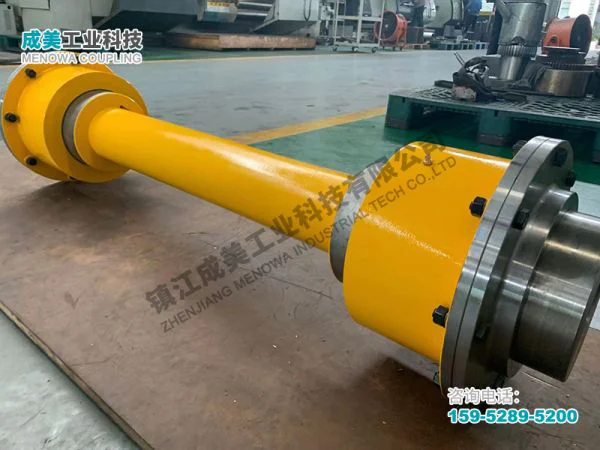
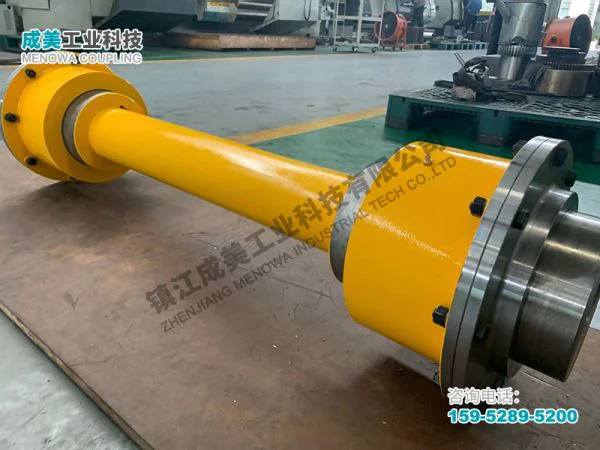
The main structure of Menowa serpentine spring coupling is composed of two half couplings, two half covers, two sealing rings and serpentine spring pieces. It relies on the snake spring to transfer torque, the snake spring coupling is the most advanced shaft connection transmission parts in the international mechanical field today, and it is also a very common shaft connection transmission parts. It also relies on the snake spring embedded in the tooth groove of the two half couplings to transfer torque, and the coupling is embedded in the tooth groove of the two half couplings with the snake spring blade to realize the link between the drive shaft and the driven shaft. Menowa serpentine spring couplings are suitable for medium and high power transmission shafting with two coaxial lines.It has certain compensation for the relative offset of the two axes and vibration reduction and buffer performance, the working temperature is -30℃~+150℃, and the nominal torque is 45~800000N.m. Mainly used in crusher, crank reciprocating movement, reducer, metallurgy, mining, lifting machinery and so on. Other kinds of mechanical and equipment shaft drive, where the motor is connected to the shaft, the motor is connected to the reducer box or the shaft is connected to the shaft can be applied.
In the complex ecosystem of mechanical transmission systems, couplings serve as the critical link that bridges rotating shafts, enabling the seamless transfer of torque while accommodating misalignments and mitigating operational vibrations. Among the diverse range of coupling technologies available, Falk Flexible Coupling, Serpentine Spring Coupling, and Grid Coupling stand out for their unique structural designs, performance characteristics, and adaptability to various industrial scenarios. These couplings play indispensable roles in ensuring the reliability, efficiency, and longevity of machinery across sectors such as manufacturing, energy, mining, and transportation.
Mechanical transmission systems rely on the precise coordination of multiple components to convert energy into usable motion, and couplings are tasked with the dual responsibility of torque transmission and system protection. Unlike rigid couplings that demand strict alignment and offer no vibration damping, flexible couplings—including the three types discussed herein—incorporate design elements that allow for controlled deformation, misalignment compensation, and shock absorption. This flexibility is crucial in real-world operating conditions, where factors such as manufacturing tolerances, thermal expansion, load fluctuations, and installation errors inevitably lead to shaft misalignments. By accommodating these deviations, flexible couplings reduce stress on bearings, shafts, and other critical components, minimizing the risk of premature failure and unplanned downtime. The selection of an appropriate coupling type depends on a range of factors, including torque requirements, speed limitations, misalignment magnitude, environmental conditions, and maintenance accessibility. A thorough understanding of each coupling’s design and capabilities is therefore essential for optimizing transmission system performance.
Falk Flexible Coupling, a representative of high-performance flexible coupling technology, is engineered to address the demands of heavy-duty industrial applications where reliable torque transmission and robust misalignment compensation are paramount. The core design of this coupling type revolves around a combination of metallic components and flexible elements that work in tandem to balance rigidity and adaptability. Typically constructed from high-strength alloys, the coupling features a split-sleeve design or a wrap-around configuration that facilitates easy installation and removal without the need to disassemble adjacent shaft components—a significant advantage in applications where space is constrained or downtime must be minimized. The flexible elements within Falk Flexible Coupling are often made from durable elastomers or metallic springs, depending on the specific application requirements for torque capacity, temperature resistance, and vibration damping.
One of the defining characteristics of Falk Flexible Coupling is its ability to compensate for multiple types of misalignment, including radial, axial, and angular deviations. Radial misalignment, caused by offset shafts, is accommodated through the lateral flexibility of the coupling’s elements, which bend slightly to bridge the gap between shafts without transferring excessive stress. Axial misalignment, resulting from thermal expansion or shaft movement, is handled by the coupling’s ability to stretch or compress within a specified range, while angular misalignment—where shafts are not collinear—is compensated through rotational flexibility. This multi-directional compensation capability reduces the load on bearings and shafts, extending their operational life and reducing maintenance costs. Additionally, Falk Flexible Coupling is designed to absorb shock loads and dampen vibrations generated by start-stop operations, gear meshing, or uneven load distribution. This vibration damping effect not only protects sensitive equipment components but also improves overall system stability and reduces operational noise.
The torque transmission capacity of Falk Flexible Coupling is tailored to meet the needs of heavy-duty applications, with designs capable of handling a wide range of torque levels from moderate to extremely high. The use of high-strength materials ensures that the coupling can withstand continuous operational loads as well as occasional peak loads without permanent deformation or failure. In applications where corrosion resistance is critical—such as marine, chemical, or food processing environments—Falk Flexible Coupling can be equipped with specialized coatings or constructed from corrosion-resistant alloys to maintain performance in harsh conditions. The coupling’s modular design also allows for customization, with various hub configurations, bolt patterns, and flexible element materials available to suit specific application requirements. This adaptability makes Falk Flexible Coupling a versatile choice for diverse industrial settings, from power generation turbines and large pumps to conveyor systems and heavy machinery.
Serpentine Spring Coupling, named for its distinctive coiled spring element, is another widely used flexible coupling technology that excels in applications requiring effective vibration damping and misalignment compensation. The core structure of this coupling consists of two hubs with tooth-like projections, a serpentine (or coil) spring that fits between these projections, and a protective cover that encloses the assembly. The serpentine spring, typically fabricated from high-quality alloy steel, is the key functional component, responsible for torque transmission, vibration absorption, and misalignment compensation. The spring’s coiled design provides inherent flexibility, allowing it to deform elastically under load and return to its original shape, ensuring consistent performance over time.
A primary advantage of Serpentine Spring Coupling is its exceptional vibration damping capability. The serpentine spring acts as a shock absorber, absorbing and dissipating vibrational energy generated by the transmission system. This is particularly beneficial in applications with frequent start-stop cycles, variable loads, or high-impact operations, such as crushers, reciprocating compressors, and industrial mixers. By reducing vibration transmission, the coupling protects connected equipment—including motors, gearboxes, and bearings—from premature wear and damage. Additionally, the spring’s elastic deformation allows for smooth torque transmission, minimizing torque fluctuations and ensuring stable operation even under dynamic load conditions.
Serpentine Spring Coupling also offers reliable compensation for radial, axial, and angular misalignments. The spring’s flexibility enables it to adjust to minor shaft deviations, reducing the mechanical stress imposed on the coupling and connected components. The tooth-like projections on the hubs are designed to mate with the serpentine spring, ensuring uniform load distribution across the spring’s length. This uniform loading prevents localized stress concentrations, extending the spring’s service life and enhancing the coupling’s overall durability. The protective cover that encloses the assembly serves multiple purposes: it prevents contamination from dust, debris, and moisture, protects the spring from external damage, and retains lubricant to ensure smooth operation. Proper lubrication is essential for minimizing friction between the spring and hubs, reducing wear, and maintaining the coupling’s performance over time.
The material selection for Serpentine Spring Coupling is critical to its performance and longevity. The serpentine spring is typically made from heat-treated alloy steel, which provides high tensile strength, fatigue resistance, and flexibility. This material can withstand repeated cyclic loads without permanent deformation, making it suitable for long-term operation in demanding industrial environments. The hubs are often constructed from cast iron, steel, or aluminum, depending on the torque requirements and weight constraints of the application. Aluminum hubs are preferred for lightweight applications, while steel and cast iron hubs offer enhanced durability for heavy-duty operations. In corrosive environments, the coupling can be treated with anti-corrosion coatings or constructed from stainless steel to prevent rust and degradation.
Grid Coupling, characterized by its use of a grid-shaped flexible element, is a robust and versatile coupling technology designed for medium to heavy-duty industrial applications. The basic structure of Grid Coupling includes two rigid hubs with peripheral grooves, a grid element (usually made of alloy steel) that fits into these grooves, and a protective casing. The grid element, which gives the coupling its name, is typically formed into a rectangular or diamond pattern, providing a balance of flexibility and torque capacity. This design allows the grid to deform elastically under load, enabling misalignment compensation and vibration damping while maintaining efficient torque transmission.
One of the key strengths of Grid Coupling is its high torque density, meaning it can transmit significant torque relative to its size. This makes it suitable for applications where space is limited but high torque capacity is required, such as industrial fans, pumps, compressors, and conveyor systems. The grid element’s design ensures that torque is distributed evenly across the coupling, reducing stress concentrations and enhancing durability. Additionally, Grid Coupling exhibits excellent fatigue resistance, thanks to the elastic properties of the grid element, which can withstand repeated cyclic loads without failure. This fatigue resistance is particularly important in applications with continuous operation or variable load conditions.
Grid Coupling offers effective compensation for radial and angular misalignments, though its axial compensation capability is generally more limited compared to Falk Flexible Coupling and Serpentine Spring Coupling. The grid element’s flexibility allows it to adjust to minor shaft deviations, reducing the strain on connected components and minimizing wear. The protective casing that surrounds the assembly is essential for maintaining the coupling’s performance, as it prevents the ingress of contaminants and retains lubricant. Lubrication is critical for Grid Coupling, as it reduces friction between the grid element and the hubs’ grooves, preventing premature wear and ensuring smooth operation. Regular lubrication maintenance helps extend the coupling’s service life and maintains its vibration damping and misalignment compensation capabilities.
The durability of Grid Coupling makes it well-suited for harsh industrial environments, including those with high temperatures, dust, and moisture. The grid element, constructed from high-strength alloy steel, can withstand elevated temperatures without significant loss of performance, while the protective casing prevents damage from external debris. In applications where corrosion is a concern, Grid Coupling can be equipped with corrosion-resistant coatings or constructed from stainless steel, ensuring reliable operation in challenging conditions. The simplicity of the coupling’s design also contributes to its reliability, as it has fewer moving parts compared to more complex coupling technologies, reducing the risk of component failure.
When comparing Falk Flexible Coupling, Serpentine Spring Coupling, and Grid Coupling, several key differences and similarities emerge, influencing their suitability for specific applications. All three coupling types fall under the category of flexible couplings, offering misalignment compensation and vibration damping capabilities that rigid couplings lack. However, their design philosophies, performance characteristics, and optimal application scenarios vary significantly.
In terms of misalignment compensation, Falk Flexible Coupling generally offers the most comprehensive range, with robust capabilities for radial, axial, and angular deviations. This makes it ideal for applications where significant shaft misalignments are expected, such as large industrial machinery with thermal expansion issues or complex installation layouts. Serpentine Spring Coupling also provides reliable multi-directional misalignment compensation, with a particular focus on vibration damping, making it suitable for high-impact and variable-load applications. Grid Coupling, while effective for radial and angular misalignments, has more limited axial compensation, positioning it as a preferred choice for applications with minimal axial shaft movement.
Torque capacity is another differentiating factor. Falk Flexible Coupling is engineered for heavy-duty applications, capable of handling extremely high torque levels, making it suitable for power generation, mining, and large-scale manufacturing equipment. Grid Coupling offers high torque density relative to its size, making it a compact solution for medium to heavy-duty applications. Serpentine Spring Coupling, while capable of transmitting moderate to high torque, is often favored for its vibration damping properties over raw torque capacity, making it ideal for applications where load stability is critical.
Vibration damping performance varies among the three coupling types, with Serpentine Spring Coupling leading in this regard due to its coiled spring design, which effectively absorbs and dissipates vibrational energy. This makes it the top choice for applications with frequent start-stop cycles, reciprocating motion, or high-impact loads. Falk Flexible Coupling also provides solid vibration damping, particularly when equipped with elastomeric elements, while Grid Coupling offers moderate vibration damping, with its performance primarily dependent on the grid element’s material and design.
Maintenance requirements differ across the three coupling types as well. Falk Flexible Coupling, with its modular design, allows for easy replacement of flexible elements, reducing maintenance time and costs. However, elastomeric elements may require more frequent replacement in harsh environments compared to metallic components. Serpentine Spring Coupling requires regular lubrication to maintain performance, as friction between the spring and hubs can lead to wear if not properly lubricated. The protective cover also needs periodic inspection to ensure it remains intact and free from damage. Grid Coupling similarly requires regular lubrication and inspection of the grid element for signs of wear or fatigue, though its simple design minimizes the complexity of maintenance tasks.
Application-specific considerations play a crucial role in selecting the appropriate coupling type. Falk Flexible Coupling is well-suited for heavy-duty applications such as turbines, large pumps, and conveyor systems, where high torque capacity and comprehensive misalignment compensation are essential. It is also a preferred choice in applications where easy installation and maintenance are priorities. Serpentine Spring Coupling excels in applications with high vibration and impact loads, including crushers, reciprocating compressors, and industrial mixers, where its vibration damping capabilities protect connected equipment. Grid Coupling is ideal for medium to heavy-duty applications such as industrial fans, pumps, and gearboxes, where compact size, high torque density, and durability are key requirements.
The operating environment also influences coupling selection. In corrosive environments, all three coupling types can be customized with corrosion-resistant materials or coatings, but Falk Flexible Coupling and Grid Coupling, with their metallic construction, may offer better long-term performance compared to Serpentine Spring Coupling with elastomeric components. High-temperature applications favor couplings with metallic flexible elements, such as Falk Flexible Coupling (with metallic springs) and Grid Coupling, as elastomeric elements can degrade at elevated temperatures. In applications where noise reduction is critical, Serpentine Spring Coupling’s superior vibration damping makes it the optimal choice, as it minimizes operational noise by absorbing vibrational energy.
Installation considerations are another important factor. Falk Flexible Coupling’s split-sleeve design allows for easy installation without disassembling adjacent components, making it suitable for retrofitting or applications where space is limited. Serpentine Spring Coupling and Grid Coupling typically require the hubs to be slid onto the shafts before assembling the flexible elements, which may be more time-consuming but still manageable with proper tools. The alignment requirements for each coupling type should also be considered during installation: while all three offer misalignment compensation, proper initial alignment reduces stress on the coupling and extends its service life.
Advancements in material science and manufacturing technology have continuously improved the performance and durability of Falk Flexible Coupling, Serpentine Spring Coupling, and Grid Coupling. The use of advanced alloys and heat-treatment processes has enhanced the strength, fatigue resistance, and corrosion resistance of coupling components, allowing them to operate in more demanding conditions. Precision manufacturing techniques have improved the dimensional accuracy of couplings, ensuring better fit and alignment, and reducing stress concentrations. Additionally, the integration of sensor technology into coupling designs has enabled predictive maintenance, allowing operators to monitor coupling performance in real time and identify potential issues before they lead to failure.
For example, modern Falk Flexible Coupling designs may incorporate strain gauges or vibration sensors that detect changes in torque, vibration, or temperature, providing early warning of component wear or misalignment. Similarly, Serpentine Spring Coupling and Grid Coupling can be equipped with condition-monitoring systems that track lubricant quality, grid or spring wear, and casing integrity. These technological advancements have reduced unplanned downtime, improved maintenance efficiency, and extended the operational life of coupling systems.
Future trends in coupling technology are likely to focus on further enhancing efficiency, durability, and intelligence. The development of lightweight materials will reduce the inertia of couplings, improving energy efficiency and dynamic performance. The integration of IoT (Internet of Things) technology will enable more advanced predictive maintenance, with couplings communicating real-time performance data to central monitoring systems. Additionally, the push for sustainability will drive the development of couplings with longer service lives, recyclable materials, and reduced maintenance requirements, minimizing their environmental impact.
In conclusion, Falk Flexible Coupling, Serpentine Spring Coupling, and Grid Coupling are essential components in modern mechanical transmission systems, each offering unique advantages that make them suitable for specific applications. Falk Flexible Coupling stands out for its comprehensive misalignment compensation, high torque capacity, and ease of maintenance, making it ideal for heavy-duty industrial applications. Serpentine Spring Coupling excels in vibration damping and shock absorption, protecting equipment in high-impact and variable-load scenarios. Grid Coupling offers a balance of compact size, high torque density, and durability, making it a versatile choice for medium to heavy-duty applications. The selection of the appropriate coupling type depends on a range of factors, including torque requirements, misalignment magnitude, vibration levels, environmental conditions, and maintenance accessibility.
As industrial machinery becomes more advanced and demanding, the role of these couplings in ensuring system reliability and efficiency will only grow in importance. Advancements in materials, manufacturing, and sensor technology will continue to enhance their performance, enabling them to operate in increasingly challenging conditions. By understanding the structural principles, performance characteristics, and application landscapes of Falk Flexible Coupling, Serpentine Spring Coupling, and Grid Coupling, engineers and operators can make informed decisions that optimize transmission system performance, reduce maintenance costs, and extend equipment life. Whether in power generation, manufacturing, mining, or transportation, these coupling technologies remain indispensable links in the chain of mechanical motion, driving productivity and innovation across industries.
 WeChat
 WhatsApp